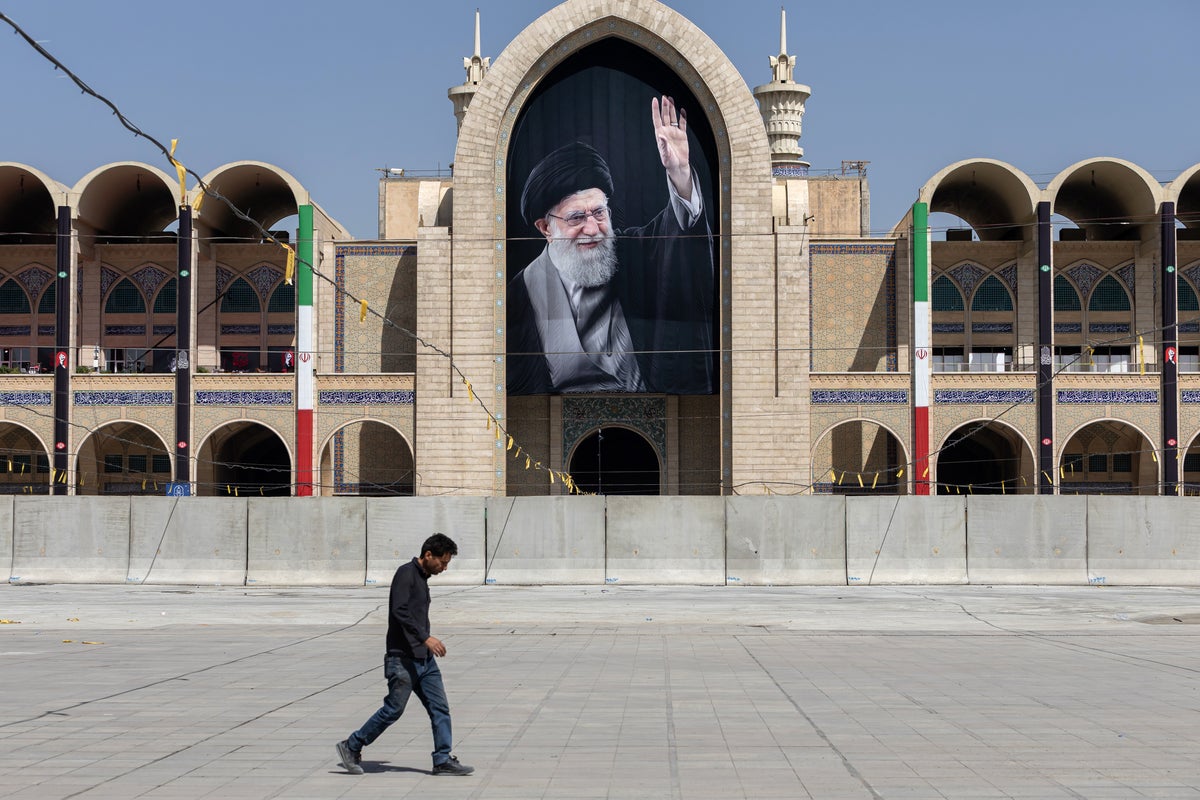
Tehran is currently staging a massive, multi-city theatrical production designed to convince the world that the Islamic Republic remains completely unshaken. Supreme Leader Ali Khamenei is dead, killed earlier this year during a devastating series of military strikes. Now, after months of delay, the state is sparing no expense to orchestrate a weeklong mourning spectacle stretching across five cities in two countries. It is blindingly obvious what the authorities are trying to accomplish. They want to use Khamenei's funeral to hide cracks in the regime.
But empty religious symbolism will not work this time. The regime's foundations have turned to dust.
The public is completely exhausted by decades of brutal economic hardship, systemic corruption, and a devastating war. The elite are terrified. They know that a transition of power is the exact moment when authoritarian systems usually fall apart. By looking closely at what is actually happening behind the scenes in Tehran right now, we can see that this funeral isn't a display of strength. It is a desperate, final attempt to keep a dying dictatorship on life support.
Why Iran Plans to Use Khameneis Funeral to Hide Cracks in the Regime
State media officials are predicting that up to 20 million people will show up for the farewell ceremonies. They claim this will make it one of the largest funerals in human history. For context, that is double the estimated turnout for the funeral of the Islamic Revolution's founder, Ayatollah Khomeini, back in 1989.
Do not believe the hype. This turnout is completely artificial.
The regime is actively converting public schools, parks, and government sports complexes into temporary housing facilities. They are organizing massive distribution networks to hand out free meals, juice, and basic goods to anyone willing to board a state-mandated bus to the capital. In a country experiencing severe food insecurity, offering free meals is a powerful tool to force compliance.
The political motive behind this logistical push is entirely transparent. Qom Friday prayer leader Ayatollah Mohammad Saidi let the truth slip when he told state media outlets that the funeral would serve as another referendum for the Islamic Republic. The clerics desperately need a massive crowd to show western capitals that the population still supports the current system.
They are lying to themselves. When thousands of citizens went out into the streets to celebrate the initial news of Khamenei's death, the illusion of public unity shattered for good. You cannot fix a broken social contract by offering people a free lunch and a mandatory flag to wave.
The Secret War Inside the Leadership Council
While millions of forced mourners line the streets, a vicious power struggle is tearing the highest levels of the government apart. An Interim Leadership Council took over right after the assassination. This council includes Alireza Arafi of the Guardian Council, Chief Justice Gholam-Hossein Mohseni-Eje'i, Parliament Speaker Mohammad-Baqer Ghalibaf, and President Masoud Pezeshkian.
They do not trust each other. They are terrified of what comes next.
The political fractures became undeniably public when state television abruptly cut off a pre-recorded broadcast by Parliament Speaker Ghalibaf right in the middle of a sentence. Hardline factions loyal to Mojtaba Khamenei—the late dictator's second son who has been aggressively maneuvering to secure the permanent Supreme Leader title—are fighting tooth and nail against any political compromises.
The internal arguments are getting incredibly messy. Hardline MP Mahmoud Nabaviyan openly condemned the government's diplomatic factions, stating that any political compromise is pure corruption. Meanwhile, the Islamic Revolutionary Guard Corps (IRGC) is feeling the heat. The IRGC-affiliated Javan newspaper issued a stark warning, noting that if internal political agreements fail, the entire nation will pay the ultimate cost.
This is not a stable government. It is a circular firing squad. When the ruling elite start silencing each other on live television, a flashy funeral procession isn't going to convince anyone that the regime is unified.
Hyperinflation and Water Riots on the Ground
Away from the televised funeral routes, daily life in Iran has become completely unlivable. The economic collapse has surpassed the worst triggers of past public unrest. The healthcare sector provides a horrifying look at how bad things have gotten.
According to data compiled by the state-run Donya-e-Eqtesad newspaper, hyperinflation and extreme currency shortages have driven medical costs to insane heights. A single standard course of chemotherapy treatment has skyrocketed from 7 million tomans to nearly 70 million tomans. The Central Bank recorded a monthly healthcare inflation rate of 23.1% earlier this spring.
People are dying because they cannot afford basic medicine. They are furious.
At the exact same time, decades of systemic corruption and terrible environmental management are triggering violent localized revolts over basic survival needs. Citizens in Garmsar recently launched intense protests along the vital Tehran-North railway line. The issue? The government stole their water rights. The protesters issued a direct ultimatum to the authorities, stating they would completely block the transit roads and the Mashhad railway line if their water was not restored.
Look at the retirees. Telecommunication workers have been marching across Tehran, Gilan, and Kurdistan. They are chanting against the incompetent government because IRGC-controlled foundations completely plundered their pensions. These people don't care about the grand legacy of a dead cleric. They want their money back. They want clean water. They want to be able to afford medical care for their children.
A Rapidly Radicalizing Armed Resistance
The most dangerous factor for the regime right now is that public anger is no longer just limited to peaceful marches. The resistance on the ground is becoming heavily armed and highly coordinated.
Armed attacks targeting regime forces have surged significantly across the provinces. A newly emerged Kurdish resistance group executed a targeted armed raid in Paveh, successfully killing two IRGC operatives. The group explicitly stated that the attack was direct retribution for the brutal role those specific officers played in crushing the 2022 democratic street protests. State-run media outlets confirmed those deaths, alongside another fatal armed ambush that targeted an IRGC intelligence officer in Saravan.
The regime is essentially fighting a shadow war against its own population. They can pack the streets of Tehran with bused-in crowds for a few days, but they cannot station an army on every railway line, water treatment plant, and provincial outpost forever.
What You Should Watch for Next
If you want to track how this crisis actually unfolds as the funeral concludes, stop looking at the state media broadcasts and focus on these specific operational indicators.
- Watch the regional strikes. Keep a close eye on whether the bazaar merchants in Tehran and major provincial cities close their shops in defiance of state orders during the mourning period.
- Track the railway disruptions. Monitor the localized protests along the Tehran-North and Mashhad transit lines. If activists manage to cut off these industrial supply lines, it will severely choke the regime's domestic logistics.
- Observe the IRGC deployment patterns. Pay attention to whether the regime pulls elite security forces out of the border provinces to guard the capital during the power transition. This will leave internal security lines incredibly vulnerable to local resistance groups.
- Monitor state television interruptions. Watch for further censorship or cut-off speeches among the Interim Leadership Council members. Any public disagreement between Ghalibaf, Pezeshkian, and the Mojtaba Khamenei faction means the transition is failing.
The grand funeral procession is nothing more than a temporary distraction. Once the cameras turn off and the free food runs out, the regime will still be stuck facing a worthless currency, dry water reservoirs, an armed domestic resistance, and an elite leadership class that is actively trying to destroy itself from within.
The cracks cannot be hidden anymore. The walls are closing in.
Inside Iran funeral for former leader
This broadcast provides an essential, detailed look at the massive scale of the state-mandated ceremonies and documents the glaring absence of the new leadership during the initial mourning events.

:max_bytes(150000):strip_icc()/TAL-nassau-bahamas-BEAUTCARIB0323-4fbfce903e5a4418b895e03717e3de0d.jpg)