The fragile peace in the Middle East didn't just crack today. It completely shattered. If you thought the June memorandum of understanding between Washington and Tehran would hold, the latest round of ballistic missiles and explosive drones just proved how wrong that assumption was.
Early on July 13, 2026, Iran's Islamic Revolutionary Guard Corps launched a highly coordinated, three-phase offensive striking directly at Western military infrastructure across Jordan, Bahrain, and Kuwait. It is a massive escalation that shifts the entire calculus of the region. This wasn't a shadow war action. This was an overt, multi-state barrage designed to prove a single point. Iran wants total control over the Strait of Hormuz, and they're willing to target American assets directly to get it.
The strategic reality on the ground has shifted. Let's look at exactly what happened, what the official reports are missing, and where this conflict goes next.
The Three Phases of the Iranian Barrage
The IRGC dubbed this operation an eye for an eye. They didn't hide their tracks. Instead, state-affiliated media channels in Tehran broadcasted the phases of the operation with explicit details about their intended targets.
Targeting Jordan in Phase One
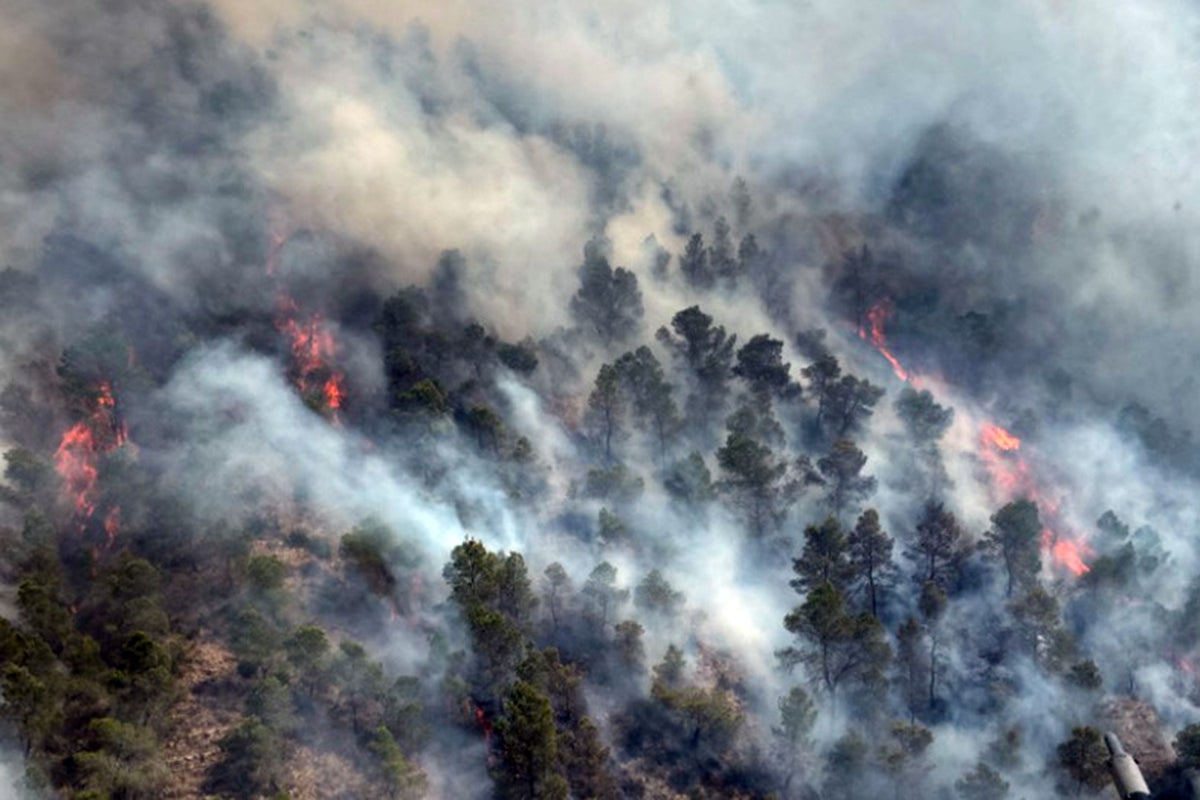
The assault started with a heavy concentration of one-way attack drones and cruise missiles directed at the Prince Hassan Air Base in Jordan. This facility serves as a vital logistics and staging hub for Western operations. Iranian state media claimed the strikes successfully ignited major fires across multiple fuel depots and ammunition storage facilities.
Jordan has long tried to maintain a delicate balancing act, positioning itself as a stable buffer state while hosting foreign military installations. By striking deep into Jordanian territory, Tehran is signaling that no regional partner hosting American forces is safe from retaliation.
Blunting Maritime Surveillance in Bahrain
Phase two moved directly to the southern edge of Manama, Bahrain. The IRGC targeted the Sheikh Isa Air Base and naval infrastructure in Juffair. This wasn't a random choice of targets. Bahrain hosts the US Navy's Fifth Fleet, making it the literal nerve center for Western maritime security in the Persian Gulf.
According to military statements, the strikes focused heavily on disabling the eyes and ears of the naval coalition. Rockets and drones targeted a hangar housing P-8 Poseidon maritime surveillance aircraft, helicopter maintenance facilities, and a primary drone command-and-control center. Reports from local residents in Hamad Town and Manama confirmed that missile alert sirens wailed multiple times throughout the morning as air defenses attempted to intercept the incoming waves.
Smashing Air Defenses in Kuwait
The final phase focused squarely on Kuwait, aiming to degrade the immediate defensive capabilities protecting American personnel. The IRGC claimed direct hits on the Ali Al-Salem Air Base and the Ahmed Al-Jaber Air Base.
Tehran asserts that this phase completely destroyed a series of fuel tanks and a Patriot air defense battery at Ali Al-Salem. Furthermore, they claimed to have knocked out a strategic long-range FPS radar system designed to track incoming aerial threats. While Kuwaiti officials noted the interception of several ballistic missiles and over a dozen drones, the sheer volume of the saturation attack appears to have bypassed local defensive grids in specific areas.
The Collapse of the June Ceasefire
To understand why this explosion of violence happened today, you have to look back at the failed diplomacy of the past month. On June 17, 2026, a tentative memorandum of understanding was brokered through Pakistani mediation. It was supposed to extend a shaky ceasefire, ease crippling Western economic sanctions, and open a path toward structured nuclear talks.
It failed completely. Both sides spent weeks accusing each other of bad-faith maneuvers. The real flashpoint remains the Strait of Hormuz.
Iran recently established its Persian Gulf Strait Authority, claiming absolute sovereignty over the waterway. They began demanding that all commercial shipping register for permits and threatened to implement unilateral tolls on international vessels. Washington viewed this as an illegal blockade of a vital global shipping lane.
The immediate trigger for today's chaos occurred over the weekend. The IRGC Navy intercepted and detained two commercial vessels in the strait, claiming they had switched off their transponders and violated transit routes. The White House responded instantly. President Donald Trump declared the ceasefire dead and ordered US Central Command to launch a massive wave of precision strikes.
CENTCOM assets, including fighter jets and naval combatants, hit more than 140 targets across southern Iranian coastal provinces like Hormozgan, Bushehr, and Khuzestan. They targeted anti-ship missile sites, coastal radar networks, and dozens of fast-attack tactical boats. Tehran waited only a few hours before launching its three-phase regional counter-attack against the bases in Jordan, Bahrain, and Kuwait.
What the Media Gets Wrong About the Strategic Stakes
Most mainstream coverage treats these attacks as a localized dispute over shipping lanes. That misses the bigger picture entirely. This is a fundamental battle over the architecture of global trade and energy security.
The Strait of Hormuz sees roughly twenty percent of the world's petroleum pass through its narrow waters every single day. When the IRGC announced today that the strait is officially closed to unauthorized traffic, the global markets reacted immediately. Oil prices spiked instantly, complicating a global economy already dealing with persistent inflation.
Strait of Hormuz Daily Oil Transit: ~20-21 Million Barrels
Percentage of Global Maritime Oil Trade: ~20%
Key Regional US Infrastructure Targeted: Jordan (Prince Hassan), Bahrain (Sheikh Isa/Juffair), Kuwait (Ali Al-Salem)
Look at how the US military is responding. CENTCOM released defiant statements asserting that Iran does not control the strait and that traffic continues to flow under armed escort. Yet, ship-tracking data tells a completely different story. Commercial vessel traffic through the waterway has slowed to a crawl. Ship owners are actively instructing their fleets to drop anchor outside the danger zone or divert entirely around the southern coast of Oman. The International Maritime Organization warned shipmasters to avoid exposing crews to extreme danger as long as security cannot be guaranteed.
Real Capabilities vs State Propaganda
Sorting out the truth in the middle of a missile war is incredibly difficult. You have to look at the gap between what Tehran claims and what actually happens on the ground.
Iran's state media claimed they completely wiped out Patriot batteries and radar systems across Kuwait and Oman. They want their domestic audience to believe they possess total tactical superiority. The reality is usually less absolute. US air defenses, including Patriot and Aegis combat systems, routinely intercept a significant percentage of incoming threats.
However, no air defense system is perfect. When an adversary launches a synchronized barrage of low-flying cruise missiles, ballistic missiles, and swarming loitering munitions simultaneously, some will inevitably get through. The confirmed fires at the Prince Hassan base in Jordan and the repeated activation of civilian sirens in Bahrain indicate that Iran's strike packages achieved at least partial penetration of Western defensive envelopes.
Meanwhile, Iran's regular army claimed a tactical victory of its own today, announcing the downing of an American Lucas-type drone over the southern skies of Bandar Abbas. The area remains a chaotic zone of engagement, with explosions rocking port cities like Sirik and Jask as both sides trade heavy blows.
Where the Escalation Loop Goes Next
We are stuck in a dangerous, self-repeating loop of deterrence. Washington believes that hitting Iranian coastal targets harder will force Tehran to back down and respect freedom of navigation. Tehran believes that striking American bases across third-party Gulf nations will raise the political and economic cost so high that the US will eventually pull back.
Neither side is backing down. President Trump signaled an unwillingness to de-escalate, warning on social media that further provocations would meet even harsher military responses. Concurrently, the IRGC warned that any continued foreign military interference in the waterway will spark larger incidents targeting the global oil and gas sector.
The United Nations has expressed deep concern, with Secretary-General Antonio Guterres calling for maximum restraint. Those words carry very little weight right now. The diplomatic track is dead, the June agreement is in tatters, and the military commanders on both sides are running the show.
Practical Realities for Global Business and Security
If you manage logistics, energy portfolios, or international supply chains, you can't treat this as a distant geopolitical event. The closing of the strait and the strikes on regional hubs mean immediate operational shifts are necessary.
First, expect maritime insurance premiums for any vessels operating in the Gulf or the Gulf of Oman to skyrocket over the next forty-eight hours. Shipping companies are already recalculating route costs to include mandatory armed escorts or lengthy detours around Africa if the blockade holds.
Second, the targeting of bases in stable countries like Jordan and Kuwait means that regional corporate operations must review their local contingency and security protocols. The geographic boundaries of this conflict have officially expanded far beyond the borders of Iran and Iraq.
Watch the energy markets closely over the coming days. If the US military attempts to force commercial convoys through the Strait of Hormuz without Iranian permits, we will likely see direct naval engagements. That scenario would push energy volatility to levels we haven't seen in years. The battle for the Gulf has entered a volatile new chapter, and the old rules of engagement are completely gone.