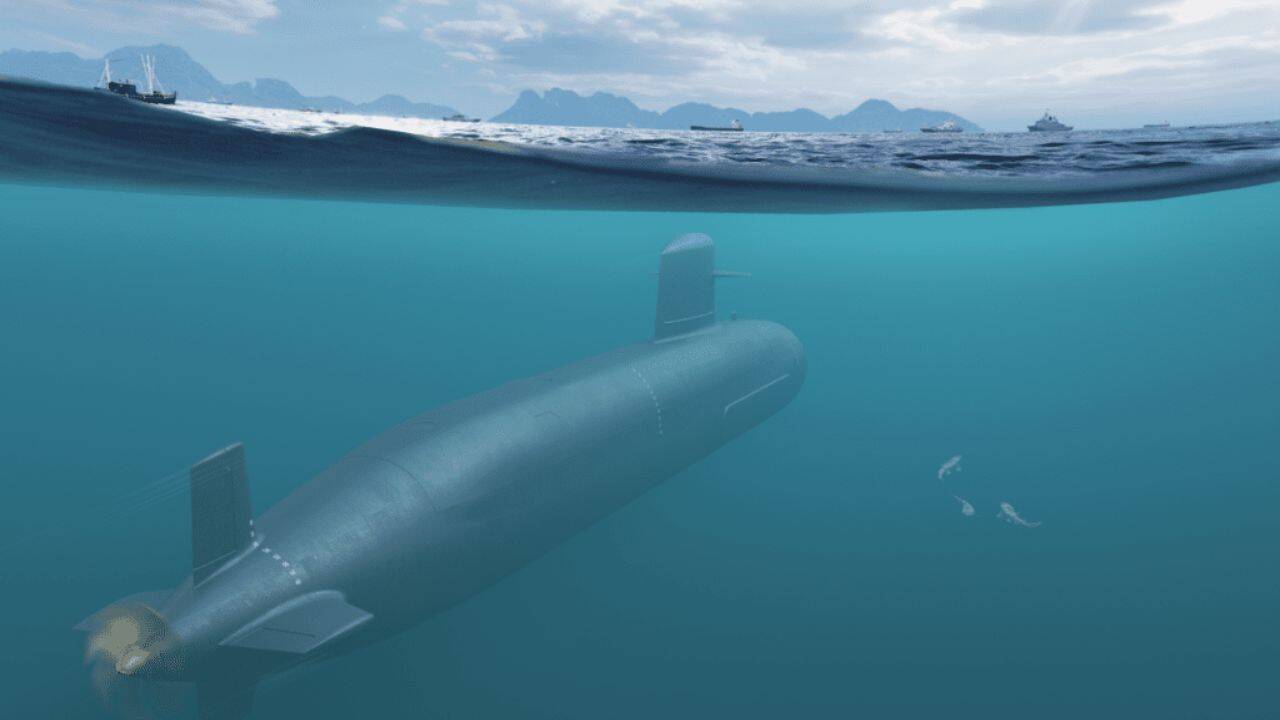
Conventional submarines have a massive Achilles' heel. They have to surface or poke a snorkel above the water every few days to run their noisy diesel engines and recharge their batteries. In modern naval warfare, that makes them sitting ducks.
Indonesia's new Scorpène Evolved submarine completely flips this script.
By ditching old battery technologies, this new vessel can stay deployed on missions for up to 80 days, spending 78 of those days fully submerged. For a diesel-electric attack submarine, that isn't just a minor upgrade. It changes the entire calculus of maritime deterrence in Southeast Asia.
With the first steel cutting beginning at PT PAL's shipyard in Surabaya, Jakarta isn't just buying weapons from France's Naval Group. It's building a sovereign undersea infrastructure that positions it to dominate critical choke points like the Strait of Malacca.
The Chemistry Behind the 80 Day Endurance
Most conventional submarines rely on heavy lead-acid batteries, or complex Air-Independent Propulsion (AIP) systems that require massive tanks of liquid oxygen and hydrogen. AIP sounds great on paper, but it takes up roughly 12% of a ship's internal volume and requires highly specialized, dangerous logistics on land to resupply. You can't just top off an AIP system at sea.
Jakarta skipped the AIP headache entirely and went straight for a full lithium-ion battery configuration.
Lithium-ion cells pack a far higher energy density than lead-acid counterparts. They charge faster, hold more power, and can discharge almost completely—utilizing between 5% and 95% of their total capacity. Lead-acid batteries generally tolerate only a 20% to 80% discharge window before suffering damage.
For the Indonesian Navy, this tech means their crews can maintain maximum underwater speeds exceeding 20 knots for much longer periods without giving away their position. The "indiscretion rate"—the amount of time a submarine spends vulnerable while snorkeling to charge—plummets.
Beyond the Specs
The basic dimensions tell part of the story. The Indonesian variant measures 71 meters long with a 6.2-meter beam, displacing between 1,600 and 2,000 tons. It can dive deeper than 300 meters, carrying a lean crew of just 31 sailors thanks to a highly automated SUBTICS combat management system.
But the real teeth lie in the weapons room.
The submarine features six launching tubes and a payload capacity of 18 heavyweight weapons. Indonesia is breaking new ground here by integrating MBDA's SM39 Exocet submarine-launched anti-ship missiles alongside F21 heavyweight torpedoes. Since Jakarta started operating submarines in 1959, it has never possessed a missile-capable underwater platform.
This introduces a serious cost-imposition mechanism for any adversarial navy entering Indonesian waters. A single missile-capable stealth submarine forces an opponent to scatter its surface assets and burn through resources on intensive anti-submarine patrols.
The Long Game for Sovereign Defense
If you look at how nations usually buy submarines, they send a check to Europe or Asia, wait a decade, and receive a finished boat. Indonesia tried a version of this before with South Korea, but the technology transfer didn't stick the way they wanted.
This $2.16 billion deal with France is different.
Both of these new Scorpène Evolved boats are being built right in Surabaya by Indonesian engineers. Over 30% of the total contract value returns directly to the domestic economy via technical training, local manufacturing jobs, and direct offsets.
A central piece of this agreement is the establishment of a joint Energy Research Lab in Indonesia. The goal isn't just to maintain these two boats. The long-term vision, according to defense officials, is for Indonesia to master submarine design and construction so thoroughly that it can independently manufacture and potentially export its own submarines between 2042 and 2050.
Immediate Shifts in Regional Power
Look at a map of Southeast Asia and you see why endurance matters. Indonesia's exclusive economic zone is vast, fragmented, and sits directly at the crossroads of global shipping lanes.
A traditional conventional submarine with a 50-day endurance spends too much time traveling to its station and worrying about its next fuel stop. With an 80-day mission capability and an operational range exceeding 8,000 nautical miles, a single Scorpène Evolved can lock down a maritime choke point for months.
It lets Jakarta move from a defensive, reactive coastal posture to an active, persistent deterrent.
What Comes Next
With pre-production shifting into physical manufacturing this month, the clock is officially ticking.
The first submarine is slated to undergo rigorous testing and sea trials between 2030 and 2032 before entering active service. The second hull will follow exactly one year later, kicking off its assembly in 2027 for a 2033 delivery.
For regional observers and naval planners, the next step involves monitoring how fast PT PAL qualifies its workforce during these early hull-cutting phases. If the Surabaya shipyard masters the complex welding and structural alignment required for high-pressure lithium hulls ahead of schedule, expect Jakarta to exercise options for additional hulls to expand its fleet even further.