The border friction between Pakistan and the Taliban-led government in Afghanistan just hit a dangerous new peak, and New Delhi isn't staying silent.
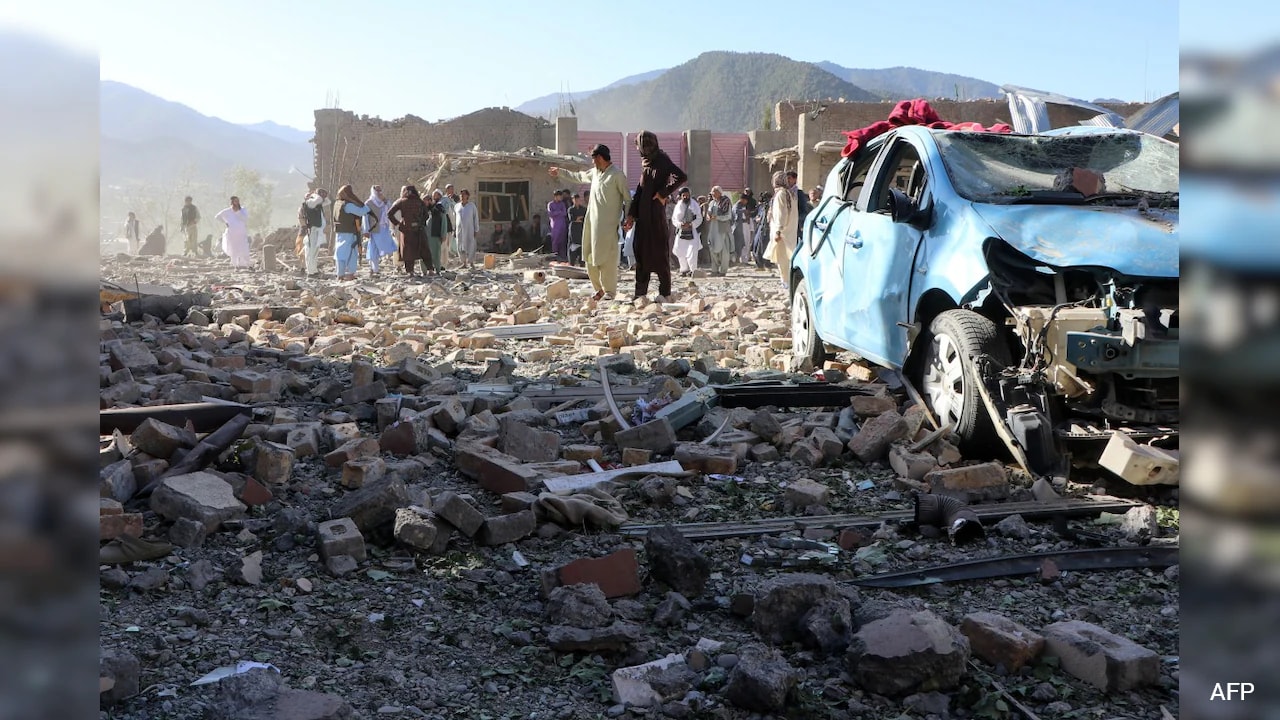
When Pakistani fighter jets crossed the frontier to bomb locations inside Afghanistan's eastern provinces, they didn't just drop explosives. They dropped the fragile remains of regional stability. Overnight military operations targeting Paktia, Paktika, and Kunar provinces left at least 36 civilians dead—including women and children—and wounded more than 160 others.
India's Ministry of External Affairs fired back with an unusually fierce diplomatic attack. New Delhi labeled the aerial strikes a blatant act of aggression, an assault on Afghan sovereignty, and a direct threat to regional peace.
If you're wondering why India is suddenly throwing its diplomatic weight behind a Taliban regime it doesn't officially recognize, you're looking at the wrong chessboard. This isn't about backing Kabul's rulers. It's about drawing a hard line against Islamabad's military playbook.
The devastating reality on the ground
Kabul and Islamabad are telling completely different stories about what happened during the overnight strikes. Pakistan claims its forces executed a tightly planned, intelligence-based ground operation followed by precision airstrikes. Information Minister Attaullah Tarar stated that security forces successfully eliminated 29 fighters belonging to militant outfits like the Tehrik-e-Taliban Pakistan (TTP) and Jamaat-ul-Ahrar.
But the details coming out of the targeted villages paint a far bloodier picture.
According to Hamdullah Fitrat, the deputy spokesperson for the Afghan government, Pakistani jets completely leveled residential homes. In the Chamkani district of Paktia province, an initial strike hit a civilian home, instantly killing an elderly man and a child. The true horror unfolded minutes later. When local villagers rushed to the scene to dig through the rubble for survivors, Pakistani forces struck the exact same spot a second time. That double-tap strike killed 28 rescuers and wounded 158 others.
In neighboring Paktika province, another house collapsed under bombardment, killing six people. Up in Kunar province, air strikes tore through rural property, wiping out local livestock.
The immediate catalyst for the violence was a high-profile militant ambush in Karachi. Gunmen rammed a vehicle into the main gates of the Pakistan Sindh Rangers provincial headquarters, sparking a heavy firefight that left three paramilitary personnel dead. Desperate to project strength at home, Islamabad launched retaliatory cross-border strikes within 24 hours.
New Delhi is calling out a pattern of reckless behavior
India's response wasn't just a boilerplate press release expressing concern. The Ministry of External Affairs called the operation a futile attempt to externalize internal failures through desperate acts of violence beyond its borders.
The language matters here. India is explicitly telling the global community that Pakistan's military establishment is using cross-border violence as a distraction tool.
Islamabad is currently facing a brutal combination of economic paralysis, political chaos, and a massive internal security crisis. By launching airstrikes into Afghanistan, the government tries to rally domestic support against an external enemy. New Delhi wants to make sure that strategy fails on the international stage.
This isn't an isolated flare-up. The two neighbors have been locked in a vicious cycle of violence all year. Back in February, Pakistan declared what it openly called an "open war" against Afghanistan following a string of TTP terror attacks. While a shaky ceasefire halted the heaviest fighting after a month, low-intensity border skirmishes never truly stopped.
The bigger geopolitical sandbox
To understand why India is taking such a definitive stance, you have to look at how dramatically the dynamics have flipped since the Taliban recaptured power in 2021.
For decades, Pakistan's military establishment nurtured insurgent groups in Afghanistan, seeking what geostrategists call "strategic depth" against India. Islamabad assumed a Taliban-led Kabul would be a submissive, friendly neighbor.
Instead, it's turned into a strategic nightmare.
The Afghan Taliban share deep tribal and ideological ties with the TTP, the group actively waging war against the Pakistani state. Kabul refuses to fence the border or expel TTP fighters, essentially turning the frontier into an open combat zone. Pakistan now faces the blowback of its own historical policies.
India is capitalizing on this rift to build soft-power leverage. While New Delhi hasn't formally recognized the Taliban government, it has quietly maintained a technical mission in Kabul. India has shipped thousands of tons of wheat, critical medicines, and earthquake relief directly to the Afghan people.
By forcefully defending Afghanistan's territorial integrity, India achieves two distinct goals:
- It solidifies its status as a reliable, long-term ally to the Afghan population, independent of who sits in the ruling palace.
- It boxes Pakistan in diplomatically, portraying Islamabad as an unstable aggressor violating international humanitarian law.
What happens next on the frontier
Don't expect either side to back down anytime soon. Both countries have already summoned each other's diplomats to lodge furious formal protests, and the political rhetoric is turning hyper-nationalistic.
For international observers and regional businesses, the immediate steps are clear. Keep a close eye on the Torkham and Chaman border crossings. These vital trade arteries between Pakistan and Afghanistan are frequently shut down during military escalations, disrupting supply chains across Central and South Asia.
Furthermore, expect the diplomatic battle to shift to the United Nations. India's permanent representatives are already using UN human rights and assistance mission reports to highlight civilian casualties from Pakistani strikes, building pressure on international bodies to scrutinize Islamabad's border tactics. The regional map is shifting, and New Delhi intends to steer the narrative.
For more visual analysis of how this regional conflict has evolved, you can watch WION's detailed broadcast on India's UN response to the border crisis. This report covers previous diplomatic clashes at the UN, where Indian envoys cited specific civilian casualty figures to challenge the legality of cross-border operations.