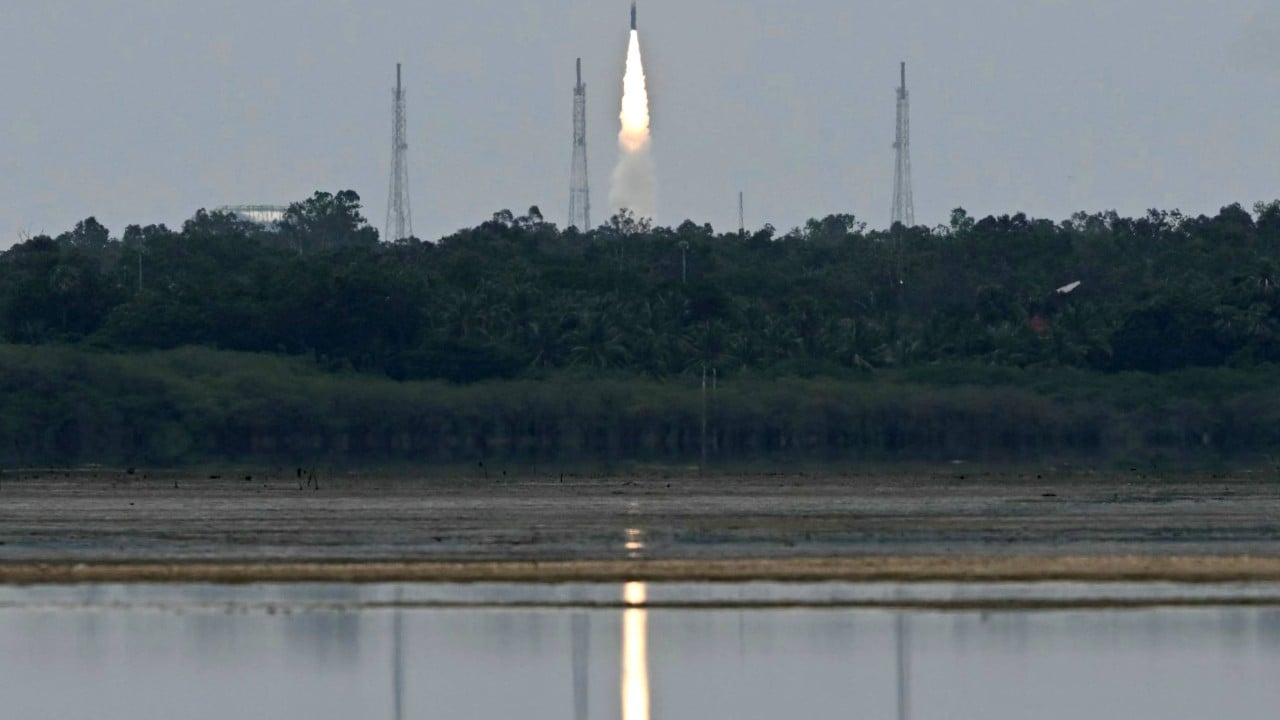
When Skyroot Aerospace sent its Vikram-1 rocket flying from Sriharikota into low Earth orbit on July 18, 2026, most observers focused on the milestone. India had officially joined the United States and China as only the third nation with a private company capable of orbital launches.
That is impressive on paper. But it misses the real story.
The real story is about how small satellite operators have been getting squeezed for a decade, and how a private startup out of Hyderabad might actually break that bottleneck.
If you run a satellite startup today, your options are pretty brutal. You either buy a ticket on a massive rideshare rocket like a SpaceX Falcon 9 and wait around for months while big prime contractors dictate the schedule, or you pay premium rates for dedicated light launchers. The Mission Aagaman flight by Skyroot—which placed six distinct payloads into a 450-kilometer orbit—was designed to offer a direct third option: a custom, on-demand taxi ride to space.
It worked. Vikram-1 completed its 16-minute ascent, deployed every payload on target, and validated seven years of grueling private development.
Now comes the hard part.
The Bottleneck Skyroot Wants to Fix
To understand why this launch matters, you have to look at how satellites get to space.
SpaceX disrupted launch costs over a decade ago. Everyone knows that. But SpaceX operates like a giant public bus line. If your 100-kilogram Earth observation satellite needs to go to a very specific orbital inclination at 10:00 AM on a Tuesday, SpaceX will tell you to jump on a Transporter mission with 80 other payloads going to a generic sun-synchronous orbit. If one major payload on that stack faces a technical delay, your hardware sits in a cleanroom for six months costing you money.
Skyroot is pitching a completely different model. They want to operate an on-demand service for payloads up to 350 kilograms.
Former ISRO engineers Pawan Kumar Chandana and Naga Bharath Daka started Skyroot in 2018 with this specific problem in mind. Satellite owners don't just want lower prices per kilogram. They want orbital precision. They want control over their own schedules.
During the July 2026 Aagaman launch, Vikram-1 proved it could handle complex, mixed-payload manifests. The rocket carried everything from an Earth observation camera to a robotic arm built for clearing orbital debris, along with commercial hardware for German firm DcubeD. It even carried symbolic items, like a lab-grown diamond piece honoring CV Raman and APJ Abdul Kalam.
Putting diverse payloads into an exact 60-degree inclination orbit on a maiden attempt is a rare technical win. Rocket Lab achieved orbital capability only on its second try. SpaceX famously failed three times before reaching orbit with Falcon 1. Astra and Firefly both suffered early launch failures. Skyroot hit its mark on the very first try.
Why the Upstream Space Market Is Moving to India
For years, India's space strategy was simple: let ISRO handle everything.
ISRO built world-class rockets like the PSLV and executed ambitious interplanetary missions to Mars and the Moon on slim budgets. But ISRO was never set up to process hundreds of commercial launch orders from global startups. State institutions don't move at commercial speed.
Everything changed when New Delhi overhauled its space policy in 2020, followed by the formal 2033 target framework and revised foreign direct investment rules in 2024. The government created IN-SPACe to grant private firms access to state-owned launchpads and testing centers.
That single regulatory shift transformed the domestic ecosystem.
Today, India hosts over 400 space startups. However, roughly 80 percent of the nation's $8.4 billion space market sits in downstream applications—satellite TV, GPS navigation, agricultural mapping, and defense analytics. Rocket hardware, satellite manufacturing, and launching make up the remaining 20 percent upstream segment.
Upstream development is where real infrastructure value gets built. Without homegrown rockets, domestic satellite makers like Pixxel or GalaxEye remain tied to foreign launch schedules. By proving that a private company can build an all-carbon composite rocket and reach orbit from Indian soil, Skyroot cleared a path for the rest of the domestic industry.
Other players are moving fast right behind them. Agnikul Cosmos is prepping its own customizable launch hardware, while satellite developers like Dhruva Space are ramping up production. The Indian government wants to scale its space economy from $8.4 billion to over $40 billion by 2033. You cannot reach that target by selling software tools alone. You need actual hardware heading into space every few weeks.
The Brutal Reality of Scaling Launch Capacity
It is easy to get caught up in launch day celebrations. Rocket launches look great on video. But building a sustainable launch company is an operational nightmare.
Skyroot is currently valued at $1.1 billion after raising over $160 million from investors like Sherpalo Ventures, Singapore's sovereign wealth fund, and funds managed by BlackRock. That makes them a unicorn. But valuations do not buy fuel or build launch towers.
Skyroot faces three immediate structural hurdles over the next 24 months.
1. Factory Output Speed
Skyroot states that its manufacturing facility in Hyderabad can build one Vikram-1 rocket per month. Building a carbon-fiber fuselage in a factory is one thing. Qualifying solid propellant stages, testing avionics, assembling multi-stage integration packages, and getting launch window approvals from regulators twelve times a year is something else entirely. Moving from a single successful test flight to routine monthly operations has broken dozens of aerospace companies.
2. Pricing Pressure from SpaceX
Skyroot isn't competing in a vacuum. SpaceX continually drives down marginal launch costs with reusability. While Skyroot offers dedicated orbits that big rockets cannot match on timing, they still have to keep pricing competitive enough that small satellite operators won't just wait around for a cheap ride on a Falcon 9 or Transporter mission. Rocket Lab learned this lesson early: you have to prove that speed to orbit justifies a higher cost per kilogram.
3. Capital Requirements for Next-Gen Rockets
Vikram-1 carries 350 kilograms. That works for small satellites, but the heavy money in satellite constellations is shifting toward larger vehicles. Skyroot is already developing Vikram-2, targeted at 1,000-kilogram capacity. Moving to heavier vehicles requires bigger engine tests, higher capital expenditure, and riskier flight profiles.
What This Means for Global Satellite Developers
If you build hardware for space, India's private entry changes your operational calculus in three concrete ways:
- Shorter Queue Times: Instead of waiting 12 to 18 months for a secondary slot on an international launch vehicle, Indian private launchers aim to offer contract-to-orbit timelines under six months.
- Flexible Orbital Options: Dedicated light rockets let you pick your inclination and altitude without asking 50 other co-passengers for permission.
- Diversified Supply Chains: Relying entirely on US launch providers or European options leaves constellation operators exposed to policy shifts and backlogs. An open, private Indian market gives international buyers an alternative launch point. Skyroot explicitly expects 70 to 80 percent of its revenue to come from international customers.
Concrete Steps for Small Satellite Ventures Evaluating Indian Launchers
If your team is evaluating Skyroot or similar emerging launch options for upcoming missions, skip the press releases and focus on these technical steps right now:
- Review Interface Standards: Evaluate your payload deployer dimensions against Skyroot's Vikram payload envelope early in your mechanical design phase to avoid expensive adapters later.
- Audit Regulatory Channels: Ensure your home nation's spectrum allocation authority has active coordination agreements with Indian space regulators (IN-SPACe) for frequency clearance.
- Compare Total Mission Cost, Not Just Kilogram Rates: Factor in integration timelines, custom orbit insertion accuracy, and storage costs while comparing a dedicated light launcher against a cheap rideshare option.
Skyroot proved that private Indian aerospace works in practice, not just in policy documents. The company has a second test flight scheduled before opening full commercial operations. Watching whether they can translate a successful maiden flight into reliable, recurring manufacturing will tell us if India can truly capture 10 percent of the global space market by 2030.