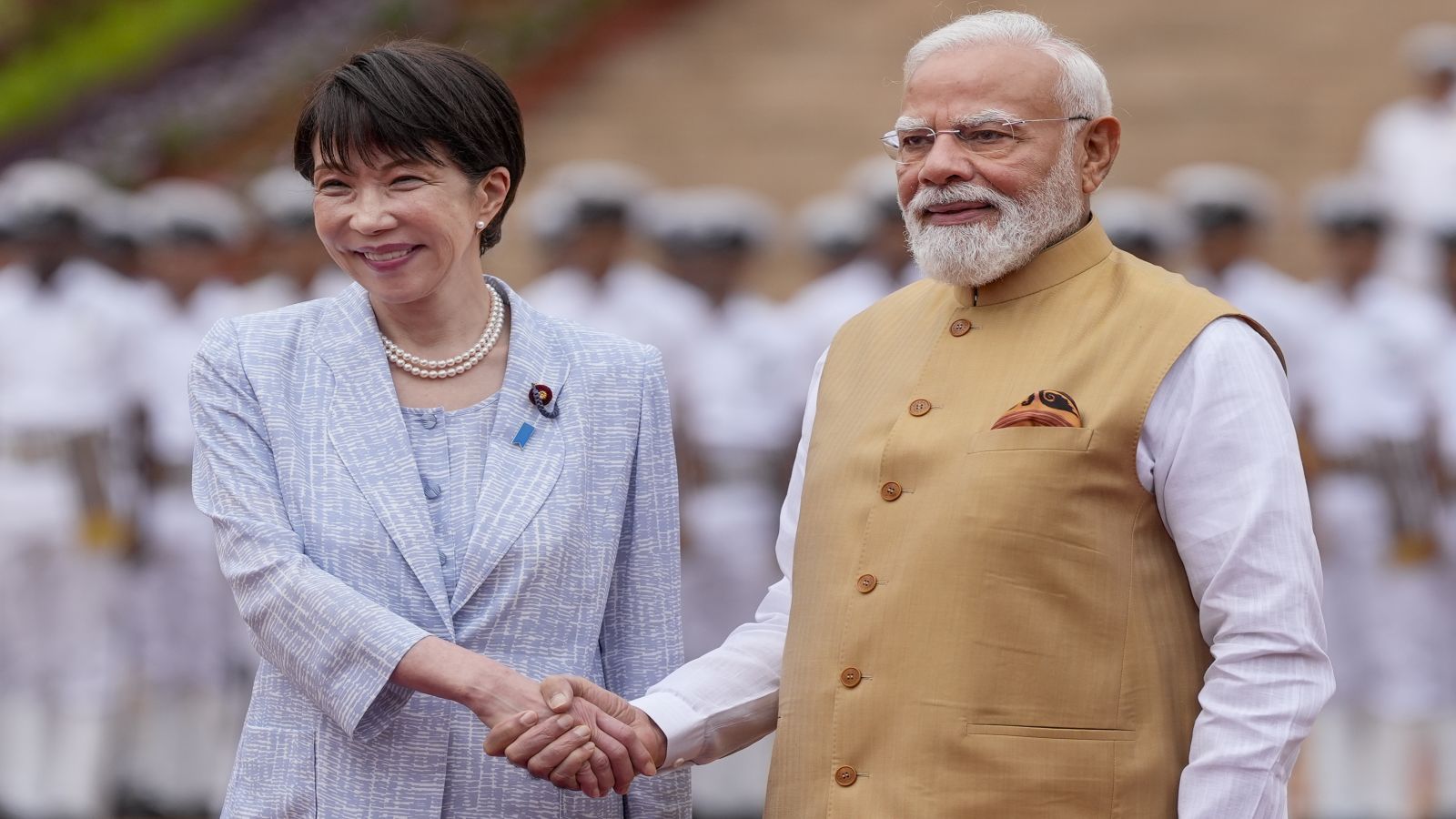
Geopolitics isn't just about handshake photos anymore. It's about who controls the code and who builds the chips.
When Prime Minister Narendra Modi welcomed Japan's Prime Minister Sanae Takaichi to New Delhi for the 16th India-Japan Annual Summit, the public focus was on the usual diplomatic pleasantries. But behind closed doors, something much more aggressive was playing out. Tokyo and New Delhi just inked a massive multi-billion-dollar roadmap that pushes both nations deep into artificial intelligence, semiconductor supply chains, and economic security.
If you think this is just another standard bilateral meeting, you're missing the bigger picture. This summit marks a sharp, deliberate pivot in how Asia intends to shield itself from both Western economic shifts and heavy-handed export controls from Beijing.
Moving Past the China and US Trade Squeeze
Let's be completely honest about why this meeting happened right now. Japan and India are both feeling the heat from a deeply unpredictable global trading system. On one side, Washington has been leaning into an "America First" stance with hefty tariffs and fluctuating commitment to Asian security. On the other side, Beijing just slammed fresh export controls on 40 Japanese entities, including major defence contractors, right before Takaichi boarded her plane to Delhi.
Tokyo is done putting all its eggs in the China basket. Right now, about 1,400 Japanese firms operate in India compared to a massive 30,000 in China. Takaichi wants to shift that balance rapidly.
The headline number coming out of this summit is a staggering 10 trillion yen (around 5.83 lakh crore rupees) push for private and public investment over the next decade. The goal isn't just to drop factories into India; it's to build a walled garden for technology that can survive global trade wars and shipping disruptions.
The Real Meat of the Deal
Forget the vague talk about "cooperation." The actual agreements signed by Modi and Takaichi focus heavily on structural independence.
Vertical AI and Large Language Models
Instead of relying entirely on Silicon Valley's tech giants, India and Japan are launching a joint Artificial Intelligence Cooperation Initiative. They're focusing on vertical AI solutions tailored for heavy manufacturing, healthcare, and automated mobility. More importantly, they're linking research universities and tech firms to co-develop domain-specific AI models that handle regional languages fluently, alongside frameworks for AI governance and cybersecurity.
Semiconductor and Mineral Corridors
We all saw how fragile microchip supply chains were during recent global conflicts. The two leaders finalized an agreement on next-generation mobility and resilient semiconductor supply chains. Japan gets a stable tech ecosystem and a massive market, while India gets the technical backing to scale up its domestic chip manufacturing goals.
The Bio-Gas Footprint
On the energy front, the nations didn't just talk about emissions; they set a concrete goal. Through the India-Japan Bio-gas Initiative, they plan to build 1,000 bio-gas and organic fertilizer plants across rural India. It's a smart play that addresses India's local agricultural needs while hitting Japan's green transition targets.
Breaking the Energy Spot Market Dependency
Both economies are highly exposed to energy price spikes. A particularly practical outcome of this summit is a new framework to build emergency LNG reserves and share market intelligence. Instead of scrambling on the spot market when a shipping lane gets blocked in West Asia, Tokyo and New Delhi will coordinate contingency responses.
Redrawing the Infrastructure Map
One of the most telling details of Takaichi's visit didn't happen in Delhi, but on paper regarding India's northeast. Japan is one of the exceptionally few foreign investors India allows into its highly sensitive northeastern border regions.
Japan is actively funding the massive Dhubri-Phulbari bridge over the Brahmaputra river and linking infrastructure to the Matarbari deep-sea port in Bangladesh. Takaichi was highly vocal about this strategy, noting that these corridors are meant to extend industrial value chains straight through Northeast India, into ASEAN nations, and down to Bhutan and Nepal. It's a literal infrastructure wall designed to offer alternative trade routes that bypass Chinese-dominated supply corridors.
What Happens Next
This isn't an overnight fix. Moving supply chains takes years, and India's bureaucratic machinery can still slow down foreign direct investment despite Modi’s promises. But the direction is clear. Japan is bringing the capital and precision tech; India is providing the massive workforce and digital scale.
If you are tracking tech investments, manufacturing supply chains, or regional policy, your next steps are practical. Monitor the rollout of the IT professional visa quotas—Japan plans to onboard 500 highly skilled Indian IT professionals by 2030 under this framework. Watch how the joint AI research grants are distributed among universities later this year, as those will signal which specific enterprise AI fields will get commercialized first.


.jpg)