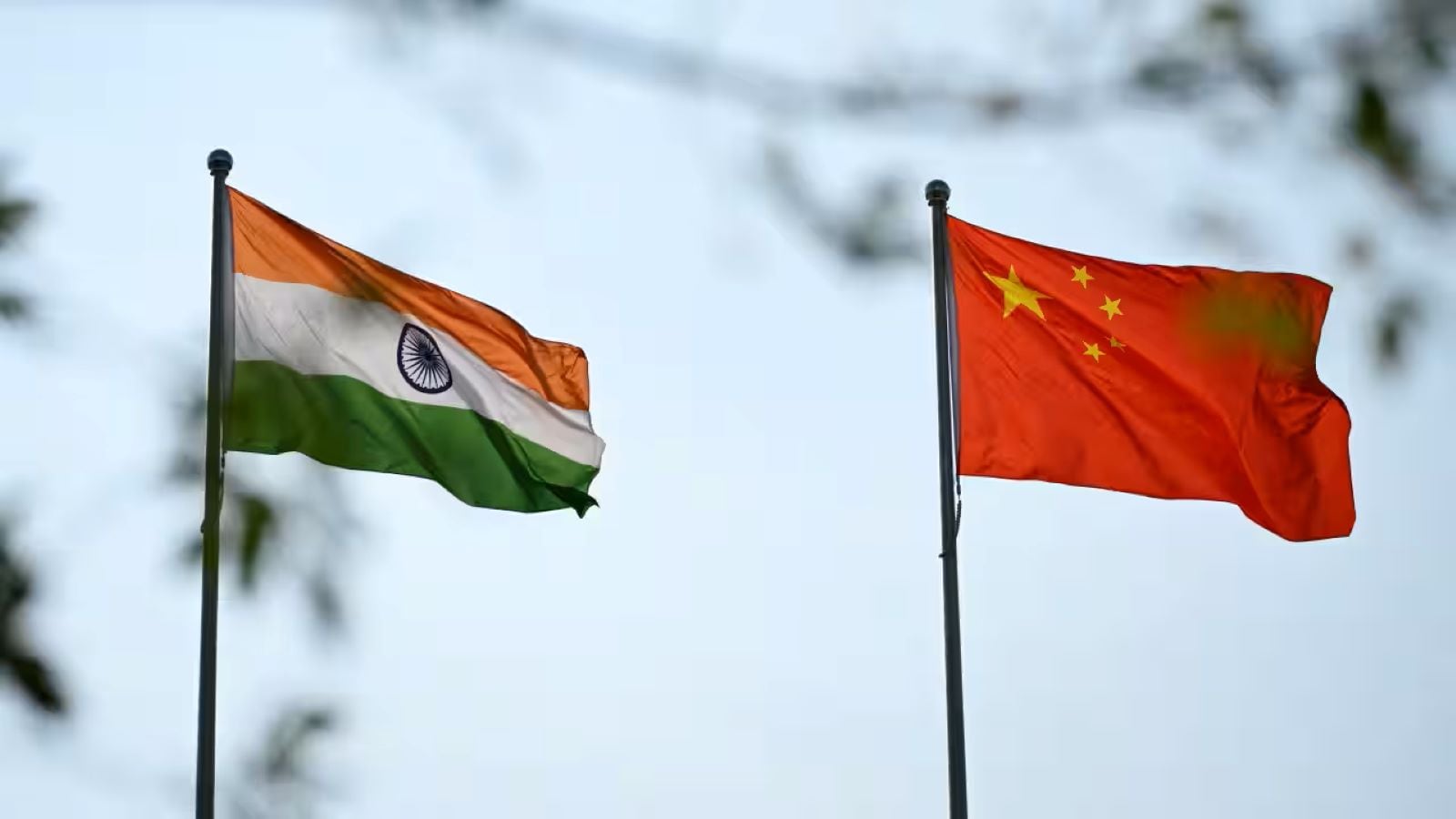
Diplomacy rarely changes on a dime during prime-time television broadcasts. The real movement happens when nobody is looking. While television anchors shout about border standoffs and economic boycotts, diplomats are quietly sipping green tea in Shanghai boardrooms, trying to figure out how two nuclear-armed neighbors with nearly three billion people can coexist without blowing up the global economy.
The recent meeting between India's Consul General in Shanghai, Pratik Mathur, and top-tier Chinese academic minds at the Shanghai Institute of International Studies shows exactly how this quiet repair job works. For years, the official narrative between New Delhi and Beijing was frozen in ice. The lethal military clash in the Galwan Valley back in 2020 changed everything, turning a complex trading relationship into an active security crisis. But you can't freeze the world's two largest populations out of each other's orbits forever. Don't miss our previous article on this related article.
We are finally seeing the groundwork for a calculated, pragmatic thaw.
Inside the Shanghai track two diplomatic channels
Track two diplomacy is a fancy term for letting smart people talk without the pressure of official government statements. When Pratik Mathur sat down with scholars like Professor Shao Yuqun, Dr. Xue Lei, and Dr. Su Liuqiang, they weren't there to sign treaties. They were there to test the waters. To read more about the background here, Associated Press offers an informative summary.
Think about the timing. This meeting didn't happen in a vacuum. It follows high-level strategic shifts, including recent security meetings between Indian National Security Adviser Ajit Doval and Chinese Foreign Minister Wang Yi in New Delhi. The heavy lifters set the boundaries. The local diplomats and think tanks figure out how to fill in the blanks.
The Shanghai Institute of International Studies isn't just an ordinary university department. It serves as a direct intellectual pipeline to the decision-makers in Beijing. When an Indian diplomat talks to these specific scholars, the messaging goes straight up the ladder to the Chinese Foreign Ministry. The same goes for Mathur’s subsequent appearance at the Diplomatic Exchange Program at East China Normal University. These aren't casual social visits. They are highly calibrated political signals.
The religious pilgrimage that acts as a geopolitical barometer
You can tell how well India and China are getting along by looking at whether people can walk around a mountain in Tibet.
The mention of resuming the Kailash Mansarovar Yatra during these Shanghai talks is a major detail that most mainstream commentators glossed over. This pilgrimage is deeply sacred to Hindus, Buddhists, and Jains. It requires Indian citizens to cross over into Chinese-controlled territory. When relations tanked after 2020, Beijing shut down access, using the pilgrimage as a political lever.
Bringing the Yatra back to the negotiating table isn't just a win for religious tourism. It's an easy, highly visible way for both nations to show their publics that things are improving without either side looking like they backed down on hard military borders. It gives the appearance of goodwill. For New Delhi, it satisfies a domestic cultural demand. For Beijing, it functions as a low-risk concession that opens the door for economic discussions.
If the buses start rolling toward Mount Kailash again soon, you'll know the military negotiations behind closed doors are succeeding.
Shifting from economic decoupling to absolute economic reality
Let's look at the numbers because numbers don't care about political speeches. After the 2020 border crisis, the Indian government banned hundreds of Chinese apps. They put intense regulatory scrutiny on Chinese smartphone brands operating within India. They told the public that economic decoupling was the goal.
It didn't work. It couldn't work.
China remains one of India's largest trading partners. India's manufacturing sector, especially electronics and pharmaceuticals, relies massively on active pharmaceutical ingredients and electronic components shipped from Chinese factories. You can't build an internal manufacturing powerhouse in Mumbai or Chennai if you cut off the supply chain from Shenzhen.
The Shanghai discussions focused heavily on trade, technology, and tourism. This tells us that both capitals have realized that absolute decoupling is an economic fantasy. Instead, they are moving toward managed interdependence. India wants Chinese capital and component manufacturing but wants it under strict regulatory oversight. China wants access to India’s massive consumer base as its own domestic economy faces headwinds. It is a marriage of sheer necessity.
How the BRICS chair alters the power dynamic
The shift in tone also ties directly into New Delhi's presidency of BRICS.
Managing this group requires a delicate touch. The bloc includes Brazil, Russia, India, China, and South Africa, alongside newer members. Beijing wants to turn BRICS into an overtly anti-Western coalition to counter Washington. New Delhi refuses to let that happen. India views BRICS as a platform for global south representation, not a tool for Chinese geopolitical dominance.
By taking the lead in these discussions, India is setting the agenda. Mathur framing the conversations around New Delhi’s vision for the bloc sends a clear message. India will engage with China, but only as a structural equal. They won't be junior partners in an absolute Chinese century.
Concrete steps to watch for next
The diplomatic dance is far from over. If you want to track whether these Shanghai academic chats actually turn into real-world policy shifts, keep your eyes on three specific operational indicators over the coming months.
- Watch the direct flight schedules. Direct commercial flights between India and China have been suspended for a long time, forcing travelers to transit through hubs like Hong Kong or Bangkok. The moment regular commercial flights resume between New Delhi and Beijing, you can bet a broader economic deal has been finalized.
- Monitor the visa approval rates for technical experts. Indian factory owners have been complaining for two years that they can't get visas for Chinese engineers to install and service machinery in India. A quiet easing of these business visa restrictions will be the first true sign of economic normalisation.
- Track the border patrolling agreements along the Line of Actual Control. Academic talk in Shanghai means nothing if troops are still skirmishing in the mountains. Look for official announcements regarding revised patrolling protocols or new buffer zones in remaining friction areas.