Private prison corporations just lost their favorite legal shield in California. For years, these multi-billion-dollar companies operated under a convenient fiction. They claimed that even though immigrant detainees clean their facilities, cook their food, and scrub their bathrooms, those detainees aren't actually employees. Because they aren't employees, the corporate logic went, state workplace safety laws don't apply to them.
That corporate safety hatch just slammed shut.
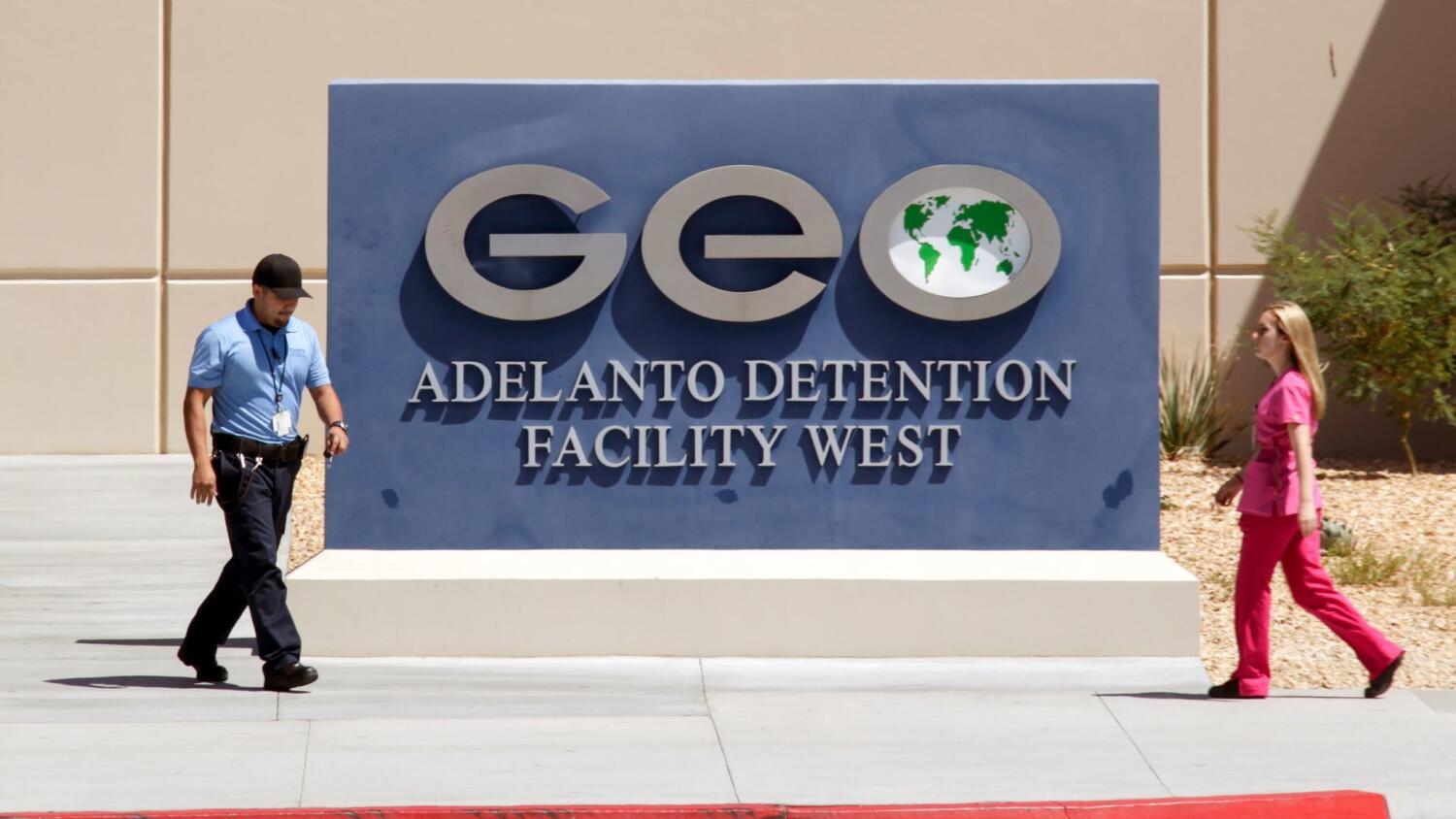
The California Division of Occupational Safety and Health, better known as Cal/OSHA, just forced the GEO Group to settle a bitter, three-year legal battle over its Golden State Annex facility in McFarland. GEO Group, one of the largest private prison operators in the country, dropped its appeals and agreed to pay more than $100,000 in workplace safety fines.
This isn't just about a relatively small cash penalty for a massive corporation. It establishes a massive legal reality. In California, if you run a private immigration detention center and you have detainees doing manual labor, you have to follow state worker safety laws. You cannot hide behind federal immigration contracts to bypass basic human dignity.
If you want to understand why this matters, look at what was actually happening inside that Central Valley facility.
The Reality of the One Dollar a Day Hustle
To understand this settlement, you have to look at how these private facilities run their daily operations. They use something called the Voluntary Work Program. It sounds noble on paper. In practice, it looks a lot like exploitation.
Detained immigrants are held on civil immigration violations, not criminal charges. Yet inside these walls, they perform the essential duties that keep the buildings running. They mop floors, mix industrial cleaning chemicals, wash laundry, cook meals, and cut hair.
Their compensation is exactly $1 a day.
Let that sink in. A dollar a day in 2026. Why would anyone volunteer for that? Because private detention commissaries charge exorbitant prices for basic necessities. If a detainee wants to buy a decent snack, a bottle of shampoo, or pay for a phone call to their family and immigration lawyer, that dollar is often their only ticket.
Private operators love this system. It saves them millions in labor costs. If they had to hire outside commercial janitorial crews at California’s minimum wage, their profit margins would crater. The entire business model relies on this cheap, captive labor pool.
But when those workers got sick, the corporations claimed no responsibility.
During the height of the pandemic, detainees at the Golden State Annex facility started pushing back. They filed complaints alleging they were forced to wipe black mold off shower walls without proper protective gear. They reported black dust spewing out of the building's air vents. They were handed strong chemical solutions with zero instructions or training on how to use them safely.
When Cal/OSHA tried to investigate, GEO Group fought back with high-priced lawyers. They argued that because immigration is a federal matter, the state of California had no business telling a federal contractor how to treat people inside those walls.
How Cal OSHA Used State Power to Force a Deal
The legal fight dragged on for years. Cal/OSHA originally issued $104,510 in fines back in 2023 after documenting six distinct violations of the state labor code. GEO Group dug in its heels, gambling that a state agency would eventually back down rather than engage in a prolonged jurisdictional war over federal immigration turf.
They lost that gamble.
The settlement proves that California has found a functional backdoor to regulate these elusive private facilities. While the state cannot dictate federal immigration policy, it absolutely can enforce health and safety building codes within its own geographic borders.
As part of the deal, GEO Group didn't just pay the money. They dropped their legal challenges and committed to improving their disease control plans for everyone inside the McFarland facility. They essentially blinked.
Denisse Gómez, a spokesperson for Cal/OSHA, made the state’s position incredibly clear after the announcement. She noted that every single worker deserves a safe and healthy environment, and they must be able to report hazards without facing corporate retaliation. The state is explicitly viewing these individuals as workers entitled to protection, completely bypassing the semantic games played by prison executives.
This matters immensely because of the political climate right now. We are currently in the middle of a massive federal immigration crackdown under the second Trump presidency. Detention numbers across California have spiked significantly over the last several months. Private facilities are filling up fast, and more bodies mean more profit, but it also means vastly more opportunities for workplace injuries and hazardous living conditions.
The Hypocrisy of the Federal Shield
The timing of this settlement reveals a chaotic game of legal whack-a-mole between state regulators and federal authorities.
Just last month, GEO Group successfully lobbied Immigration and Customs Enforcement to rewrite its official national detention standards. The updated ICE guidelines now explicitly state that detainees are not entitled to wages or benefits under any standard labor regulations. It was a blatant, desperate move to insulate private contractors from a wave of class-action lawsuits demanding minimum wage for detainee labor.
Look at the contradiction here. On the federal level, ICE tries to pass a rule saying these people aren't workers to protect corporate wallets. Meanwhile, on the ground in California, the state just proved that you can still hold these companies accountable under workplace safety umbrellas regardless of what ICE writes in its handbook.
You might not have to pay them minimum wage yet under federal rules, but you damn sure can't make them breathe black dust or handle toxic chemicals without a mask under California rules.
This creates a fascinating blueprint for other states. Activists and state labor departments in places like Washington, New York, or Illinois don't have to wait for a gridlocked Congress to reform federal immigration detention. They can deploy their own state labor and safety inspectors to march right through the front doors of these private facilities.
The Structural Breakdown of Private Detention
Honestly, the private prison industry is facing a death by a thousand cuts in progressive states, even as it expands nationally under federal mandates. California currently houses eight private immigration detention centers. The Department of Homeland Security has even tried buying up facilities directly to bypass state friction, spending $1.5 billion recently on two California centers.
Why is the federal government buying these buildings? Because operating a private, for-profit facility in California is becoming a legal nightmare. Between state laws like SB 995 designed to aggressively ramp up local health inspections and this new Cal/OSHA precedent, the cost of doing business for private entities is skyrocketing.
When you strip away the ability to cut corners on safety, the profitability of the entire enterprise begins to decay.
Let's look at what typically happens when these companies are forced to comply with real regulations. In similar legal fights, like the historic minimum wage battle over the Northwest Detention Center in Washington state, private operators chose to shut down their voluntary work programs entirely rather than pay people fairly. They would rather let the facilities get dirty or pay market rate for outside commercial cleaners than give an inch of ground on the principle that detainees have rights.
Whether GEO Group tries a similar tactic in California remains to be seen. If they stop the work program, they have to bring in outside staff, which costs them money. If they keep the program, they must buy top-tier protective gear, provide rigorous training, and open their doors to state inspectors who can fine them at the drop of a hat. Either way, the era of unchecked exploitation in California's Central Valley is over.
What Legal Advocates Need to Do Next
This settlement is a massive win, but it's only a tool if people use it. If you are an immigrant rights advocate, an employment attorney, or someone working with detained populations, here are the immediate strategic steps required to capitalize on this precedent.
First, establish direct communication channels with detainees participating in the Voluntary Work Program across all remaining private facilities in California. They need to know that they have a right to refuse unsafe work environments without facing administrative retaliation or threats of solitary confinement.
Second, document everything. If a detainee reports a lack of gloves while handling industrial bleach, or if a kitchen worker notes broken, hazardous equipment, these can no longer be ignored as internal federal matters. File immediate, detailed complaints directly with Cal/OSHA. Use this specific GEO Group settlement as the governing precedent in your filings.
The corporate defense of "the state has no jurisdiction here" is officially dead. The state has jurisdiction because the state has a duty to protect anyone performing labor inside its borders. It is time to flood the regulatory pipelines and hold these corporations to the exact same standards as any other business operating in California.