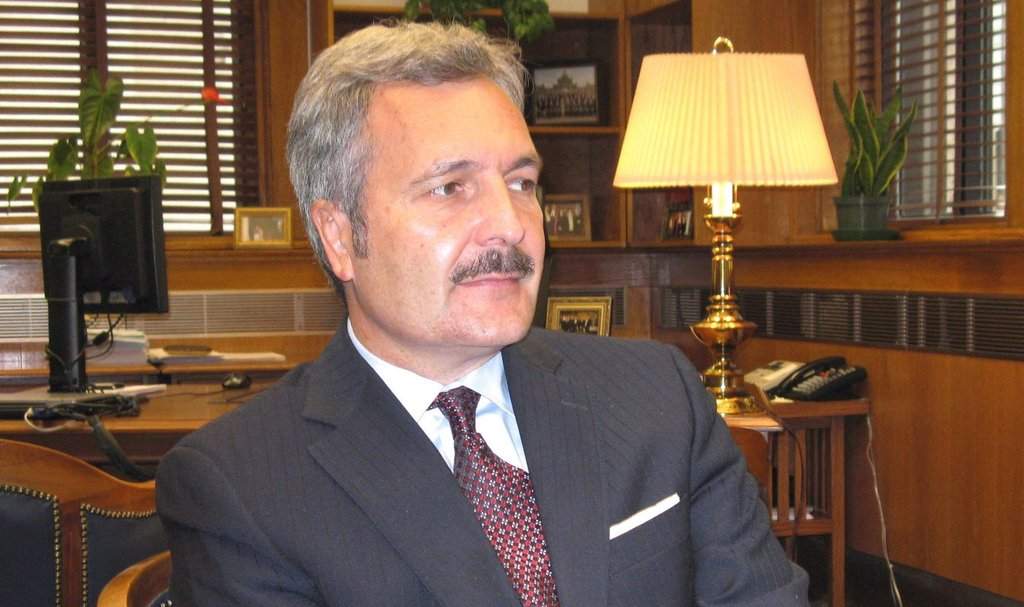
Canadian judicial appointments aren't supposed to look like American political theater. We don't usually see fierce partisan bickering or dramatic public cross-examinations of judges. Yet, the recent parliamentary hearing for Supreme Court of Canada nominee Glenn Joyal shows that the firewall between law and politics is thinning.
When Joyal sat before a special House of Commons justice committee, he wasn't facing a simple job interview. He was walking directly into a fierce debate over the eroding credibility of Canada's legal structures. In related developments, take a look at: Why The Iran Us Ceasefire Was Always Headed For A Crash.
Joyal, who has served as the chief justice of the Court of King's Bench of Manitoba since 2011, was nominated by Prime Minister Mark Carney to fill the vacancy left by retiring Justice Sheilah Martin. The two-and-a-half-hour session gave Canadians a rare glimpse into the mind of the man who will soon help decide the law of the land.
He didn't hold back. His central message was clear. The justice system is struggling with public trust, and judges need to start listening instead of just lecturing. Associated Press has analyzed this important issue in extensive detail.
Ground Zero for Indigenous Trust
You can't talk about the justice system in Manitoba without talking about Indigenous communities. Winnipeg has frequently been described as a structural flashpoint for the rocky relationship between the Canadian state and Indigenous peoples. Joyal addressed this reality immediately. He called his 28 years on the Manitoba bench "extremely humbling" and described his home province as "ground zero" for structural legal reform.
Joyal admitted that the current level of mutual trust between the judiciary and Indigenous communities is simply not where it needs to be. That is an incredibly blunt admission for a prospective Supreme Court justice.
His strategy to fix this isn't about traditional public relations. He argued that rebuilding trust requires far more than judges going out on community outreach tours to explain what they do. It requires actual, deep listening. Over his career, Joyal actively engaged with Indigenous leaders to reshape how provincial courts interact with community members, a project he admits still has years of work left.
The Bail and Sentencing Battleground
While Joyal focused heavily on institutional trust, opposition MPs wanted to talk about crime. Conservative justice critic Larry Brock pushed the nominee on why so many Canadians feel the system is failing, specifically pointing to loose bail conditions and offenders who repeatedly commit violent acts while out on release.
This is where the standard rules of judicial hearings tied Joyal's hands. Nominees are strictly banned from commenting on current laws, past rulings, or hypothetical scenarios. If you were hoping for a dramatic soundbite about a specific criminal code amendment, you weren't going to get it.
Instead, Joyal gave a masterclass in judicial restraint. He stated plainly that his job is to base decisions strictly on existing jurisprudence and legal principles, not on political trends.
He threw the ball right back into the politicians' court. If Canadians want different results than what the courts are delivering, that's not a failure of the judges. It's a signal that Parliament needs to rewrite the laws. Judges apply the rules; politicians write them. If you don't like the outcome, change the law.
Defending Stupid Systems
One of the most refreshing moments of the entire hearing came when Joyal spoke about institutional criticism. In an era where political polarization means people regularly attack the courts whenever a ruling goes against their preferred political team, Joyal drew a sharp line between fair criticism and toxic misinformation.
He noted that the Supreme Court isn't immune to critique. In fact, healthy debate keeps the system sharp. But he made his own stance incredibly clear with a punchy declaration. "I don't believe in defending stupid systems."
If a legal process is broken, inefficient, or overly complex, Joyal believes it should be improved. He pointed to the rise of artificial intelligence in everyday life as a prime example. While acknowledging that AI is "not entirely all bad, but it's not entirely all good," he noted that all Canadian courts must explore new technologies if they want to make legal services cheaper and easier to access for regular people.
Why This Appointment Matters Right Now
Every Supreme Court appointment shapes the country for a generation. Joyal brings a distinct Western Canadian perspective to a bench that is often criticized for being too focused on the legal culture of Ontario and Quebec.
Maureen McTeer, who chairs the independent advisory board that reviewed the nominations, praised Joyal's forward-looking perspective on the role of the top court. Justice Minister Sean Fraser similarly defended the rigorous selection process, emphasizing that Joyal possesses the exact blend of integrity and real-world experience needed to navigate an increasingly cynical public environment.
The real test for Joyal won't be how he handled a room full of politicians. It will be how he handles the complex constitutional challenges heading straight for Ottawa. From environmental regulations to provincial autonomy battles, the Carney government's judicial picks will face intense scrutiny. Joyal's performance shows he understands the weight of the office, but the real work begins when he puts on the robes.
If you want to track how Joyal's philosophy impacts real-world laws, your immediate next step should be monitoring the Supreme Court's upcoming fall docket for major constitutional or criminal law challenges. Watch how his written dissents or majority opinions address the balance between statutory text and public interest.