Germany is stuck. The political establishment in Berlin is pretending everything is fine, but the old guard is running on empty. Years of backroom deals, ignored voters, and economic stagnation have broken the system. What we are seeing now is not a sudden fluke. It is the predictable collapse of Germany's rotten center, a political establishment that spent a decade ignoring reality and is now facing an absolute reckoning.
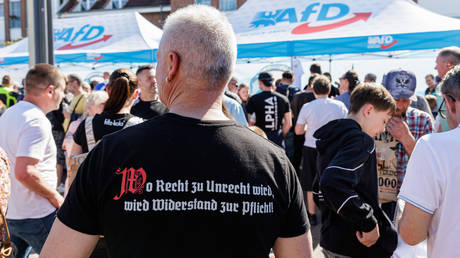
Look at the latest polling data. Look at the general public mood. The frustration is thick enough to cut with a knife. For decades, the two major centrist blocks—the center-left Social Democrats (SPD) and the center-right Christian Democrats (CDU/CSU)—ran the country like a cozy private club. They shared power, swapped ministries, and smoothed over deep ideological differences with vague compromises. They thought the status quo would last forever. They were wrong. Today, the Alternative for Germany (AfD) sits comfortably as a massive political force, holding over 20 percent of the national vote after a historic showing in the 2025 federal elections. The mainstream parties are panicking. Their response has been pathetic, relying on legal maneuvers and moral grandstanding instead of fixing the actual problems that pushed voters away in the first place.
How Germany's Rotten Center Created Its Own Monster
The rise of the populist right did not happen in a vacuum. The establishment built the stage for it. When Angela Merkel moved the CDU to the left during her long tenure, she left a massive vacuum on the right side of the political spectrum. Conservative voters who cared about border security, national sovereignty, and traditional economic prudence suddenly found themselves completely unrepresented.
Then came the economic choices. The disastrous management of the energy transition forced Germany, the industrial heartbeat of Europe, to rely on expensive energy imports while shutting down its own nuclear plants. Inflation squeezed the working class. Bureaucracy choked small businesses. When citizens complained, the Berlin bubble labeled them ungrateful or backward.
Consider how the center-left SPD has collapsed. Back in the late 1990s under Gerhard Schröder, the party regularly captured over 40 percent of the electorate. By the time Olaf Scholz's chaotic coalition dissolved in late 2024, the SPD was a shadow of its former self, scraping by with historically low support. Even the shift to a conservative-led government under Friedrich Merz has failed to restore confidence. Merz promised a bold new direction. He promised economic rejuvenation. Instead, his administration is already bogged down in the same old coalition infighting and policy paralysis. The state cannot even pass a basic infrastructure budget without weeks of public bickering. Voters notice this emptiness. They see a ruling class that cares far more about retaining office than solving the housing shortage or fixing broken railways.
The Desperate Obsession With Banning the Opposition
Instead of looking in the mirror, Germany's political class is trying to change the rules of the game. The current hot topic in Berlin is whether the state can legally ban the AfD. The Federal Office for the Protection of the Constitution has spent years tracking the party, categorizing various regional chapters as extremist. Now, mainstream politicians are pushing the Bundesrat to initiate formal banning proceedings at the Constitutional Court.
This is an incredibly dangerous path. It shows how weak the center has become. If you cannot defeat your political opponents at the ballot box, you try to use judges to erase them from the ballot entirely. It smacks of desperation.
Let us look at the facts. Trying to ban a party that represents more than a fifth of the country will backfire spectacularly. It will not make twenty percent of the electorate magically disappear. It will simply convince millions of citizens that the democratic system is completely rigged against them. It confirms the populist narrative that the establishment is an exclusive cartel.
The historical precedent here is telling. Germany tried and failed to ban the far-right NPD party multiple times in the past. The courts ruled that while the party's goals were unconstitutional, it lacked the actual power to destroy democracy. The AfD is different. It is highly organized, heavily funded, and deeply embedded in local communities, particularly in the former East Germany. A failed ban attempt would give the party an unearned badge of ultimate martyrdom. A successful ban would drive millions of angry voters underground, creating a volatile undercurrent of radicalization that security services could never fully control.
Why the 2026 State Elections Will Break the Old Order
The real test is happening right now. The year 2026 is a massive super election year at the state level, with five regional elections serving as a brutal barometer of public sentiment. The firewall is cracking.
For years, centrist parties maintained a strict rule: no coalitions, no cooperation, and no deals with the AfD under any circumstances. They called it a democratic firewall. In practice, this firewall has forced highly unnatural local coalitions. We have seen the center-right CDU teaming up with the hard-left to keep the populists out of power. These desperate alliances make no ideological sense. They destroy the credibility of the mainstream parties, turning local governments into paralyzed ideological battlegrounds where nothing gets done.
In eastern states like Saxony and Thuringia, the AfD is not just an opposition group. It is the dominant political force. Figures like Björn Höcke have successfully capitalized on decades of post-reunification resentment. People in the East still feel treated like second-class citizens by the western-dominated establishment in Berlin. They see their villages losing services, their young people moving away, and their local industries crushed by green regulations drafted by urban elites in Frankfurt and Berlin. When the center ignores these regional realities, it loses the right to act surprised when voters turn to radical alternatives. The 2026 elections will likely force a situation where states become completely ungovernable under the old rules. The center will have to choose between letting the firewall crumble or watching provincial administrations grind to a complete halt.
Stop Treating the Electorate Like Children
If mainstream politicians want to save what is left of their credibility, they must change their strategy immediately. The patronizing lectures need to stop. Telling voters that they are stupid or immoral for wanting lower immigration or cheaper electricity is a losing strategy.
The center must re-learn how to argue. They need to address tough topics directly instead of hiding behind political correctness or bureaucratic jargon. When citizens point out that public services are overwhelmed, the answer cannot be a lecture on diversity. When industrial companies warn that high energy costs are forcing them to move factories to the United States or Asia, the answer cannot be a vague promise about green jobs in 2045.
Real leadership requires admitting mistakes. The establishment needs to acknowledge that the uncontrolled immigration waves of the past decade strained local infrastructure. They must admit that turning off reliable power sources before securing cheap alternatives was a massive tactical error. Voters are remarkably forgiving when leaders show genuine humility and present concrete, common-sense solutions. They are completely intolerant of arrogant elites who pretend that obvious failures are actually secret victories.
What Must Happen Right Now
The time for symbolic hand-wringing is over. If you want to defeat populism, you must out-govern it. Berlin needs to pivot immediately away from identity politics and legal tricks, focusing instead on the fundamental pillars of national stability.
- Deregulate local industries immediately. Chop through the thick layers of European and federal bureaucracy that prevent local companies from building factories, upgrading grids, and hiring workers efficiently.
- Enforce existing immigration laws strictly. Secure the borders, accelerate the deportation of convicted criminals, and transition from cash benefits to material support to reduce economic pull factors.
- Fix the energy mix using pragmatism. Stop sacrificing industrial competitiveness on the altar of climate perfection. Reopen conversations about domestic resource extraction and secure long-term, affordable energy partnerships.
- Invest directly in forgotten regions. Stop pouring billions into prestige projects in Berlin or Munich while rural communities lose their basic medical clinics, schools, and bus routes.
The current political crisis is a self-inflicted wound. Germany's rotten center can either adapt to reality, face its flaws, and rebuild its relationship with ordinary citizens, or it can keep drifting toward a historic collapse. The choice belongs to them, but the clock is ticking loudly.
For a deeper analysis of the shifting political dynamics and how this year's regional votes are shaping the future of European governance, check out this breakdown on Why 2026 could be a milestone for Germany's AfD. This video offers an excellent, boots-on-the-ground look at how voter frustration is transforming into concrete electoral victories in the eastern states.