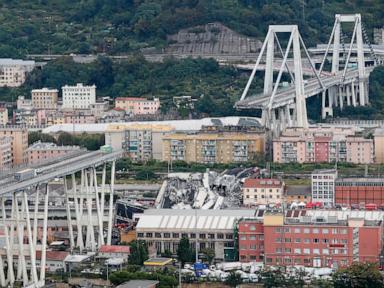
Eight years is a lifetime. But for the families of the 43 people who plunged to their deaths when Genoa's Morandi Bridge snapped in half, time basically stood still until today.
On a rainy morning on August 14, 2018, a massive 200-meter section of the concrete highway bridge gave way. It was the eve of Ferragosto, Italy's biggest summer holiday. Dozens of cars and trucks plummeted into the dry riverbed and railway tracks 45 meters below. The images of that severed, jagged concrete structure hanging over the city shocked the world.
Today, a court in Genoa is delivering its first-instance verdict in a massive criminal trial involving 57 defendants. We're talking about former corporate executives, state engineers, and government officials facing charges ranging from multiple manslaughter to negligent disaster.
This isn't just an Italian local news story. It is a terrifying masterclass in what happens when corporate greed, bad governance, and crumbling infrastructure collide. If you think the roads and bridges you drive on every day are safe, this trial is a wake-up call you cannot afford to ignore.
What Really Happened on the Eve of Ferragosto
To understand why this trial is so explosive, you have to look at the bridge itself.
Inaugurated in 1967, the Morandi Bridge was celebrated as an engineering marvel. Designed by Riccardo Morandi, it utilized a highly unusual design: A-shaped concrete pylons with stay cables encased in prestressed concrete. The idea was to protect the steel cables from rust.
It did the exact opposite.
   [ A-Shaped Pylon ]
       /   |   \
      /    |    \  <-- Concrete-encased stay cables
  ===========#===========  <-- Highway Deck (Pillar 9 collapsed here)
The concrete casing actually hid the steel cables from view, making it nearly impossible to spot corrosion without advanced, invasive testing. Moisture from the nearby Ligurian Sea and heavy pollution from Genoa's industrial zone slowly ate away at the steel inside.
The disaster didn't happen because of a freak storm. It happened because of a slow, decades-long rot that everyone in charge apparently chose to ignore.
The Ticking Time Bomb
The prosecution’s case is devastatingly simple. They argue that those in charge of the bridge knew it was structurally unsafe but kept postponing critical maintenance to keep corporate profits flowing and dividends high.
Genoa prosecutor Walter Cotugno famously called the Morandi Bridge "a ticking time bomb". He wasn't exaggerating.
During the trial, prosecutors presented evidence showing that warning signs about the specific pylon that collapsed—pillar number 9—had been known for decades. In fact, back in 1993, operators carried out extensive reinforcement work on the other two pylons, numbers 10 and 11. For reasons that defy logic, they never extended those repairs to pillar 9.
Imagine owning a car, realizing two of your tires are bald and replacing them, but deciding to drive on the highway with the other two completely worn down. That's essentially what happened here, but on a catastrophic scale.
Profits Over Human Lives
At the time of the collapse, the highway operator Autostrade per l'Italia (ASPI) was controlled by Atlantia, a massive holding company dominated by Italy's wealthy Benetton family.
The state had privatized the motorway network, handing ASPI a incredibly lucrative concession. Prosecutors allege that the private operators cut maintenance budgets to the bone to maximize shareholder payouts.
The defense, of course, disputes this. Lawyers for the defendants, including former Atlantia CEO Giovanni Castellucci, argue that the collapse was due to an unpredictable "construction defect" dating back to the 1960s. They claim no amount of routine maintenance could have saved it.
But let’s be real. If you run a high-risk infrastructure network and you know a bridge has a highly experimental design that is showing structural deterioration elsewhere, you don't cross your fingers and hope for the best. You shut it down. You fix it. They did neither.
How Corporate Giants Avoided the Dock
If you're expecting to see the corporate entities themselves get hit with massive criminal punishments, prepare to be disappointed.
In 2022, both Autostrade per l’Italia and its engineering and maintenance subsidiary SPEA reached an out-of-court settlement with Genoa prosecutors. They paid a combined 29 million euros (about $34 million) to the Italian state.
The Get-Out-of-Trial Card: This settlement spared the corporations from standing trial as defendants. It allowed them to avoid potentially devastating consequences, like being barred from bidding on lucrative public contracts.
📖 Related: lyrics dancing in the street
Instead, the trial focuses strictly on the 57 individual defendants. The current CEO of Autostrade, Arrigo Giana, even took the step of publishing a full-page public apology in major Italian newspapers, calling the apology "a moral imperative that goes beyond establishing legal responsibility".
It’s a nice gesture, but it feels incredibly hollow to the families who lost their loved ones because of a corporate culture that treated safety as an adjustable line item on a spreadsheet.
The Agonizingly Slow Wheels of Italian Justice
One of the most frustrating aspects of this entire saga is how long it has taken to get a basic answer.
It has been nearly eight years since the collapse. The trial itself started in July 2022 and has dragged on through more than 280 hearings. Because of these immense delays, the statute of limitations has already kicked in for several of the lesser charges, such as document forgery.
Yes, you read that correctly. Because the Italian judicial system is notoriously slow, some defendants will escape punishment for allegedly faking safety documents simply because too much time has passed.
And this verdict is only the first step. In Italy's three-tiered legal system, today's ruling is a "first-instance" verdict. It will almost certainly be appealed by whichever side loses. Legal experts estimate it will take at least another 18 months for an appeal trial, and another year after that before the Supreme Court issues a final, unappealable judgment.
For people like Egle Possetti, who lost her sister, brother-in-law, and two young niblings in the collapse, this agonizing wait is a secondary trauma.
Below is a video detailing the opening of the trial back in 2022, capturing the long-standing anger and demands for accountability:
https://www.youtube.com/watch?v=ogzEuI2M8j0
The Global Infrastructure Wake-up Call
We like to think of bridge collapses as tragedies that only happen in developing countries with weak regulations. Genoa proved that is a lie. This happened in the heart of Europe, on a major artery connecting Italy and France.
The lesson here is simple: privatization of public infrastructure without aggressive, independent government oversight is a recipe for disaster. When you mix the profit motive with concrete and steel, safety standards will always be under pressure.
Governments worldwide are currently sitting on thousands of bridges, tunnels, and highways built during the mid-century infrastructure boom. They are reaching the end of their design lives. If we do not demand absolute transparency and independent audits of these structures, Genoa will not be the last tragedy of its kind.
What We Must Demand Right Now
We can't bring back the 43 people who died in Genoa. But we can change how we manage the structures we rely on every single day. Here are the immediate steps governments and civil societies need to take:
- Mandate independent, third-party inspections: Highway operators should never be allowed to inspect their own infrastructure. The conflict of interest is too great.
- Create public transparency databases: Inspection reports, structural safety ratings, and maintenance budgets for all major public bridges and tunnels must be accessible to the public online.
- Eliminate corporate liability shields: Settlements should never allow corporations to escape trial when systemic safety failures lead to mass casualties.
- Ban state-level concession renewals for negligent operators: If a private entity fails to meet maintenance benchmarks, their operating license must be revoked immediately without compensation.
A sleek new replacement bridge designed by famed architect Renzo Piano opened in Genoa in 2020, featuring 43 silent lamps to honor the dead. But a beautiful new bridge is not enough. True honor for the victims lies in establishing absolute accountability and making sure profit never again comes before public safety.