Iran doesn't do political accidents. When General Ahmad Vahidi, a towering figure in the Islamic Revolutionary Guard Corps (IRGC), suddenly resurfaced in Tehran after months in total isolation, it wasn't just to pay respects. It was a calculated message to the world.
Tehran is currently locking down its capital to prepare for a massive, multi-day funeral for its late Supreme Leader, Ayatollah Ali Khamenei. The 86-year-old cleric was killed alongside several family members in a devastating Israeli airstrike on February 28, a strike that launched a high-stakes conflict reshaping the Middle East. Vahidi hadn't been seen in public since February 8, weeks before those bombs dropped.
His sudden reappearance tells us exactly who is holding the steering wheel as the regime navigates its most dangerous transition in decades.
The Man Next to the Coffin
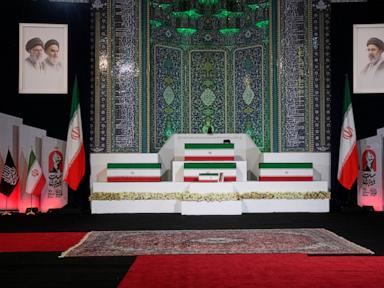
State media images showed Vahidi sitting directly beside Khamenei's casket during an intimate Thursday night service. The setting was highly symbolic, held near the former leader's downtown compound ahead of Saturday's massive public processions at the Grand Mosalla of Tehran.
Mourners dressed in black threw scarves and personal items toward the casket to be blessed by attendants, a standard Shiite mourning practice. Red tulips lined the stage, and paper butterflies hung from the ceiling. The casket itself was draped in a red flag brought from the Imam Hussein shrine in Karbala, Iraq, signaling a deliberate appeal to religious martyrdom and regional alliance.
Vahidi didn't just show up to mourn. He attended high-level logistics meetings managing the capital's impending lockdown. When a regime faces an existential crisis, the public presence of an IRGC heavy-hitter signals continuity. It tells the public, and foreign intelligence agencies, that the command structure remains intact.
Shaping Iran's New Red Lines
Vahidi's return is directly tied to the geopolitics of what comes next. Regional security experts point out that he has quietly become the chief architect of Iran’s unyielding position in negotiations to end the war with the United States and Israel.
The regime is operating under extreme duress. Israel spent months systematically targeting top military and political officials. By stepping into the light, Vahidi is signaling that the IRGC's core leadership can't be fully erased. He represents the old guard, a stabilizing pillar for a government currently missing its ultimate authority figure.
The Hidden Successor
The elephant in the room is Iran's new Supreme Leader, Ayatollah Mojtaba Khamenei. The younger Khamenei has reportedly been in hiding since the February 28 strikes, where he was wounded in the same attack that killed his father.
Mojtaba faces an incredibly perilous landscape. Israel has made it clear that his life is also on the line, forcing him to govern from the shadows. Vahidi is widely believed to belong to an incredibly tight, exclusive inner circle maintaining direct, secure contact with Mojtaba.
Because the new Supreme Leader can't make public appearances without risking another missile strike, Vahidi serves as his public proxy. He is the physical enforcement of Mojtaba's authority on the ground in Tehran.
What Follows the Funeral
Starting Saturday, daily life in Tehran will come to a grinding halt. Major roads are closing, security is at maximum alert, and the regime is preparing to transport Khamenei's body through several cities in both Iran and neighboring Iraq.
This funeral is designed to be a massive show of public strength, but the real actions are happening behind closed doors. Watch how Vahidi and his fellow IRGC commanders handle the crowds and the negotiations over the next week. If you want to know how the war ends, or how the new Supreme Leader plans to rule, stop looking at the empty podiums. Look at the generals standing right next to them.