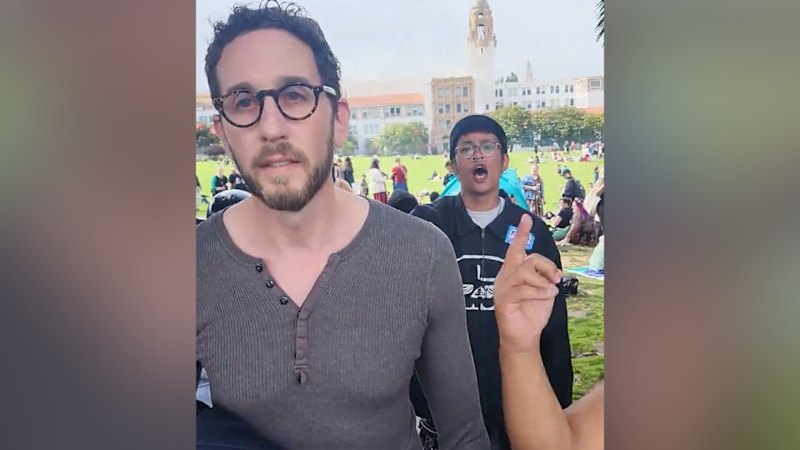
You can't make this stuff up. On Friday, California State Senator Scott Wiener walked into San Francisco's Dolores Park to celebrate the annual Trans March, an event he hasn't missed since it started back in 2004. Instead of a celebration, he was swarmed, aggressively hounded, and physically forced to flee by a group of angry activists protesting the war in Gaza.
It was ugly. Activists cornered him, screamed about his "Israeli handlers," and made it entirely unsafe for him to stay.
But if those protesters thought they were winning a political point, they severely miscalculated. Within 48 hours of being chased out of the park, Wiener’s congressional campaign saw an absolute flood of financial support, breaking fundraising records on both Saturday and Sunday. By trying to ostracize one of California's most prominent Jewish and LGBTQ+ lawmakers, the activists handed him his biggest fundraising weekend of the entire election cycle.
Political theater often blows up in the faces of the people staging it. This is exactly what happened in San Francisco.
The Collision of Identity and Left Wing Litmus Tests
The confrontation at Dolores Park didn't happen in a vacuum. Wiener is currently the frontrunner to fill the massive shoes of retiring former House Speaker Nancy Pelosi in California's 11th Congressional District. He already won the June 2 primary handily, landing 41 percent of the vote to secure a spot in November against progressive San Francisco Supervisor Connie Chan.
Wiener has spent a decade in Sacramento building a national reputation for championing aggressive pro-housing laws and pioneering transgender rights protections. He’s openly gay. He’s also Jewish.
In today's hyper-polarized political climate, those identities are crashing headfirst into a rigid progressive litmus test regarding the Middle East.
The crowd that surrounded Wiener yelled things like, "You've been terrible on Gaza, we hate you, you do not belong here anymore." But the rhetoric crossed a clear line from political dissent into flat-out bigotry when protesters started screaming about his supposed "Israeli handlers." That kind of language relies on old, nasty antisemitic tropes about dual loyalty.
What makes the attack so bizarre is that Wiener’s actual voting record and public stances don't even align with the caricature the protesters painted. Earlier this year, Wiener publicly stated that he believed Israel's military actions in Gaza amounted to genocide. His campaign website explicitly notes that he doesn't support U.S. military funding for Israel or the Iron Dome defensive system.
But for these activists, nuance doesn't matter. You're either entirely with them, or you're a target.
The Backlash to the Bullying
San Francisco politics can be cutthroat, but local leaders quickly realized that letting an angry mob bully a lawmaker out of a Pride event was a terrible look. The progressive coalition fractured almost immediately.
The California Senate Democratic Caucus and the California Legislative LGBTQ Caucus issued furious joint statements denouncing the verbal and physical harassment. San Francisco Mayor Daniel Lurie weighed in too, calling the language directed at Wiener "targeted, hateful, and anti-Semitic."
Even the California Legislative Jewish Caucus pointed out that this wasn't an isolated incident. Just two days earlier, an activist cornered and filmed himself hounding Wiener at a restaurant in the Mission District. It has become a coordinated effort to completely isolate and push Wiener out of public life in his own city.
When you push everyday voters too far with aggressive tactics, they respond with their wallets. Wiener’s campaign reported that Saturday saw the single highest number of individual contributors since he launched his congressional bid, only to be totally eclipsed by an even larger wave of donations on Sunday.
Aggressive Activism Frequently Snaps Back
This isn't just a San Francisco story. It’s a case study in how modern political activism often achieves the exact opposite of its intended goal.
When activists rely on intimidation, physical isolation, and bigoted tropes, they alienate the moderate and pragmatic wings of their own party. Voters who might feel deeply conflicted about the war in Gaza look at a mob chasing a gay, Jewish lawmaker out of a Trans March and think, "I don't want to be associated with that."
Wiener already held a massive 8-to-1 fundraising advantage over his general election opponent, Connie Chan, entering the summer with millions in cash on hand. The activists wanted to weaken him. Instead, they gave his campaign a massive jolt of momentum and a mountain of fresh cash to plaster his message across the district heading into November.
The lesson here is simple. Intimidation isn't a political strategy. It’s a fundraising tool for the person you're trying to scare.
If you want to track how this local fallout alters the race to replace Nancy Pelosi, keep a close eye on the upcoming campaign finance disclosures to see just how deep this donor surge really goes.