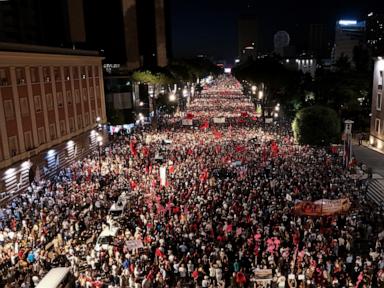
Tens of thousands of people don't march through the streets for over a month just because they dislike a construction plan. What started as localized anger over a luxury real estate deal on the Adriatic coast has transformed into a massive, country-wide political uprising. On Saturday night, the residents of Tirana filled the main boulevard, marking the 35th consecutive night of protests.
If you look at mainstream news coverage, the story seems simple. A wealthy foreign investor wants to build a resort, environmentalists get upset, and people protest. That narrative misses the entire point. The reality is that the proposed mega-resort backed by Jared Kushner and Ivanka Trump acted as the ultimate breaking point for a population pushed to the brink by years of institutional corruption, economic stagnation, and political arrogance.
The nightly demonstrations, now widely known as the Flamingo Revolution, have expanded into a direct challenge to the survival of Prime Minister Edi Rama’s government. Protesters are no longer just demanding a halt to bulldozers in protected wetlands. They want the immediate resignation of the prime minister, the establishment of a transitional technical government, deep constitutional reforms, and a systemic cleanup of state corruption.
The spark that ignited the streets of Tirana
To understand how a coastal development project triggered the largest civil unrest Albania has seen in decades, you have to look at what is being sacrificed. The plans involve building multi-billion-dollar luxury complexes on Sazan Island and the Narta Lagoon. Sazan is an uninhabited former military island holding a sacred place in the collective memory of the country. Narta Lagoon is one of the most critical, delicate wetlands in the Balkans, serving as a vital sanctuary for migratory birds, sea turtles, and large colonies of pink flamingos.
When the government quietly paved the way for foreign oligarchs to develop these protected zones, it felt like a betrayal to ordinary citizens. The deal exposed a deep divide between a ruling elite eager to court elite Western investors and a population that feels completely ignored. For locals, Sazan Island and Narta are not real estate assets to be carved up for wealthy tourists. They are part of the national heritage.
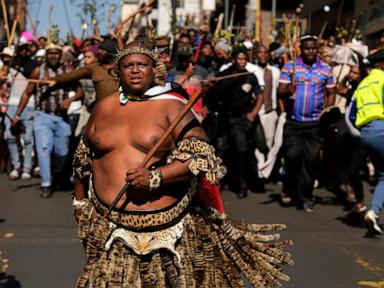
The anger turned into a daily routine. Every single evening for five weeks, crowds have gathered to voice their rage. The movement grew organically, drawing in students, cartographers, pensioners, and members of the diaspora who flew back specifically to join the ranks. By the time the 35th night arrived, the energy on the streets had not waned. It had hardened into an organized, furious political force.
Not just a fight over pink flamingos
It is easy for international observers to focus on the environmental angle. Protesters carrying pink flamingo balloons make for great television imagery. The truth is that the birds are a symbol for a much larger grievance. The real fight is about sovereignty, fairness, and who actually owns the future of Albania.
For years, citizens have watched young people leave the country in droves due to a lack of economic opportunity. Meanwhile, the political class has concentrated wealth within a small circle of preferred businessmen and international tycoons. When news broke that pristine public land was being handed over for private luxury villas, it crystallized everything wrong with the current system.
People are asking a basic question. Why should a foreign billionaire get access to a pristine national park while ordinary Albanians struggle to find decent jobs or afford housing in their own capital? The Flamingo Revolution is the physical manifestation of that frustration. The movement has effectively connected the dots between environmental destruction and political corruption, showing that both stem from the exact same abuse of power.
The shadow of 1991 hangs over Skanderbeg Square
The historical echoes during Saturday's protest were impossible to ignore. As tens of thousands of marchers flooded the main boulevard toward Skanderbeg Square, they carried a tall bust of Prime Minister Edi Rama. In a highly choreographed display of defiance, the crowd used thick ropes to pull the bust to the ground.
The action was a deliberate reference to February 1991. Back then, furious citizens toppled the giant bronze statue of the longtime communist dictator Enver Hoxha, signaling the collapse of one of the most repressive regimes in Europe. By recreating that exact scene with Rama’s likeness, the protesters sent a clear message. They view the current administration not as a functioning democracy, but as an authoritarian regime that needs to be dismantled.
Shouts of "New Albania" and "Edi Rama, resign" echoed off the surrounding buildings. This was not a standard political rally organized by an opposition party looking to score quick points. This was a populist rejection of the status quo. The symbolism showed that the psychological barrier of fear has completely broken down. When a population starts toppling statues of a living leader, the political dynamic changes permanently.
A birthday party Edi Rama will never forget
The timing of the 35th night of protests added another layer of irony to the unrest. Saturday happened to be Prime Minister Rama’s 62nd birthday. Rather than ignoring the occasion, the crowd integrated it into their demonstrations with dark, sarcastic humor.
Protesters carried mock birthday cakes constructed entirely out of solid cement. The heavy gray blocks served as a direct indictment of the massive, unregulated concrete building projects that have altered the face of Tirana and the Albanian coastline under Rama’s tenure. The crowd even sang an ironic, mocking rendition of "happy birthday" that quickly transitioned back into angry chants demanding his imprisonment.
The atmosphere shifted from theatrical mockery to direct confrontation later in the evening. After marching for two hours, a massive contingent broke off and headed straight for a major police station. They were demanding the immediate release of dozens of fellow demonstrators who had been arrested during violent clashes outside the parliament building two nights prior.
The tension boiled over quickly. Protesters began hurling rocks, smashing the windows of the police station. Security forces responded with heavy water cannons to push the crowds back and clear the area. The clash followed a violent pattern established on Thursday, where police used tear gas, pepper spray, and water cannons against demonstrators who threw eggs, stones, and plastic bottles, resulting in injuries to a dozen police officers and numerous detentions. The escalating violence indicates that the peaceful phase of the nightly gatherings is giving way to a more volatile conflict.
The stakes for the future of the nation
The government finds itself in a precarious position. For years, Rama has cultivated an image as a modern, artistic reformer who is successfully guiding his country toward membership in the European Union. He has actively defended the luxury resort projects, arguing that high-end tourism will boost the economy and put the nation on the global map.
That defense is falling completely flat at home. The sheer persistence of the protests proves that the population no longer buys the official rhetoric. The country is watching a direct clash between two entirely different visions. On one side is a government that measures progress by the number of luxury hotels and foreign investment deals. On the other side is a populace that wants functional institutions, clean governance, and a country where they can actually afford to live.
The timing could not be worse for the political elite. The country is currently engaged in delicate accession talks with the European Union. A prolonged internal crisis marked by nightly riots, mass arrests, tear gas in the streets, and demands for constitutional overhauls will inevitably complicate those negotiations. European leaders are watching Tirana closely, and the image of a government relying on water cannons to maintain order contradicts the democratic standards required for EU entry.
How to track the crisis moving forward
If you want to understand where this movement is heading, you need to look past the official government press releases and the standard Western media summaries. The situation is moving fast, and the next few weeks will decide whether the administration can ride out the storm or will be forced to make major concessions.
Keep a close eye on the independent labor unions and student organizations. The true strength of the Flamingo Revolution lies in its ability to paralyze daily operations. Watch for calls for a general strike. If the street protests successfully transition into widespread workplace stoppages, the economic pressure on the ruling class will increase dramatically.
Monitor the actions of the state police during the nightly gatherings. The transition from peaceful marches to open clashes at police stations suggests that the tolerance on both sides is wearing thin. An overreaction by security forces could easily turn a localized riot into a massive national flashpoint.
Track the official statements coming from Brussels and Western embassies in Tirana. The current government cares deeply about its international standing. If foreign allies begin to publicly criticize the handling of the demonstrations or express concern over the environmental exemptions granted to luxury developers, the political calculations in the prime minister's office will have to shift.
The daily protests are not slowing down. The 35th night showed that the movement has the logistical stamina and the emotional drive to keep going indefinitely. The core demands are out on the table, the population is energized, and the traditional methods of political evasion are no longer working.