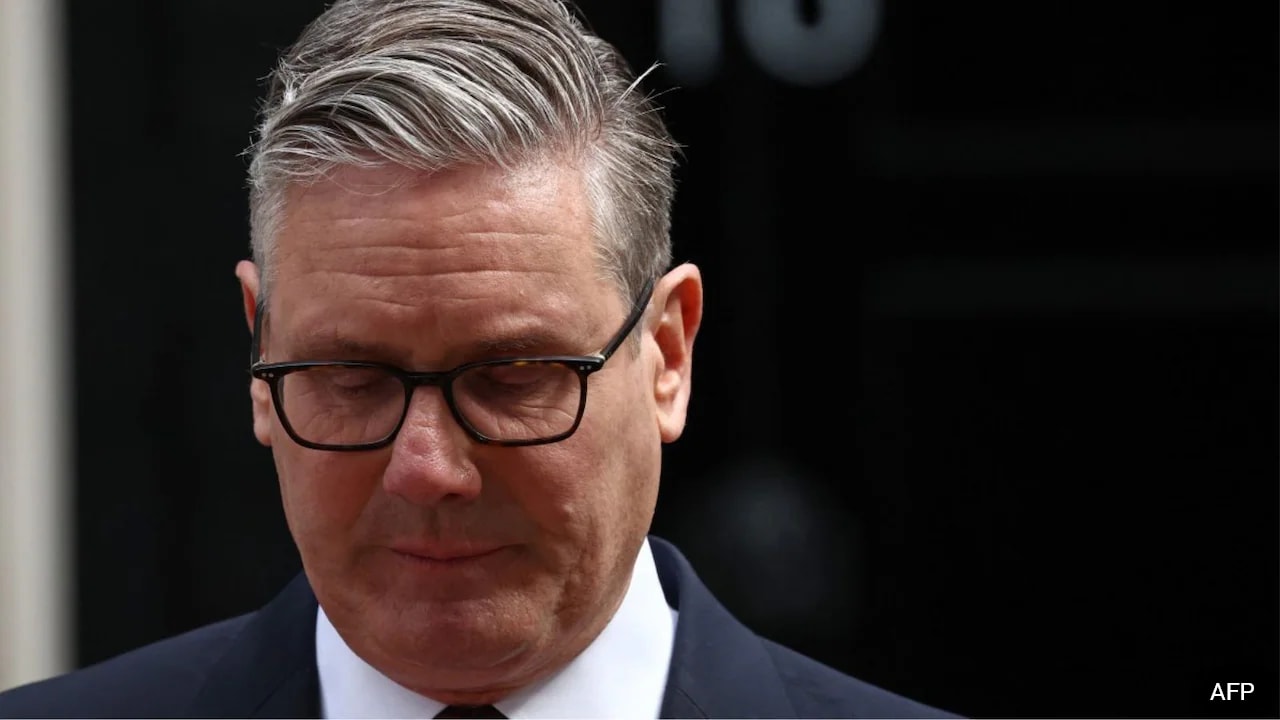
Britain used to pride itself on political stability. The world looked at Westminster as a boring, predictable machine where leaders served out long terms and quiet transitions of power were the standard. Not anymore. Right now, the British political system looks more like a high-speed blender. With Keir Starmer stepping down outside 10 Downing Street, the country is staring down the barrel of its seventh prime minister in just ten years. Firing prime ministers isn't just a political anomaly anymore. It's a national pattern, an institutional habit that nobody seems able to break.
The revolving door at Number 10 isn't just about bad luck or poor choices of leadership. It's a systemic failure. When David Cameron walked away after the Brexit referendum, it triggered a political avalanche that hasn't stopped rolling. Theresa May was eaten alive by her own party over her withdrawal agreement. Boris Johnson collapsed under the weight of personal scandals and pandemic-era rule-breaking. Liz Truss lasted fewer days than a head of lettuce before her economic experiments sent the financial markets into a violent tailspin. Rishi Sunak tried to steady the ship but ended up leading his party to a historical election defeat. And now, Starmer has thrown in the towel after buckling under intense internal pressure from the Labour Party, proving that a massive 174-seat parliamentary majority cannot save you when the system turns against you.
What's really going on here? Why can't a British leader hold onto power for more than a couple of seasons? The answer isn't found in individual personality flaws, though those exist in abundance. The root cause lies deeper, buried inside the mechanics of the British electoral system and the way modern political parties operate.
The Myth of Stability Under First Past the Post
Supporters of the First Past the Post electoral system always argue that it delivers strong, stable governments. They contrast it with continental Europe, where complex coalition governments take months to form and collapse at the first sign of trouble. That argument is officially dead.
Look at the numbers from the election that brought Labour to power. They won a crushing majority in terms of parliamentary seats, but they did it with just 34% of the popular vote. Think about that for a second. Two-thirds of the people who voted didn't want the government they got. When a prime minister governs with a massive majority built on a hollow foundation of actual public support, instability is baked into the recipe from day one.
The Electoral Reform Society points out that this math creates a dangerous illusion of security. A prime minister looks at their massive majority in parliament and thinks they have a mandate to rewrite the rulebook. Meanwhile, individual Members of Parliament look at their tiny majorities in their local constituencies and panic. They know that a tiny shift in public opinion can wipe them out completely. When local MPs get scared, they become ruthless. They stop looking at what's good for the country and start looking at how to save their own skin. The quickest way to do that is often to chuck the leader under the bus.
This creates a permanent state of paranoia inside Downing Street. Leaders are constantly watching their backs, executing dramatic policy reversals to appease rebellious backbenchers. Starmer's brief tenure was defined by these shifts. He backed down on welfare reform, altered course on the family farms tax, and adjusted positions on business rates for pubs. These weren't calculated strategic adjustments. They were desperate attempts to survive a restless parliamentary party. When a leader spends all their time trying not to get executed by their own side, they can't actually govern.
How Modern Party Rules Turned MPs Into Executioners
The way British political parties choose and remove their leaders has broken the executive branch of government. Historically, the Parliamentary Labour Party or the Conservative 1922 Committee held the keys to power. If a leader lost the confidence of their colleagues in parliament, they were gone.
Then came the democratization of party rules. Both major parties handed significant power to their wider membership bases—a tiny, highly ideological sliver of the overall British electorate. This created a profound disconnect. A leader needs to appeal to the regular public to win a general election, but they have to satisfy a small group of activists to keep their job.
Consider what happened with the Conservatives. Liz Truss was elected by party members who loved her radical tax-cutting rhetoric. But she completely lacked the support of the financial markets and a large chunk of her own MPs. The moment she tried to implement the policies her base wanted, the entire economic structure revolted, forcing her out in 45 days.
Labour faces its own version of this trap. Starmer spent years trying to reform a party he described as politically and financially broke. He dragged it back to the center to win an election. But the activist base and powerful affiliated trade unions, like Unite, never fully trusted him. The moment things started going wrong, the internal pressure became unbearable. Sharon Graham, the general secretary of Unite, openly called his resignation the right decision, demanding an immediate pivot toward heavy union priorities and economic interventions.
This shows a fatal design flaw. British prime ministers are caught in a pincer movement. They are squeezed between the harsh realities of governing a struggling nation and the ideological demands of the people who put them in power. It's an impossible balancing act.
The Burning Economics Behind the Chaos
Politics doesn't happen in a vacuum. The main reason British prime ministers keep getting fired is that the British public is living through a prolonged economic squeeze, and no leader has found a magic wand to fix it.
Ever since the 2008 financial crash, productivity growth in the United Kingdom has flatlined. Real wages haven't kept pace with costs. Then came the economic shocks of leaving the European Union, followed by the global pandemic and a massive energy crisis triggered by international conflicts. The economic pie is shrinking, or at best staying the same size, while the demands on public services are skyrocketing.
The National Health Service is under immense strain. Waiting lists are long. Local councils are declaring bankruptcy. Infrastructure projects are delayed or canceled. When people feel that their standard of living is slipping away, they look for someone to blame. In the British system, the prime minister is the ultimate lightning rod.
Recent British Prime Ministers and Their Tenures:
- David Cameron (2010–2016): Resigned after losing Brexit referendum
- Theresa May (2016–2019): Pushed out by party over Brexit gridlock
- Boris Johnson (2019–2022): Resigned after series of ethics scandals
- Liz Truss (2022): Resigned after 45 days following market crash
- Rishi Sunak (2022–2024): Defeated in general election
- Keir Starmer (2024–2026): Resigned under severe internal party pressure
Every new leader arrives at Downing Street promising a fresh start and a new strategy for growth. They give optimistic speeches in the Downing Street garden. But within months, they run headfirst into the brick wall of reality. There is no money left. Rachel Reeves, as Chancellor, quickly realized that the financial constraints left almost no room to maneuver. Tax thresholds remained frozen, dragging ordinary workers into higher tax bands through fiscal drag. Public anger built up fast.
When a government can't deliver material improvements to people's lives, its poll numbers crater. Starmer's approval ratings dropped to a grim -46 before his resignation. In the modern media environment, a sustained low approval rating is a death sentence. The 24-hour news cycle, fueled by social media outrage and instant polling, amplifies every failure. MPs see the numbers, realize they are on track to lose their seats at the next election, and start plotting the next coup.
The High Cost of the Revolving Door
This constant firing of prime ministers isn't harmless political theater. It inflicts massive, long-term damage on the country's ability to solve real problems.
Governing a major nation requires long-term planning. If you want to fix the housing crisis, reform the social care system, or rebuild industrial capacity, you need policies that span a decade, not a fiscal quarter. But when a prime minister's life expectancy in office is shorter than that of a domestic appliance, long-term planning becomes impossible. Everything becomes about short-term political survival.
Every time a prime minister is replaced, the entire machinery of government grinds to a halt. A new leader means a new cabinet. Ministers are shuffled from department to department like pieces on a chessboard. A politician who has spent a year mastering the complexities of the health department is suddenly moved to defense. A new minister arrives, brings in a new team of advisors, tears up the previous strategy, and orders a fresh review. Civil servants spend months briefing new bosses instead of executing policy.
This institutional whiplash destroys international credibility. Foreign governments don't know who they will be dealing with in six months. International investors hate instability. They look at the constant rule changes, the sudden tax shifts, and the political volatility, and they decide to put their capital somewhere else. The instability intended to fix the government's problems ends up making the underlying economic crisis worse.
Breaking the Cycle of Firing Prime Ministers
Britain cannot afford to keep running its government this way. The country is burning through leaders at a rate that undermines the democratic process itself. Voters go to the polls expecting to choose a government for five years, only to see that government tear itself apart and install a new leader without a public vote. It breeds cynicism and erodes public trust.
To stop the bleeding, the country needs to look beyond individual personalities and address the structural flaws in its political framework.
First, the electoral system needs a radical overhaul. First Past the Post no longer delivers the stability it promises. Moving toward a system of proportional representation would force political parties to build genuine, broad-based coalitions. It would end the era of absolute power won on a minority of votes, creating a more stable foundation for governance.
Second, political parties must reform their internal rules for removing leaders. Raising the threshold required to trigger a leadership challenge would give prime ministers the space to make difficult, long-term decisions without fearing an immediate backbench mutiny.
The next prime minister, whether it's Andy Burnham or another contender emerging from the upcoming Labour leadership contest, will face the exact same institutional trap that destroyed their predecessors. Unless the underlying system changes, the result will be identical. The clock is already ticking on the next political execution. If you want to see real change in British politics, stop looking at who is inside Downing Street and start looking at the broken rules that keep dragging them down. Take a hard look at the structural reform campaigns led by organizations like the Electoral Reform Society, get involved in local party consultations on leadership rules, and demand that your local representatives prioritize institutional stability over short-term partisan survival. Splitting the difference is no longer an option. Let's fix the system before it breaks the country entirely.