The clock doesn't care about geopolitics. When the ground tore open in northern Venezuela on June 24, 2026, triggering back-to-back 7.2 and 7.5 magnitude earthquakes, it left a trail of crushed concrete, twisted steel, and tens of thousands of missing people. A week later, the initial adrenaline of the emergency response has shifted into a grinding, dangerous phase of technical urban search and rescue.
While headlines focus on staggering damage estimates and political transitions in Caracas, specialized teams on the ground are fighting a localized war against structural collapse. Among them is USA-2, the international urban search and rescue task force from the Los Angeles County Fire Department. They landed on June 26, joining crews from Fairfax County (USA-1) and Miami-Dade (FL-TF1) to pull living bodies from the wreckage of a disaster zone that stretches across La Guaira state and into the capital.
The grim reality of urban rescue is that hope has an expiration date, but specialized units refuse to pack up early.
The Reality of the Golden Hours
In search and rescue, the "Golden Hours" usually refer to the first 72 hours after a collapse. That's when trapped individuals have the highest chance of survival before dehydration, crush syndrome, or suffocation take over. We're well past that mark. Yet, elite rescue teams operate on a different timeline because anomalous pocket voids can preserve life much longer than expected.
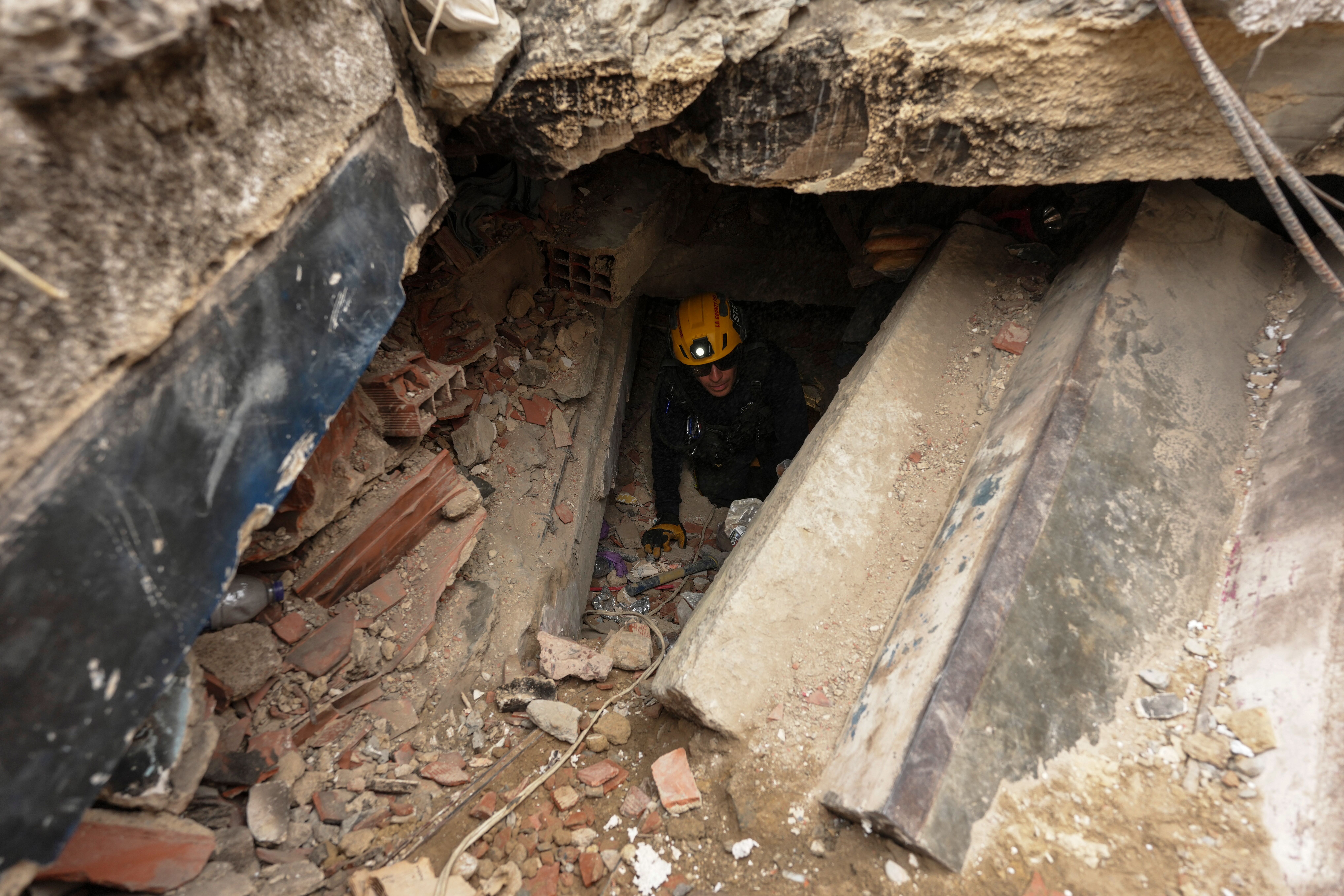
When a building pancaked during the twin quakes, it didn't always crush everything uniformly. Furniture, structural pillars, and reinforced slabs often lean against each other to create small triangular pockets. If a victim lands in one of these spaces and has access to air, they can survive for a week or more.
That's exactly why 71 personnel from the L.A. County Fire Department, along with six canine teams and 84,000 pounds of heavy equipment, are working 24-hour shifts. This isn't just about moving rocks. It's an intricate, highly technical process of listening to the dead silence of a ruined city.
Sound and Scent in the Ruins
You don't just walk up to a collapsed building with a bulldozer if you expect to find anyone alive. Heavy machinery causes shifting debris that can easily crush someone still breathing underneath. Instead, the process relies heavily on highly trained canine teams.
- Scent Detection: The L.A. team's search dogs are trained specifically to ignore the scent of deceased individuals and focus entirely on live human scent. They scramble over shifting concrete mounds, working through noise, dust, and aftershocks to pinpoint a specific location.
- Confirmation: Once a dog alerts, human handlers don't just start digging. They deploy technical search equipment, including acoustic listening devices that can pick up a faint heartbeat or a scratching sound through meters of solid debris. Specialized fiber-optic cameras are snaked through tight gaps to visually confirm a survivor's condition.
- The Breach: Only after a location is confirmed do technical rescue specialists begin the slow process of breaching concrete and cutting through rebar.
Crews from LACoFD USA-2, working alongside international partners from Florida and Chile, recently managed to pull a trapped survivor to safety from a collapsed structure. It proves that despite the passing days, survival is still entirely possible.
Logistics in a Damaged Infrastructure
The biggest hurdle for international teams hasn't been the rubble itself, but getting to it. The double quakes heavily damaged Simon Bolivar International Airport in La Guaira. One runway was completely cracked and rendered inoperable, stalling early relief flights.
U.S. crews had to rapidly repair an alternate runway just to land the heavy cargo planes carrying mobile hospitals and specialized rescue gear. To bypass choked roads and collapsed bridges, the U.S. military deployed the USS Fort Lauderdale off the coast, using it as a mobile launching pad to airlift supplies and personnel directly to where they are needed most.
What Happens When the Rescue Ends
The physical extraction of a victim is only half the battle. When a person has been pinned under heavy debris for days, their body undergoes metabolic changes. The moment the pressure is released, toxins built up in the damaged muscles can rush into the bloodstream, causing sudden kidney failure or cardiac arrest—a condition known as crush syndrome.
Because of this, paramedics from the L.A. County team must treat the patient while they are still partially trapped, administering intravenous fluids and medication before the final debris is lifted.
The scale of the crisis is immense. NASA satellite analysis estimates that nearly 59,000 structures have been damaged or destroyed, and the United Nations warns that up to 6.8 million people may require some form of humanitarian assistance. But for the handlers, engineers, and firefighters working the pile in La Guaira, the focus remains small, sharp, and intense: one building, one void, one life at a time.
If you are looking for ways to support the relief efforts or keep track of the evolving humanitarian response in Venezuela, you can monitor updates and donation channels through the U.N. Office for the Coordination of Humanitarian Affairs (OCHA) or the International Federation of Red Cross and Red Crescent Societies (IFRC).