She is gone. Well, not gone in the literal sense, but completely hidden from the eyes of the world. In April, Myanmar's military junta announced that the country's deposed democratic leader, Aung San Suu Kyi, was moved from a cold cell in Naypyidaw prison to house arrest. Senior General Min Aung Hlaing framed it as an act of humanitarian mercy. He even tried to use it to smooth over his transition to a self-proclaimed civilian presidency following heavily rigged elections.
But if you go looking for her in the capital city, you will hit a wall of absolute silence. Nobody knows where she is.
The state broadcaster showed static, old imagery. Her son, Kim Aris, speaking from London, openly doubts whether his 81-year-old mother is even being held in a proper residence. He calls it a private prison. This is not a standard political arrest. It is a state-sponsored vanishing act taking place inside one of the most bizarre, confusing urban experiments on earth.
The Ghost Capital Built for Paranoia
To understand why the world cannot find Aung San Suu Kyi, you have to understand Naypyidaw. The name literally translates to "The Abode of Kings." In 2005, the previous military dictator, Than Shwe, abruptly packed up the entire federal government in Yangon and moved it into the central agricultural plains.
The move made zero sense to economists. It made perfect sense to paranoid generals.
Yangon was crowded. It was a hotbed for student protests, monk-led uprisings, and maritime vulnerabilities. The military wanted a fortress. They built one from scratch, spending billions of dollars to carve a capital out of the jungle. It is massive. The land area is roughly nine times the size of New York City, yet barely a million people live there. Most of them are military personnel, civil servants, and their families.
A Labyrinth of Twenty Lane Highways
Driving through the capital feels like entering a post-apocalyptic simulation. You encounter twenty-lane highways built to serve as emergency runways for military aircraft. These roads are almost completely empty.
The city lacks a natural heartbeat. There is no central downtown area. Instead, the planners divided the capital into rigid, segregated zones. The military elites live in one sector. The mid-level bureaucrats live in another. The hotels are clustered in their own distinct district, miles away from anything useful.
Because everything looks identical, finding a specific compound is a logistical nightmare. The villas feature the exact same roof tiles, painted in uniform pastel shades according to the ministry they serve. There are no bustling street corners where you can ask for directions. If you linger too long near a security checkpoint, armed guards will quickly question you.
Why Naypyidaw Replaced Yangon
Urban theorists note that the city was engineered to prevent collective action. In a normal city, protestors can gather in central squares or march down narrow avenues to block commerce. In Naypyidaw, a crowd of ten thousand people would simply swallow up on a single empty highway.
The vast distances make it impossible to move around without a motorized vehicle. If you do not have a car, you do not move. This design isolates residents by default. The military does not just use the city to run the country. They use the city to control information.
The Illusion of House Arrest
When the junta announced the transfer of the Nobel laureate, international diplomats hoped it signaled a shift. United Nations officials tentatively called it a meaningful step toward dialogue. The reality on the ground proved far more cynical.
The Calculated Mercy of Min Aung Hlaing
The timing of the announcement was incredibly deliberate. The junta faced massive battlefield losses against the People's Defence Forces and ethnic armed organizations across the country. Morale among regular soldiers had hit an all-time low. By announcing that the aging leader was out of prison, the military high command tried to ease international sanctions and appease regional neighbors like India and China.
It was a public relations stunt. Moving a prisoner from a concrete cell to a heavily guarded villa inside an inaccessible military zone changes very little. She has no phone. She has no internet. She cannot see her lawyers. The military controls her diet, her medical care, and her entire daily routine.
What Kim Aris and the Resistance Really Think
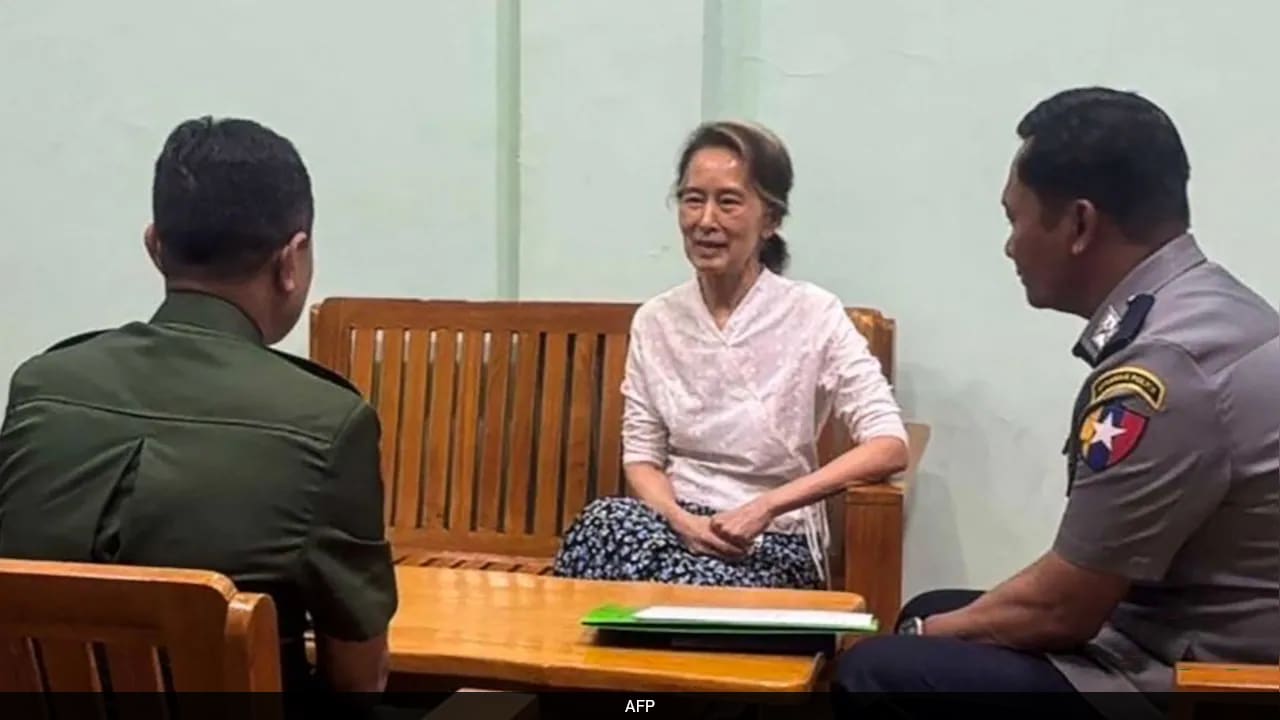
The parallel National Unity Government has been vocal about this deception. Spokespeople point out that the junta has refused to offer any actual proof of life. A single, undated photograph released by military propaganda teams is all the public has seen.
Her family remains deeply worried about her deteriorating health. At 81, years of isolation take a brutal toll. Her son has repeatedly demanded that independent medical professionals be allowed to visit her. The military continues to ignore these requests. They prefer to keep her status ambiguous. An ambiguous leader can be used as a bargaining chip.
Shrouded in Secrecy The Architecture of Isolation
Even the police forces inside Naypyidaw are left in the dark. Intelligence sources from different districts admit that they do not know which compound holds the former State Counsellor.
When her transfer occurred, the top brass split her security detail across multiple jurisdictions. One official claimed she was in a southern suburb. Another insisted she was held near the military's main command center. This confusion is intentional. If the generals do not know where she is, they cannot leak the information to the resistance.
[Yangon Mansion Detention (1989-2010)]
   - Publicly visible lakeside home
   - Pilgrimage site for democracy activists
   - Visual link to the outside world

[Naypyidaw Secret Detention (2021-Present)]
   - Hidden behind miles of empty highways
   - No public access or clear location
   - Absolute informational blackout
During her previous stints under house arrest in the 1990s and 2000s, she lived at her family's lakeside mansion on University Avenue in Yangon. Supporters could walk past the gates. She could occasionally climb onto a stool and give speeches over the wall to cheering crowds. That physical presence kept the democracy movement alive.
The generals learned from that mistake. By keeping her in the capital of confusion, they have cut that vital connection. Her current home is not a place of comfort. It is a black box.
Actionable Steps for the International Community
The current strategy of releasing polite statements is failing. If global leaders want to ensure her safety, the approach must change immediately.
- Demand Direct Diplomatic Access: Regional blocs like ASEAN must condition future talks on physical meetings with Suu Kyi. Digital photos are no longer acceptable.
- Target the Military Supply Chains: Sanctions must focus directly on the aviation fuel and banking networks that allow the junta to maintain its grip on the capital.
- Support Local Humanitarian Networks: Funding must reach the ground level where independent actors are tracking military movements inside the regime's inner circle.
The search for her location is not just an administrative puzzle. It is a fight to keep the symbol of Burmese democracy from being quietly erased by a regime that has perfected the art of isolation.