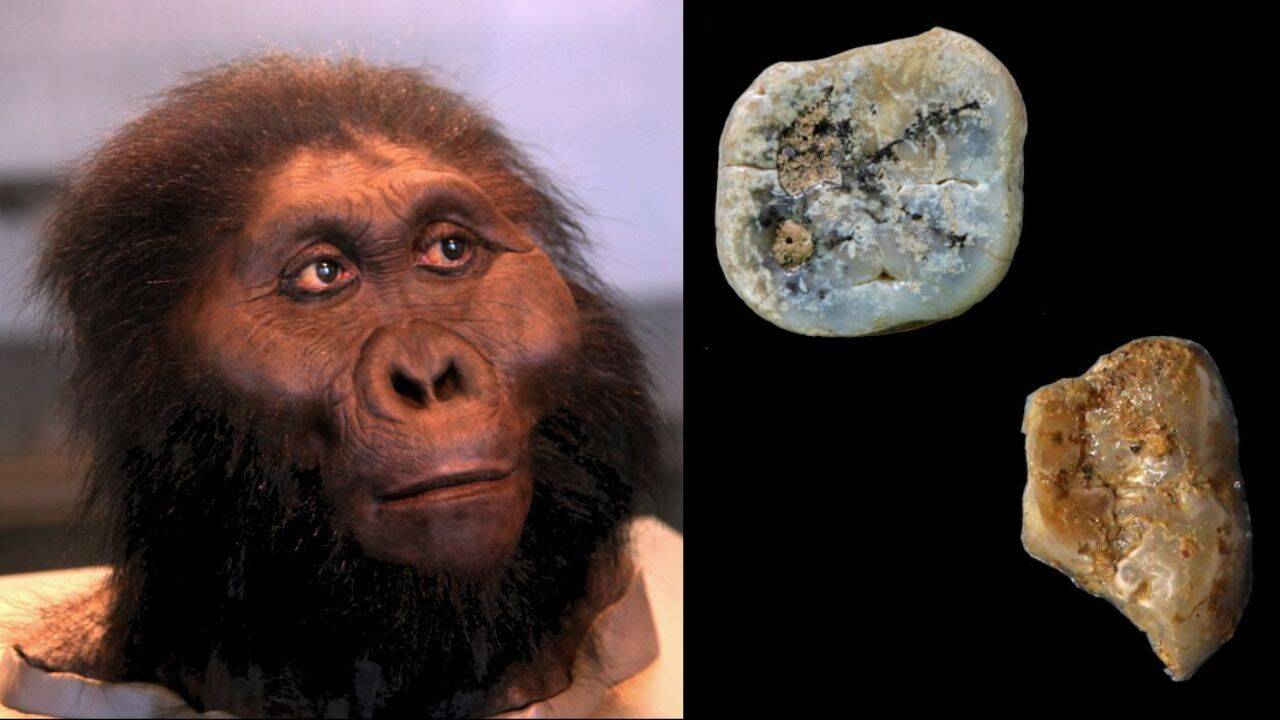
For decades, textbooks told a simple story about human evolution. Our direct ancestors, the early members of the genus Homo, grew big brains, figured out how to flake stone, and used those tools to conquer the African savanna. Meanwhile, our evolutionary cousins, the heavy-jawed hominins known as Paranthropus, supposedly sat on the sidelines chewing on tough roots and nuts until they went extinct. It was a neat, comfortable narrative of human intellectual supremacy.
It's also totally wrong.
Recent discoveries from an archaeological site called Nyayanga in southwestern Kenya have completely upended what we thought we knew about who made the first stone tools. We aren't just talking about a minor adjustment to the evolutionary timeline. We're talking about a massive shift in how we view ancient intelligence. The evidence suggests that Paranthropus, a creature scientists long dismissed as a massive-jawed evolutionary dead-end, was likely butchering hippos with sophisticated stone toolkits nearly three million years ago.
Even more shocking, recent data proves these ancient creatures were engaging in strategic, forward-planned road trips to gather the best rocks for their toolkits. This behavior pushes back our understanding of complex cognitive planning by more than half a million years.
If you want to understand why this discovery changes everything, you have to look at what was actually pulled out of the dirt at Nyayanga, how it shatters old assumptions, and what it means for our understanding of ancient minds.
The Crime Scene at Nyayanga
When Thomas Plummer of Queens College and his team began excavating the Nyayanga site on Kenya's Homa Peninsula, they weren't expecting to rewrite the history books. Between 2014 and 2022, the team uncovered a massive collection of more than 330 stone artifacts alongside thousands of animal bones.
The items found weren't just random broken rocks. They were classic Oldowan tools. This specific toolkit includes three main types of implements:
- Heavy stone cores used as platforms for striking off sharp pieces.
- Sharp cutting flakes struck from those cores, which worked like prehistoric pocketknives.
- Hammerstones used to strike the cores and smash open bones.
Before the Nyayanga excavations, the oldest known Oldowan tools came from Ledi-Geraru in Ethiopia, dating to about 2.6 million years ago. The Nyayanga sediments, however, date back much further, somewhere between 2.6 and 3 million years old. Most experts working on the site estimate the finds sit closer to the 2.9-million-year mark. That single detail pushes the origin of this technology back by hundreds of thousands of years.
But the real shocker wasn't the age of the tools. It was the presence of two large, peg-shaped molars found directly alongside the artifacts.
Those teeth didn't belong to a human ancestor. They belonged to Paranthropus.
The Diner or the Dinner
Paleoanthropologists are a cautious bunch. When you find a fossil next to a tool, you can't automatically assume that individual was the one using it. As the saying goes in archaeology, you always have to ask whether the fossil represents the diner or the dinner.
For a long time, the scientific consensus was that Paranthropus lacked the brainpower to manufacture tools. They had small brains, roughly the size of a modern chimpanzee's. What they did have were massive, muscular jaws and giant teeth, which earned them the nickname "Nutcracker Man." The traditional assumption was that their biology was their toolkit. They didn't need sharp stones because their massive molars could crush whatever tough vegetation they wanted to eat.
Homo habilis, on the other hand, was literally named "handy man" because we assumed our bigger-brained lineage was the exclusive architect of stone technology. We thought our ancestors needed tools to survive because our teeth were too small to process raw meat or tough plants.
The Nyayanga site shatters that bias. There are no Homo habilis fossils at the site. None. There are only the remains of Paranthropus and a massive pile of butchered bones.
Among those bones were two partial skeletons of ancient hippopotamuses. The hippo bones show clear, unmistakable cut marks where sharp stone flakes sliced flesh away from the bone. Other bones were completely crushed, indicating that someone used heavy hammerstones to break them open and extract the nutrient-rich fatty marrow inside. Antelope bones at the site showed similar signs of butchery.
Think about the reality of this scene for a second. This happened nearly three million years ago. Fire wouldn't be tamed for another two million years. Whoever was processing these carcasses was eating everything completely raw, perhaps pounding the tough hippo meat into a primitive tartare to make it chewable.
The idea that Paranthropus just happened to die at the exact spot where an unknown member of the genus Homo was butchering hippos is becoming harder and harder to defend. The simplest explanation is that Paranthropus was actively making and using these tools.
The Six Mile Road Trip
If the 2023 announcement of the Nyayanga tools shook the scientific community, a subsequent study published in late 2025 by biological anthropologist Emma Finestone blew the doors completely off.
Finestone and her colleagues wanted to know where the toolmakers got their raw materials. The local rocks immediately surrounding the Nyayanga site are relatively soft. If you try to strike them to make a sharp edge, they crumble. If you use them to pound a thick hippo hide, they shatter.
The researchers used advanced geochemical and geological analysis to analyze 401 stone artifacts from the site, mapping their chemical signatures against 11 exposed rock deposits across the Homa Peninsula.
What they discovered was stunning. The high-quality quartz, quartzite, and basalt used to make the best cutting flakes didn't come from Nyayanga. They came from rock deposits located up to 13 kilometers—roughly eight miles—away.
To get the right materials, these ancient hominins were systematically traveling substantial distances, procuring heavy rocks, and carrying them all the way back to their home base near the lake. This isn't accidental behavior. It requires an extraordinary amount of forward planning.
Before this study, the earliest evidence of hominins transporting tool stone over long distances was dated to about two million years ago. The Nyayanga findings push this complex behavioral milestone back by 600,000 years.
This means that nearly three million years ago, creatures with brains no larger than a chimp's were mentally mapping their environment. They knew exactly where the high-quality stone was, they understood that the local rock wasn't good enough, and they had the intent to carry heavy loads across a dangerous savanna filled with apex predators to ensure they had the right equipment for future foraging.
Rethinking Ancient Intelligence
This leaves us with a profound problem. If a creature with a tiny brain and a massive jaw was capable of making sophisticated stone tools, transporting raw materials over miles, and butchering megafauna, then what makes our own lineage unique?
For generations, we associated toolmaking with the rise of the large human brain. We viewed technology as the engine that drove our intelligence. But the Nyayanga tools substantially predate the dramatic increase in brain size that we see in the genus Homo after two million years ago. Technology came first; big brains came later.
This suggests that toolmaking might be a much older, ancestral trait shared by multiple lineages on the hominin family tree. It's highly probable that multiple species were making and using Oldowan tools simultaneously. Stone tools weren't a shiny new invention exclusive to our ancestors; they were a widespread survival strategy used by different cousins across the African landscape.
The traditional view of Paranthropus as a dim-witted evolutionary dead-end is officially dead. They weren't just passive herbivores grinding away on roots. They were active, calculating participants in their ecosystem, capable of planning, long-distance transport, and meat consumption.
Your Next Steps to Deepen Your Knowledge
If you want to move past the outdated narratives found in old textbooks and stay on top of this rapidly shifting field, here is how you can engage with the latest science right now.
- Read the primary research: Look up the original February 2023 paper in Science titled "Expanded geographic distribution and dietary strategies of the earliest Oldowan hominins and Paranthropus." Follow that up with the August 2025 paper in Science Advances detailing the long-distance stone transport on the Homa Peninsula.
- Audit your current sources: Check the publication dates of any human evolution books or articles you rely on. If they were written before 2023, take their sections on early tool use and the capabilities of Paranthropus with a massive grain of salt.
- Track the Homa Peninsula Project: Keep an eye on updates from the National Museums of Kenya and the Smithsonian's Human Origins Program. Excavations in southwestern Kenya are ongoing, and more fossils or tools could drop at any time, further altering our understanding of early hominin behavior.