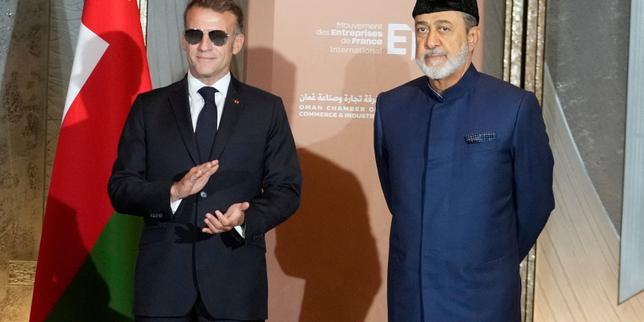
You probably missed it behind the barrage of daily headlines, but a massive geopolitical chess move just happened in Paris.
On June 29, 2026, French President Emmanuel Macron welcomed Omani Sultan Haitham bin Tariq to the Élysée Palace. It was a historic meeting, marking the first time an Omani ruler has stepped foot in France for an official state visit in nearly 40 years. While the official agenda hummed with standard talk of business forums, solar energy contracts, and trade investments, the real fireworks happened over a joint declaration concerning the most volatile choke point in global energy: the Strait of Hormuz.
France and Oman announced they are teaming up to conduct joint mine-clearing operations in the strait. They issued a blunt plea for "free navigation, without conditions or restrictions."
If you think this is just standard diplomatic talk, you're missing the bigger picture. This joint statement completely shifts the friction between Western powers, Iran, and the United States. It didn't take long for Iran to hit back with a sharp warning, telling France to back off and not complicate an already explosive situation.
The Panic Behind the Paris Agreement
Why is France suddenly inserting its military into the waters of the Persian Gulf? It's all about what's happening behind closed doors between Washington and Téhéran.
Just last week, the Trump administration and Iran reached a surprise framework agreement. Technical talks to implement that framework are literally kicking off right now in Qatar. On paper, it looks like a pause in hostilities. But European leaders, particularly in Paris and London, are terrified of what a final US-Iran deal might look like.
Here's the problem. France and other European nations fear that Washington might sign an agreement that allows Iran and Oman to jointly manage the Strait of Hormuz. That joint management could include shipping tolls or transit fees on international vessels. For a continent heavily reliant on trade routes remaining open and cheap, the idea of paying a premium to pass through a vital international waterway is a nightmare scenario.
By jumping into a demining partnership with Oman, Macron is trying to plant a European flag in the middle of the channel before the US and Iran can lock down a private deal. France is insisting that any final deal must guarantee zero tolls and completely unconditional passage based on the international law of the sea.
Iran Strikes Back Immediately
The ink wasn't even dry on the French-Omani declaration before Téhéran responded. Iranian Deputy Foreign Minister Kazem Gharibabadi took to social media to shut down any Western ideas of policing the strait.
According to Gharibabadi, previous agreements dictate that demining operations in those waters are the exclusive right of Iran. He made it clear that Iran won't permit foreign navies to conduct operations there, explicitly warning France not to worsen things with what he labeled as "provocations."
This sets up an immediate, dangerous standoff. The Strait of Hormuz is incredibly narrow. At its tightest point, the shipping lanes are only two miles wide in either direction. If France attempts to deploy naval mine countermeasures into the area alongside Omani forces, they will be operating right on Iran's doorstep.
Oman In The Middle As Usual
You have to look at Oman's role here to truly appreciate the complexity. For decades, Muscat has operated as the "Switzerland of the Middle East." They talk to everyone. They facilitate prisoner swaps, host secret backchannel negotiations between Western intelligence and Iranian officials, and keep a cool head when the rest of the region is on fire.
Sultan Haitham bin Tariq didn't travel to Paris just to talk about security. He brought a massive business delegation. The two countries signed 12 major cooperation agreements. We're talking about massive, tangible contracts:
- A 500-megawatt solar power plant project in Al-Kamil and Al-Wafi handled by EDF Renewables.
- A massive pumped-storage hydropower project at the Wadi Dayqah Dam with the EDF Group.
- Logistics, port management, and aerospace partnerships involving giants like Airbus, Suez, CMA CGM, and Thales.
Oman needs Western capital and technology to transition its economy away from total fossil fuel dependence. By giving Macron the geopolitical win of a joint maritime declaration, Oman secures billions in French corporate investments. It's a calculated gamble. Oman knows Iran will complain, but Muscat is betting its relationship with Téhéran can handle the strain.
What Happens Next
Don't expect the French navy to sail a massive fleet into the gulf tomorrow morning. The technical talks in Qatar between American and Iranian officials will dictate how fast this situation escalates.
If the US pushes forward with a deal that ignores European concerns over transit fees, expect France to double down on its naval presence under the guise of maritime safety. Shipping companies are already watching the area closely after recent security scares slowed traffic down last week.
If you want to track where global energy prices and maritime security are heading this summer, ignore the political theater in Washington for a moment. Watch the shipping lanes in the Strait of Hormuz and see if French mine-hunting ships actually show up. That's where the real test of wills will happen.