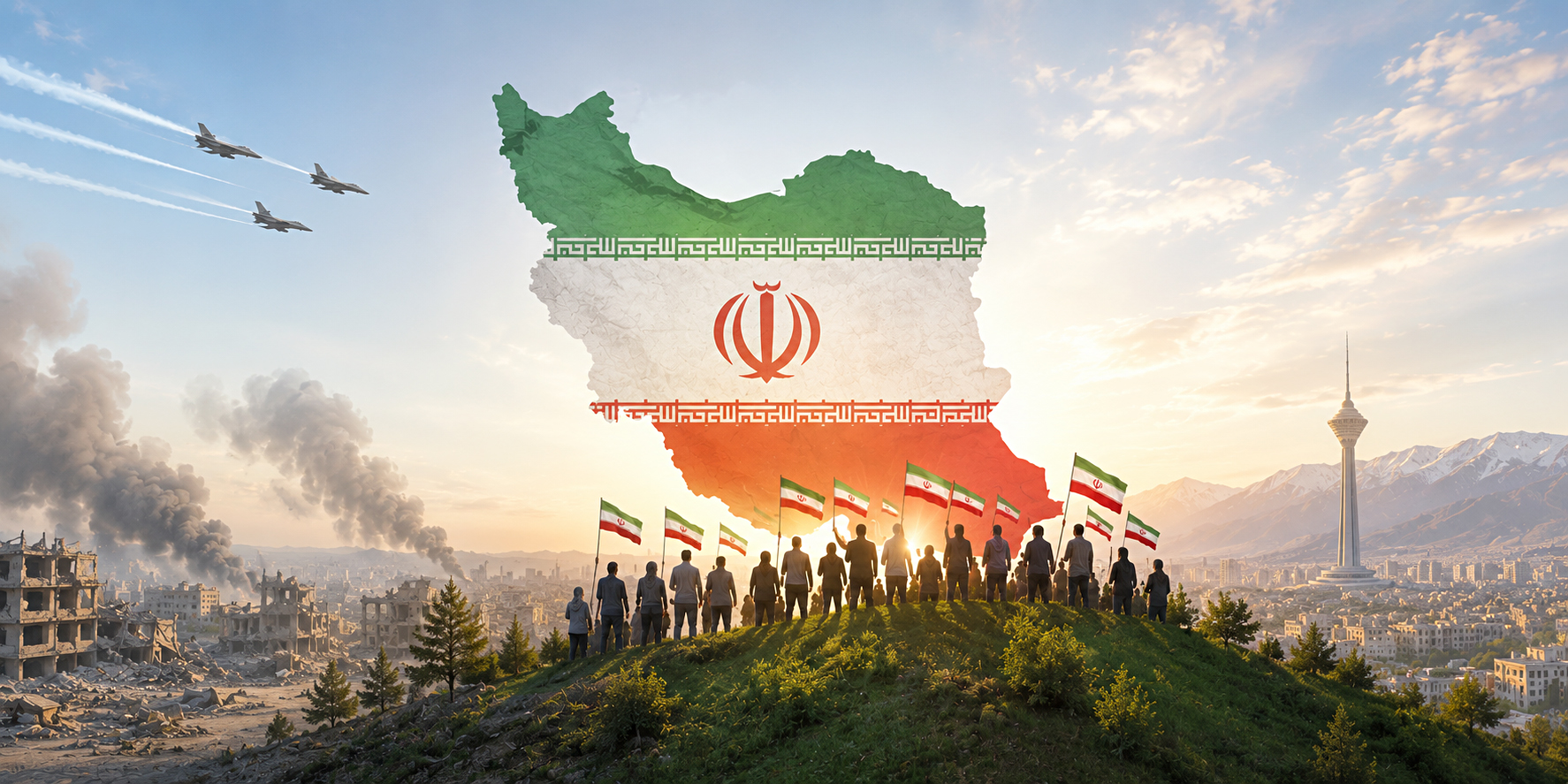
Western capitals keep making the exact same mistake in the Middle East. They treat regional security like a fire that needs foreign water, ignoring that their presence acts more like aviation fuel. When Iranian officials stepped up to the microphone recently to warn that outside intervention in the Strait of Hormuz would only complicate issues, the standard reaction in Washington and Brussels was a predictable mix of eye-rolling and naval posturing.
They are missing the entire point.
The Strait of Hormuz is not just a geographical chokepoint. It is the literal jugular vein of global energy trade. When Tehran tells foreign militaries to keep their hands off, it is not just a generic rhetorical flex. It is a calculated statement rooted in decades of asymmetrical warfare strategy and regional pride. If you want to understand why global oil markets spike every time a commander in the Islamic Revolutionary Guard Corps (IRGC) mentions this narrow strip of water, you have to look past the immediate headlines.
Iran views the presence of American carriers and international coalitions not as a stabilizing force, but as an active threat to its sovereignty. More than that, they see it as an unnecessary disruption to an ecosystem they believe they should oversee.
The Reality of the Worlds Most Dangerous Chokepoint
Look at a map. The Strait of Hormuz is tiny. At its narrowest, it is only about 21 miles wide. The actual shipping lanes used by massive supertankers are even narrower, consisting of just a two-mile-wide lane for inbound traffic and a two-mile-wide lane for outbound traffic, separated by a two-mile buffer zone.
Think about the sheer volume of wealth moving through that tiny corridor. We are talking about roughly 20 percent of the worlds total petroleum liquids consumption passing through here every single day. That is millions of barrels of crude oil moving from the production facilities of Saudi Arabia, Iraq, Kuwait, and the United Arab Emirates straight to energy-hungry economies across the globe, particularly in Asia. Japan, South Korea, China, and India rely heavily on this single artery.
When Iran states that foreign intervention complicates things, they are highlighting a structural truth that western planners love to ignore. The moment Western warships crowd into these tight shipping lanes to protect commercial vessels, the margin for error drops to zero. A single miscalculation, an aggressive maneuver by a fast-attack craft, or a misunderstood radio transmission can trigger an immediate shooting war.
The Iranian argument is straightforward. They share these waters. They live there. They argue that the littoral states—the nations actually bordering the Persian Gulf—are fully capable of managing their own maritime security without external powers hovering over them.
Why Western Deterrence Keeps Failing in the Gulf
For years, the United States and its allies have used a specific playbook. When tensions rise, send a strike group. When a tanker gets harassed, form a new maritime coalition.
It does not work.
In fact, history shows it usually provokes the exact behavior it is meant to prevent. The Iranian defense establishment does not back down when confronted with conventional naval superiority. They do not try to match the US Navy ship-for-ship. They know they would lose that fight in an hour.
Instead, they built a military doctrine specifically designed to make conventional naval power irrelevant. They use swarms of small, heavily armed fast-attack craft. They deploy thousands of smart naval mines. They have lined their rugged coastline with anti-ship missile batteries that are dug deep into mountainsides, completely hidden from aerial view.
When a foreign armada enters the Gulf, it gives the IRGC a massive, slow-moving target list. Tehran uses this leverage beautifully. Every time the US announces a new freedom of navigation operation, Iran responds by conducting high-profile naval drills or testing new drone systems. It is a constant game of chicken where the stakes are global economic collapse.
The Economic Leverage That No One Wants to Face
Let us talk about what actually happens if things go sideways in Hormuz. If a conflict breaks out and the strait is closed even for a few days, the global economy takes an instant hit.
Insurance rates for commercial shipping would skyrocket overnight. Many maritime shipping lines would simply refuse to send their vessels into the region. Tankers would be forced to reroute, adding weeks to transit times and forcing countries to draw down their strategic petroleum reserves.
The shockwaves would hit gas stations in Europe and North America within forty-eight hours. It is the ultimate economic weapon, and Iran knows it holds the trigger.
This explains why Tehran takes such a hard line against foreign naval coalitions. By telling outside powers to stay away, they are reminding the world who controls the thermostat of the global economy. They want the international community to understand that calling for outside help does not make shipping safer; it actually puts the entire supply chain at risk.
What Most People Get Wrong About Regional Dynamics
The mainstream media loves to frame this as a simple story of Iran versus the West. That is a lazy perspective. The actual dynamics among the Gulf states are far more complex and subtle than a simple black-and-white rivalry.
Oman, for instance, shares sovereignty over the strait with Iran. Muscat has spent decades maintaining a delicate, highly successful diplomatic balancing act. They keep lines of communication open with Tehran while simultaneously hosting western military facilities. They know that a hot war in their backyard would destroy their economy.
Even Saudi Arabia and the United Arab Emirates have shifted their approach. After years of demanding that Washington take a harder military line against Iran, these absolute monarchies have realized that relying solely on western military might is a dangerous strategy. They have engaged in direct diplomatic talks with Tehran to patch up relations.
Why? Because they realized that when missiles start flying, their multi-billion-dollar desalination plants, oil refineries, and luxury glass skyscrapers are the easiest targets. They have to live next to Iran forever. The Americans can always sail away.
When Iran says foreign intervention complicates things, it is speaking directly to its neighbors. The message is clear. Relying on outside protectors will not save your infrastructure when the shooting starts.
The Long History of Maritime Friction
This tension did not start last week. You can trace this exact conflict back to the Tanker War of the 1980s, during the brutal conflict between Iraq and Iran.
Back then, both sides attacked commercial shipping to choke off each others economic lifeblood. The United States stepped in with Operation Earnest Will, reflagging Kuwaiti tankers and providing military escorts. That intervention led to direct, violent clashes, including the accidental downing of an Iranian civilian airliner by a US warship.
That historical memory runs deep in Tehran. It shapes how every Iranian strategist views Western naval movements. They do not see humanitarian protectors or guardians of free trade. They see the same hostile forces that have been trying to contain, sanction, and isolate their country for nearly half a century.
Moving Past the Endless Cycle of Escalation
The current path is completely unsustainable. We cannot keep repeating this cycle where a shipping incident leads to a naval deployment, which leads to an Iranian threat, which leads to a spike in oil prices.
If the international community genuinely wants to secure the Strait of Hormuz, the solution will not be found by sending more warships into a crowded bathtub. It requires a fundamental shift in diplomatic strategy.
First, the focus must shift toward regional maritime agreements that include all littoral states. A security architecture that deliberately excludes the largest military power on the coast is fundamentally broken from the start. You cannot build a stable security framework for the Persian Gulf by ignoring Iran.
Second, western powers need to stop treating every aggressive Iranian statement as an unprovoked act of madness. It is a response to an ongoing campaign of maximum economic pressure and sanctions. Maritime security and broader diplomatic relations are deeply intertwined. You cannot expect cooperation in the water while pursuing total economic warfare on land.
The shipping companies that actually operate these massive vessels understand this reality perfectly. They do not want a war zone. They want predictable, boring transits. The more the waters of the Gulf are militarized by outside coalitions, the higher the risk of a catastrophic misunderstanding.
Instead of rushing to match every rhetorical escalation with a show of force, international policymakers should take a step back and consider the actual mechanics of Gulf stability. Security here cannot be imported from thousands of miles away. It must be negotiated, maintained, and respected by the nations that actually call these shores home.
The next time an Iranian official warns the world to keep its hands off the Strait of Hormuz, do not just dismiss it as empty propaganda. Treat it as an accurate description of a fragile ecosystem that is one spark away from blowing up the global economy.
To track this ongoing situation effectively, watch the specific insurance premiums issued by the Joint War Committee in London rather than political speeches. When those maritime insurance rates shift, it tells you exactly how risky the waters are getting, completely free of political spin. Monitor the actual ship tracking data through public automated identification system registries to see if tankers are genuinely altering their routes. That data will tell you the real story long before the politicians figure it out.