A thousand extra deaths in just four days. That is the devastating reality French health officials dropped on us this Sunday. If you think extreme summer heat is just about uncomfortable sweat or a reason to head to the beach, you are dead wrong. The current deadly European heatwave is a brutal reminder that our continent is fundamentally unprepared for the reality of a warming planet. The mercury is shattering historical records, power grids are buckling, and vulnerable people are dying alone in their apartments.
People are searching for answers because they want to know how a modern, wealthy society can lose so many lives to the weather so quickly. The short answer is simple. We are treating a structural emergency like a temporary inconvenience. Public Health France reported that since June 24, around 1,000 excess deaths occurred compared to normal baselines. The vast majority of these victims, about 85 percent, were senior citizens aged 65 and older.
This is not just a statistical anomaly or a bad week of summer weather. The heatwave is migrating eastward across Central Europe and the Balkans right now, leaving a trail of infrastructure damage and human tragedy. If we keep ignoring the underlying systemic failures exposed by these soaring temperatures, this week's horror will become our standard summer routine.
The grim reality behind the deadly European heatwave numbers
When you look at the raw data coming out of Paris and the surrounding Île-de-France region, the details are horrifying. Public Health France admits that the 1,000 excess deaths figure is just a preliminary estimate. The real number is almost certainly higher and will climb as data from care homes and rural communities filters in.
[Image of urban heat island effect]
The most alarming part of this crisis is where people are dying. They are not dropping dead on the streets. They are dying at home. In dense urban centers like Paris, stone buildings and asphalt roads absorb massive amounts of solar radiation during the day. At night, they radiate that heat back out, preventing apartments from cooling down. It turns residential buildings into literal brick ovens.
The crisis has completely overwhelmed local resources. Gautier Caton, speaking for the National Funeral Services Federation, revealed that both of the main funeral homes in Paris reached maximum capacity by Thursday. Families are being forced to transport their deceased loved ones to distant facilities outside the region. Local authorities are actively considering opening temporary structures and refrigerated containers to handle the surge of bodies, mirroring the darkest days of the early pandemic.
Infrastructure cannot handle the thermal stress
This is a failure of engineering as much as a biological crisis. Western Europe was built for a cooler era. Most homes do not have air conditioning. Our transport networks are built on the assumption that temperatures will stay within moderate bounds. When a high-pressure system parks itself over the continent and drives the mercury past 40 degrees Celsius, everything breaks.
Look at the railways. A Eurostar train stalled east of Brussels, trapping 400 passengers inside steel carriages with a dead air conditioning system. Three people had to be hospitalized for severe heat exhaustion before rescue teams could extract them. Germany's national rail operator, Deutsche Bahn, had to offer free cancellations for long-distance trips because the extreme sun exposure threatens to warp tracks, distort overhead wires, and trigger signal failures.
Even the power grid is struggling. Nuclear power plants rely on river water for cooling. When river temperatures rise too high, plants have to scale back production to avoid ecological disasters in the waterways. We are facing a nightmare scenario where energy demand for cooling spikes exactly when our ability to generate power drops.
The deadly search for relief
The danger extends far beyond heat stroke in isolated rooms. Desperation drives people to make fatal choices. French Interior Minister Laurent Nunez reported that 74 people have drowned since June 18. Most of these victims were young people between the ages of 15 and 25 who jumped into banned, unsupervised rivers, streams, and ponds to escape the oppressive air. Many suffered sudden cardiac arrest from the thermal shock of diving into cold water with an overheated body.
Meanwhile, neighboring nations are seeing parallel catastrophes. Spain's national mortality monitoring system linked over 320 deaths directly to the heat in a matter of days. Germany provisionally broke its all-time June record when temperatures hit 41.3 degrees Celsius in Saarbrücken near the French border.
Scientists from the World Weather Attribution group have already called this event the most severe ever recorded in the region. Europe is heating up at roughly twice the global average rate. We cannot keep pretending this is normal.
Why urban isolation makes heat a quiet killer
We need to talk about loneliness because it is a massive public health risk during a climate emergency. High temperatures reveal the deep fractures in our social fabric. When an elderly person lives alone in a top-floor apartment without a working fan or a phone connection to their neighbors, a heatwave becomes a death sentence.
Public health agencies can issue all the red alerts they want, but a text warning does nothing for someone who cannot physically leave their room to buy water. True solidarity means physically checking on people. It means knocking on doors and ensuring the vulnerable have cold fluids and a way to cool down.
Immediate steps to protect yourself and your community
The weather might be cooling down slightly in France as the system moves east, but the danger lingers. Health Minister Stephanie Rist warned that the medical impacts of severe heat exposure can show up in patients for up to ten days after the atmospheric temperature drops. The strain on internal organs does not vanish when the cool breeze arrives.
You need a practical plan for the next wave because another one will hit before the summer ends.
- Stop closing windows during the peak heat of the day. Keep them shut tight and draw the blinds while the sun is beating down, then open them wide at night when the outside air is cooler than the indoor air.
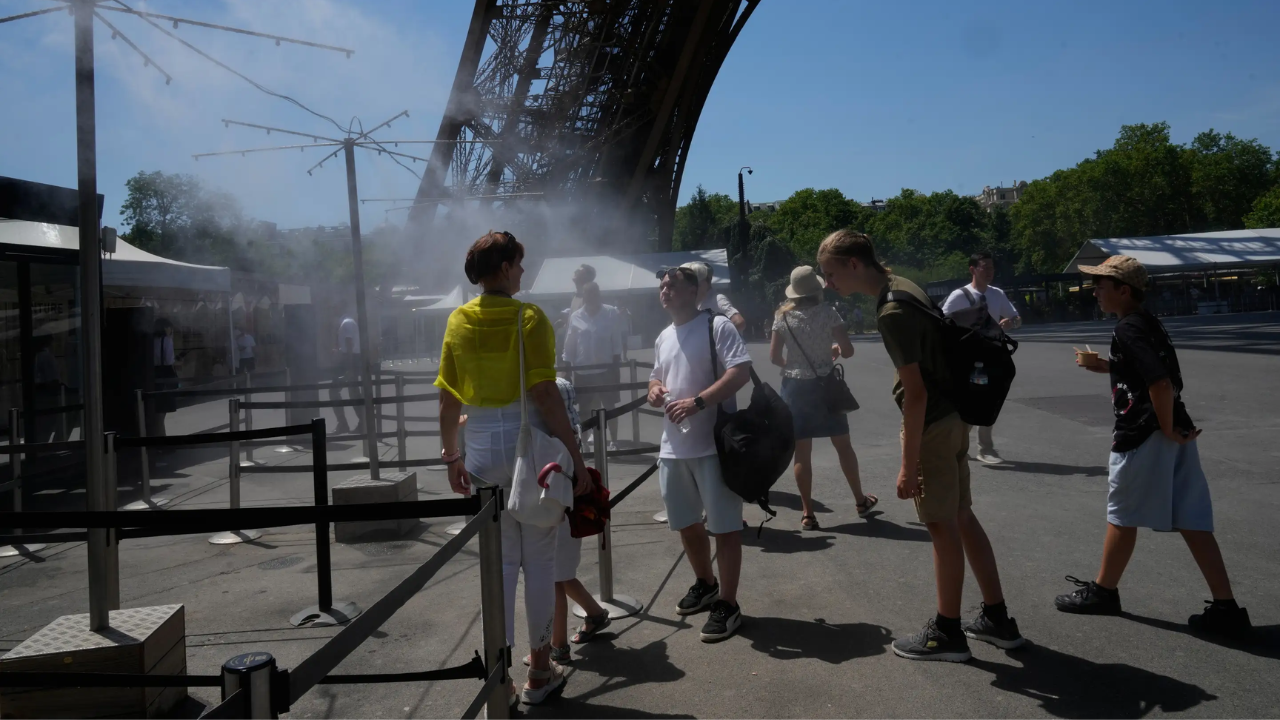
- Forget about relying solely on standard electric fans when indoor temperatures pass 35 degrees Celsius. Fans just blow hot air around at that point, accelerating dehydration unless you are misting your skin with water simultaneously.
- Identify the designated cool spaces in your municipality now. Libraries, shopping malls, and municipal buildings often have cooling systems and are open to the public during emergencies.
- Establish a phone tree or check-in schedule for elderly relatives or isolated neighbors. Never assume someone is fine just because they haven't called for help.
The time for viewing these events as unusual anomalies is over. Surviving the modern European summer requires radical, active adaptation. Our climate has permanently changed, and our habits must change with it.