The traditional power brokers of the Democratic Party just suffered a brutal reality check in New York City. For years, the party elite treated Gotham as a dependable ATM and a bastion of predictable, center-left institutionalism. They figured that as long as they locked down institutional backing, local labor unions, and endorsements from Washington leadership, their seats were safe.
They figured wrong.
The June 2026 primary results proved that the old playbook is broken. An insurgent wave of democratic socialists and fiery progressives completely swept a trio of marquee congressional races. They didn't just compete. They kicked down the door and unseated powerful incumbents backed by the highest echelons of national Democratic leadership, including House Minority Leader Hakeem Jeffries.
This isn't a minor internal disagreement over legislative phrasing. It's an ideological realignment. While Washington insiders fret about alienating moderate swing voters ahead of the midterm elections, the ground in deep-blue urban centers has completely shifted under their feet.
The Kingmaker in City Hall
You can't talk about this shift without talking about New York City Mayor Zohran Mamdani. Just a year after his upstart campaign shook the country by defeating former Governor Andrew Cuomo to claim City Hall, Mamdani went all-in. He risked his fresh political capital by backing three progressive challengers who ran explicit, un-sanctified campaigns against the party establishment.
Every single one of them won.
The shockwaves from primary night are still rattling Washington. Look at the raw results. In New York’s 13th Congressional District, Darializa Avila Chevalier, a 32-year-old community organizer, pulled off the biggest upset of the year. She narrowly defeated five-term incumbent Representative Adriano Espaillat, the powerful chair of the Congressional Hispanic Caucus. Espaillat had the institutional machine behind him. Chevalier had Mamdani's ground game, a deep connection to working-class tenants, and zero fear of criticizing party leadership.
Then look at the 10th District. Former City Comptroller Brad Lander decisively unseated two-term incumbent Representative Dan Goldman. That race focused heavily on a fierce debate over foreign policy and U.S. funding for Israel, showing that local primary voters are willing to punish incumbents who stick too closely to the Washington consensus. Down in the 7th District, state Assembly member Claire Valdez secured the nomination to succeed retiring Representative Nydia Velázquez, defeating Brooklyn Borough President Antonio Reynoso despite Reynoso holding Velázquez’s personal endorsement.
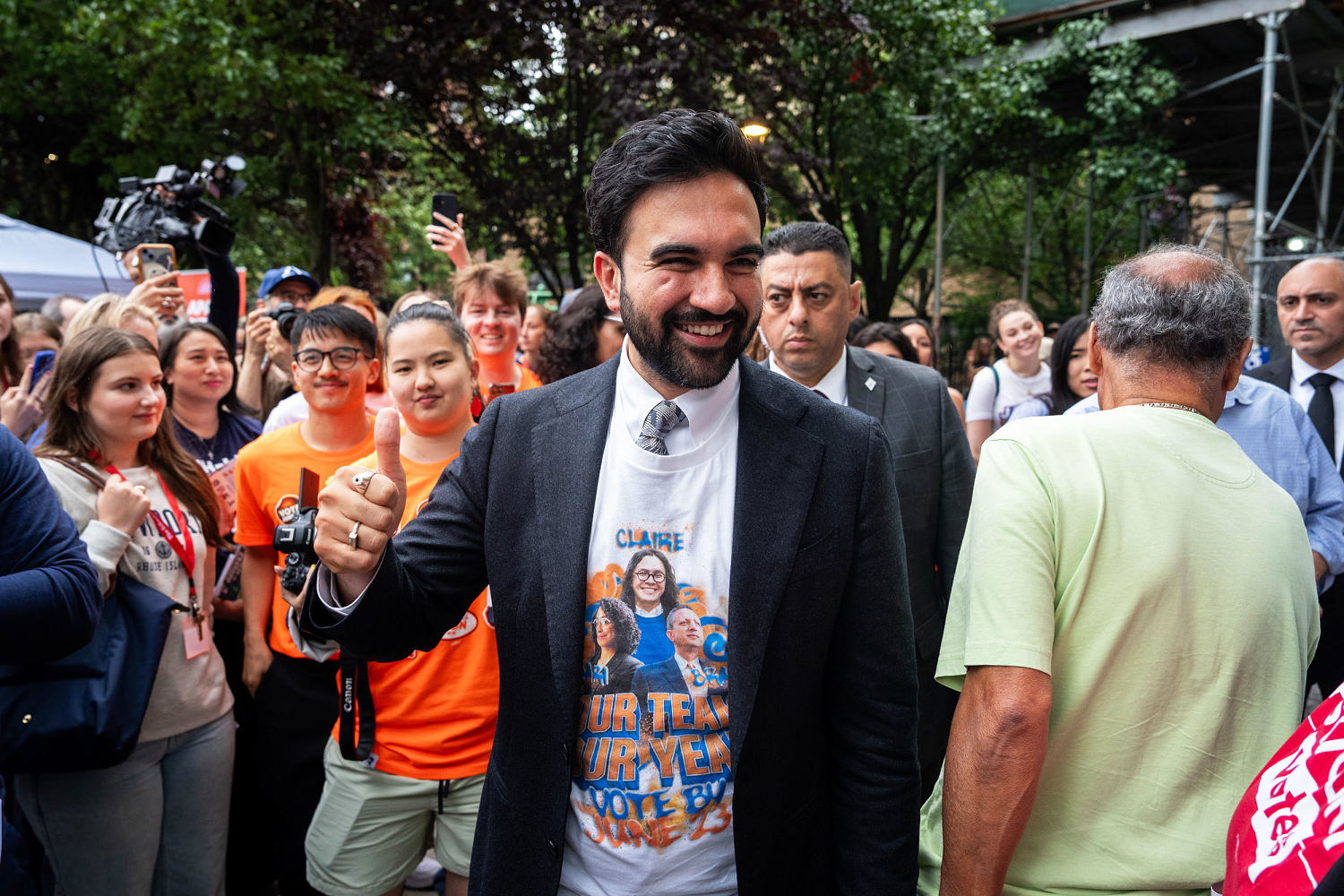
Mamdani’s gamble paid off in spades. At his victory party in Brooklyn, he told the roaring crowd that his own mayoral victory wasn’t the end of a movement, but the beginning. He is right.
The Policy Cliff Separating the Two Factions
The dividing line between these two camps isn't cosmetic. The insurgent winners ran on platforms that make establishment strategists break out in a cold sweat. Chevalier, Lander, and Valdez didn't moderate their rhetoric to appeal to some mythical center. They leaned directly into it.
They campaigned openly on taxing the rich to fund local infrastructure, abolishing ICE, and placing strict human rights conditions on foreign military aid. For a party trying to build a big-tent coalition to protect a razor-thin national environment against Donald Trump's allies, these platforms look like a liability to the beltway crowd. Former Representative Steve Israel, who used to lead the House Democrats' campaign arm, quickly tried to downplay the results, arguing that a few deep-blue enclaves don't define the national party.
But downplaying these wins misses the point entirely. These deep-blue enclaves are where the party’s activist energy, small-dollar donor networks, and youth mobilization live. When you alienate that base, your ground game evaporates.
The establishment did manage to save one crown jewel in Manhattan's 12th District, where Micah Lasher won a crowded primary to succeed retiring Representative Jerry Nadler. Lasher had the full weight of Governor Kathy Hochul, former Mayor Mike Bloomberg, and millions of dollars in super PAC spending behind him. He beat out a field that included Kennedy grandson Jack Schlossberg and Assembly member Alex Bores.
Bores’s loss was particularly telling. His campaign turned into a proxy war for tech billionaires and artificial intelligence interests who poured over ten million dollars into the race to defeat him because of his push for tech regulations. After conceding, Bores noted that the tech oligarchs wanted to make an example out of him to scare off future regulators. Instead, they just proved how much cash it takes for the establishment to hold onto a single wealthy district.
Why the Old Playbook Fails
If you look at how these races were run, the establishment made the same mistake that corporate consultants make every cycle. They relied on top-down messaging and legacy endorsements. They assumed that a nod from Hakeem Jeffries or a mailer from a traditional union boss carries the same weight it did twenty years ago.
It doesn't.
Voters in working-class neighborhoods in the Bronx, Upper Manhattan, and Queens are dealing with exploding housing costs, stagnant wages, and a feeling that corporate interests run Washington regardless of which party is in charge. When an insurgent candidate shows up talking about aggressive tenant protections and taxing billionaires, that resonates far more than a glossy flyer highlighting a fifteen-year-old legislative achievement.
The political reality of 2026 is that Democrats are operating as two distinct parties sharing a single ballot line. One party is focused on suburban swing voters, national stability, and maintaining relationships with corporate donors. The other is driven by an explicit working-class populism that views those corporate donors as the primary enemy.
What Happens Next on the Trail
The immediate challenge for national Democrats is figuring out how to co-exist. The New York primary winners are virtually guaranteed to win their deep-blue seats in November. They will head to Washington as a disciplined, media-savvy bloc with a direct mandate from their voters to disrupt the status quo.
If you are a progressive organizer or an institutional strategist looking at these numbers, the lesson is clear. The establishment cannot take its base for granted anymore, and top-down endorsements are no longer a shield against a well-organized, localized ground campaign.
The next major test of this ideological tug-of-war will move away from the East Coast and land in the Midwest. All eyes are now turning to Michigan’s upcoming August primary, where a wide-open, highly competitive U.S. Senate race will test whether this brand of progressive populism can translate to a crucial presidential battleground state. If the left replicates even a fraction of its New York momentum there, the Democratic establishment won't just be dealing with a rift. They will be looking at a total hostile takeover.