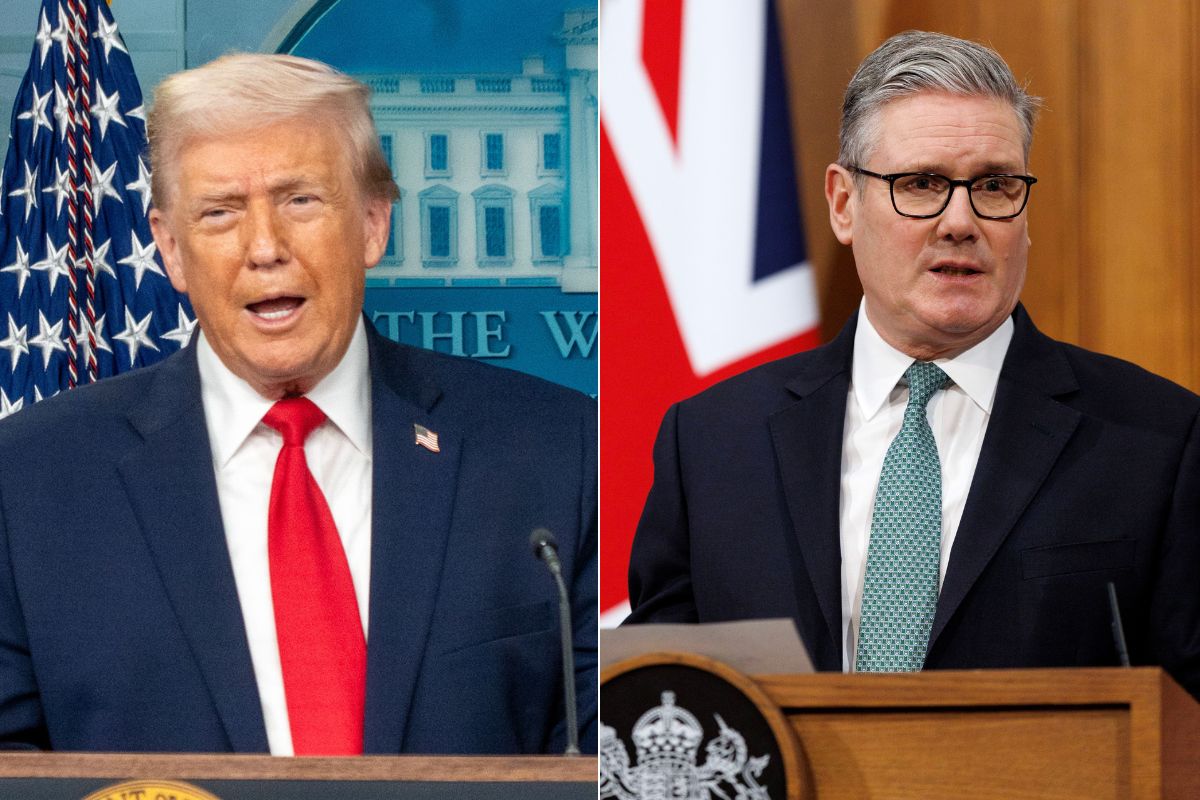
Donald Trump isn't exactly known for holding back his thoughts on foreign leaders, but his latest prediction regarding British Prime Minister Keir Starmer takes political bluntness to a whole new level. Taking to his Truth Social platform, Trump flatly declared that Starmer is finished. He didn't just guess either; he explicitly stated that Starmer "will resign" and pinned the blame on two massive failures.
This public intervention isn't just standard internet trolling from across the Atlantic. It lands directly into a scorching political crisis currently unfolding in London, where rumors are spinning that Starmer might announce a departure timetable as early as Monday.
If you're wondering how a historic 2024 landslide victory evaporated this quickly, you aren't alone. The reality is that London's political ground is shifting fast, and Trump's comments just poured rocket fuel onto an already raging fire.
The Two Policy Failures Trump Pointed Out
Trump didn't mince words when outlining exactly why he thinks the British Prime Minister has failed badly. He pointed to two specific areas that have caused massive friction between Washington and London since Trump took office in January.
The Energy Crises and North Sea Oil
Trump slammed Starmer's energy strategy, specifically calling out the decision to halt new oil and gas exploration licenses in the North Sea. The ongoing conflict involving Iran led to the closure of the Strait of Hormuz—a critical oil shipping lane—sending UK energy and gas prices skyrocketing.
Trump previously urged Starmer to open up deep-sea drilling in the North Sea to stabilize the chaotic energy markets. Starmer refused, digging in to protect strict domestic climate targets. In Trump's eyes, prioritizing regulations over energy independence during a global supply shock is a disqualifying failure.
The Immigration Flashpoint
The second issue is immigration, a topic where the Trump administration takes a notoriously hardline stance. Trump has repeatedly labeled Starmer's border policies as "horrible."
The friction escalated significantly following violent protests over immigration in Belfast. Behind closed doors, the White House has grown increasingly frustrated, viewing the UK as a potential "transition point" for undocumented migration into the US. Starmer's inability to project control over Britain's borders completely broke whatever goodwill remained with the Republican administration.
Why Starmer is Facing an Internal Revolt
Trump's critique might sound like outside noise, but it mirrors a brutal reality inside Starmer's own Labour Party. The administration has struggled to convert its massive electoral mandate into tangible improvements for regular citizens. Instead, voters are dealing with sluggish economic growth, a strained National Health Service (NHS), and unrelenting cost-of-living pressures.
The cracks became impossible to hide after Labour suffered devastating losses in local elections, dropping hundreds of council seats. Left-wing voters are abandoning the party for the Greens, while working-class voters concerned with the economy and immigration are jumping ship to Nigel Farage's Reform UK.
The pressure peaked when defense ministers John Healey and Al Carns resigned from the cabinet, destroying Starmer's narrative that he maintains control over his government. Political commentators in London note that the PM is clinging to power, but his internal authority has essentially evaporated.
The Return of Andy Burnham
What makes Starmer's position genuinely untenable right now isn't just the policy failures—it's that a clear successor is waiting in the wings.
Former Greater Manchester Mayor Andy Burnham just won a crucial parliamentary by-election in the Makerfield constituency. This election wasn't random; it was deliberately engineered to bring Burnham back into the House of Commons. Under Labour Party rules, this clears the path for Burnham to launch a formal challenge to Starmer's leadership.
Allies and party insiders heavily expect Starmer to bow to the inevitable pressure and announce his exit strategy. If he steps down, it will trigger an immediate leadership contest, putting the United Kingdom on track to install its seventh prime minister in just a decade.
What Happens Next
If you are tracking global political stability, the next 24 to 48 hours are critical. Watch Downing Street for an official statement regarding a leadership transition timeline.
Pay close attention to Andy Burnham’s public statements over the coming days, as his camp prepares for a potential leadership transition. At the same time, keep an eye on international energy markets; any signals that a future UK government might reverse the North Sea oil ban could instantly impact global oil pricing structures.