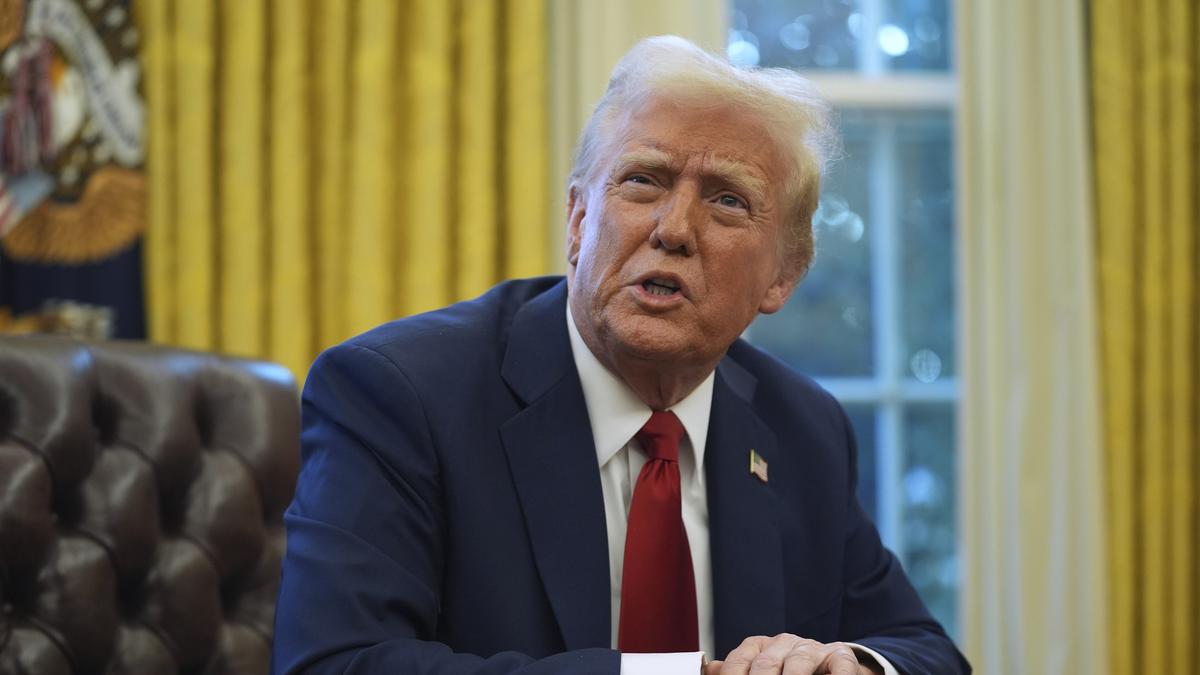
Donald Trump wants to rewrite the rules of American identity. On his very first day back in the White House, he signed an executive order aiming to strip away automatic birthright citizenship from the children of undocumented immigrants and temporary visa holders. His logic sounds simple on television. He claims the 14th Amendment was custom-built solely for the children of freed slaves after the Civil War, not a blank check for the rest of the world to pack their bags and flood across U.S. borders. It is a bold, aggressive argument. It is also completely wrong.
The U.S. Supreme Court made that reality undeniably clear. In the landmark case Trump v. Barbara, a divided high court officially struck down Trump’s executive order. Chief Justice John Roberts led a majority that flatly rejected the White House’s revisionist history, reaffirming that anyone born on American soil is a citizen. Period. If you are trying to understand why Trump’s immigration agenda just hit a massive constitutional wall, you have to look at what the text actually says, what the history proves, and how the legal battle unfolded. For another view, consider: this related article.
The True History Trump Tries to Ignore
The administration's legal defense rested on a single historical narrative. They argued that the authors of the 14th Amendment only wanted to fix the horrors of the 1857 Dred Scott decision, which had declared that Black people could never be citizens. Because the Reconstruction-era Congress focused on protecting newly freed slaves, the modern White House claims the law applies exclusively to them.
That is bad history. It ignores what actually happened during the congressional debates of 1866. Similar reporting on the subject has been published by The New York Times.
The politicians who wrote the amendment knew exactly what they were doing. They did not just write a narrow law for freed slaves. They chose broad, sweeping language. The Citizenship Clause states that all persons born or naturalized in the United States, and subject to the jurisdiction thereof, are citizens.
During the original debates, skeptics explicitly asked if this language would grant citizenship to the children of Chinese immigrants and temporary visitors. The architects of the amendment answered with a resounding yes. Senator John Conness of California openly acknowledged that it would cover the children of Chinese citizens born on U.S. soil. They chose a system based on soil, not bloodlines. They wanted a clean break from the European systems that kept families stateless for generations.
Inside the Supreme Court Rejection of Executive Order 14160
When Trump issued Executive Order 14160, titled Protecting the Meaning and Value of American Citizenship, he attempted to bypass Congress entirely. He ordered federal agencies to stop issuing passports and social security numbers to U.S.-born children unless at least one parent was a citizen or permanent resident.
The legal pushback was instant. The American Civil Liberties Union and several immigrant advocacy groups filed lawsuits, leading to a fierce showdown at the highest level.
Chief Justice John Roberts looked straight at centuries of English common law to dismantle the administration's stance. American law inherited a basic rule from Great Britain. If you are born within the territory of the sovereign, you owe allegiance and you get protection. The exceptions are incredibly small, like the children of foreign diplomats or invading foreign armies.
The administration’s Solicitor General argued that "subject to the jurisdiction" required a permanent political domicile. The court did not buy it. If an undocumented immigrant breaks a local law, they are prosecuted under American law. Why? Because they are subject to U.S. jurisdiction. You cannot argue that someone is bound by your laws for punishment but completely outside your jurisdiction for citizenship.
Justice Amy Coney Barrett joined the liberal block to secure the historic ruling. The court relied heavily on a 128-year-old precedent. In 1898, the court decided United States v. Wong Kim Ark. That case confirmed that a child born in San Francisco to Chinese parents was a citizen, even though his parents were legally barred from ever becoming citizens themselves. The current court recognized that altering this rule would mean tossing out more than a century of settled law.
The Push for a Permanent American Underclass
Trump's political allies have not stopped fighting just because the Supreme Court ruled against them. Senators like Ted Cruz and Lindsey Graham immediately pushed the Birthright Citizenship Act, trying to achieve through legislation what Trump failed to do by executive decree.
They point to numbers from the Center for Immigration Studies, which claims that hundreds of thousands of births each year are to undocumented parents. They argue this creates a massive incentive for illegal immigration.
Let's look at what would happen if they actually got their way.
Ending birthright citizenship does not stop people from coming to the country. It just ensures their children grow up without legal status. You would instantly create a massive, multi-generational underclass of stateless children. These kids would grow up in American towns, speak English, attend local schools, but remain completely barred from legally working, voting, or traveling.
It would turn the United States into a society divided by inherited legal castes. That is exactly what the 14th Amendment aimed to destroy.
What Happens Next for Immigrant Families
The executive order is dead, but the political war over immigration is far from over. If you are navigating the current legal environment, you need to know where the actual risks lie right now.
- Watch the legislative space: While the Supreme Court declared the executive order unconstitutional, Justice Brett Kavanaugh suggested in a separate opinion that Congress might hold the power to alter statutory definitions of citizenship. Keep a close eye on the balance of power in the Senate.
- Prepare for targeted enforcement: Immediately after the court ruling, the Department of Justice announced it would step up investigations into what it calls "birth tourism" rings. They are targeting commercial operations that help wealthy foreign nationals travel to the U.S. on tourist visas solely to give birth.
- Secure official documentation early: For families with mixed immigration status, obtaining a child's official U.S. birth certificate and passport immediately after birth remains the most effective protection against shifting administrative hurdles.
The Supreme Court protected a core pillar of American identity. The country remains one of the few nations where your future is defined by where you are born, not who your parents are. Trump tried to treat the 14th Amendment like a historical relic meant only for the 19th century. The high court reminded him that the Constitution belongs to the present.