The ground in northern Venezuela didn't just shake on June 24. It shattered. Two massive Venezuela earthquakes struck a mere 39 seconds apart, turning high-rise apartment complexes into concrete graves and exposing the structural decay of a nation already on the brink. We are now seeing the true, horrific scale of this disaster. National Assembly President Jorge Rodriguez recently confirmed that the official death toll has climbed to 4,490.
That number is tragic. It is also almost certainly an understatement.
With over 16,740 people injured and an estimated 30,000 citizens still completely unaccounted for, the rescue phase has grimly transitioned into a recovery operation. Families in the hardest-hit coastal state of La Guaira aren't waiting for government promises anymore. They are digging through mountains of pulverized brick with their bare hands, searching for decomposing remains so they can give their children a proper burial. This isn't just a natural disaster. It's a systemic failure that shows exactly what happens when a catastrophic geological event collides with years of economic ruin and political gridlock.
Thirty-Nine Seconds of Absolute Terror
The science behind the catastrophe explains why the destruction was so sudden and absolute. The disaster began at 6:04 p.m. local time when a magnitude 7.2 foreshock ripped through the Veroes Municipality near the San Sebastián fault system. Before residents could even process what was happening or run out of their homes, a massive magnitude 7.5 mainshock hit just 39 seconds later.
It was the most powerful seismic event to strike Venezuela in over a century. The shallow strike-slip faulting occurred right along a highly populated northern corridor, sending violent shockwaves straight into Caracas and the coast.
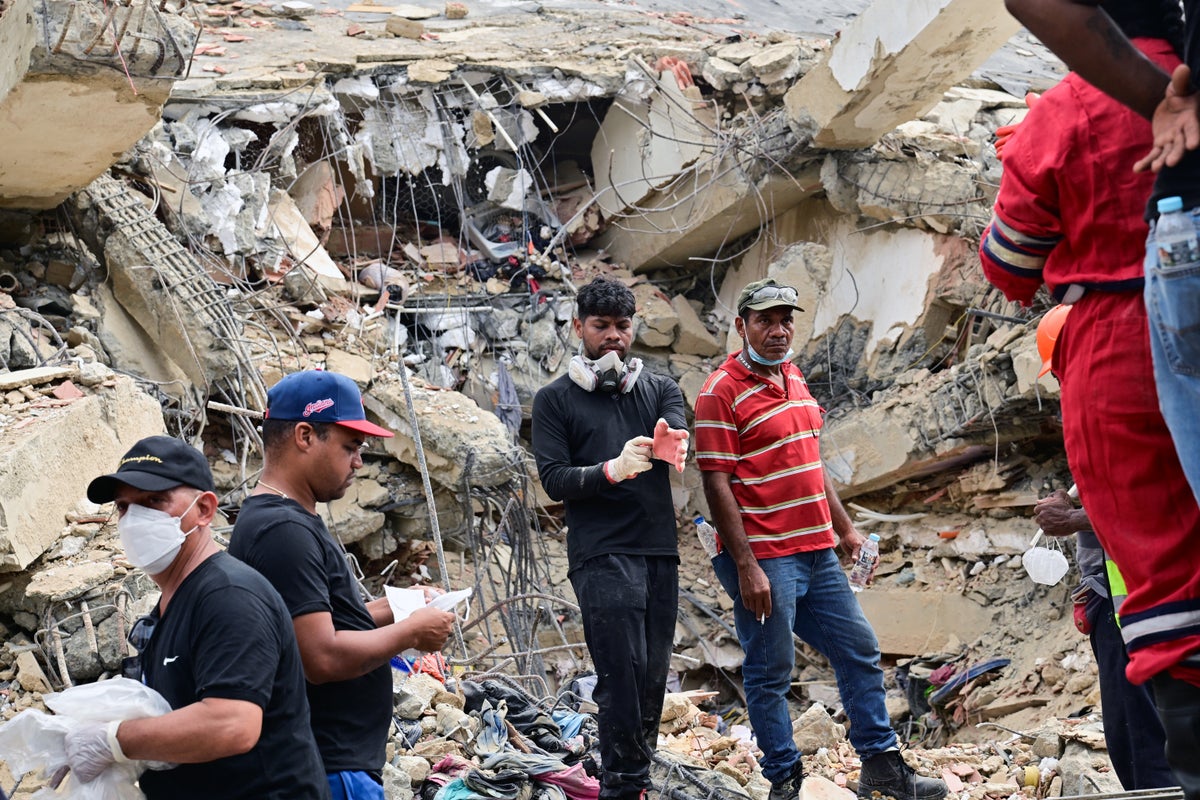
In La Guaira, the devastation defies belief. Estimates indicate that up to 80% of the buildings in certain coastal districts completely collapsed. Modern apartment blocks flattened like accordions. The United States Geological Survey used its PAGER system to analyze the early data, warning from the start that fatalities could easily climb past 10,000 given the density of the population and the vulnerability of the local housing infrastructure. Today, more than 17,907 people are officially homeless, forced to sleep in crowded temporary camps or out in the open air where heavy rains threaten to trigger mudslides.
The Brutal Reality on the Ground
Walk through the ruins of La Guaira right now and you won't see a highly coordinated, high-tech rescue operation. You'll see everyday people carrying the burden. Locals have openly criticized the government, pointing out that official search teams were largely invisible during the critical first 48 to 72 hours when the chance of finding survivors was highest.
Consider the harrowing reality that families face daily. Without heavy earth-moving equipment, neighbors have had to form human chains to move chunks of concrete. The stench of decay hangs heavy over entire neighborhoods. The medical system is buckling under the weight of the crisis. At Caracas's Hospital del Oeste Dr. José Gregorio Hernández, doctors are frantic. They aren't just treating fractures and crush injuries anymore. They are bracing for a massive wave of severe infections from patients who lay trapped under the debris for days before being pulled out.
Sanitary conditions in the makeshift camps are rapidly deteriorating. Clean drinking water is scarce. While officials claim they have distributed millions of liters of water and thousands of tons of food, the aid isn't reaching the deeply isolated pockets of the coast fast enough.
A Political Blame Game Over Ripped Concrete
While citizens mourn, a fierce political battle is playing out in the capital. Executive Vice President Delcy Rodriguez forcefully hit back at critics during a recent press conference, calling the anger of the survivors a "disgraceful" politicization of a human tragedy. She insisted that emergency protocols were activated immediately.
But the political friction runs deeper than angry press conferences. The government is using the disaster to demand the release of state funds frozen abroad due to international sanctions. Delcy Rodriguez even made a direct appeal to King Charles III to release roughly 30 tonnes of Venezuelan gold currently held in the United Kingdom.
The United Nations has stepped in, launching an emergency appeal for $300 million to fund immediate relief operations. A massive international presence has finally arrived, including thousands of volunteers and international rescuers. But the underlying issue remains. Decades of economic hardship mean the country lacked the basic emergency reserves, updated building codes, and structural reinforcement necessary to withstand a major geological shift.
What Needs to Happen Right Now
The time for political posturing ended the moment the first building collapsed. If the international community wants to prevent the death toll from doubling due to disease and exposure, immediate steps must be taken without delay.
First, aid agencies must bypass central political bottlenecks and deliver water purification units directly to the coastal camps. The threat of a cholera outbreak or widespread waterborne illness is incredibly high.
Second, the immediate focus must shift toward supplying heavy excavation machinery to local volunteer groups. Countless bodies remain buried deep beneath multi-story ruins, and manual labor cannot clear the sheer volume of debris blocking essential roads.
Third, a transparent, independently monitored fund must be established to handle international donations. Donor countries are hesitant to send funds directly to state coffers, but they will fund trusted non-governmental organizations that can buy medical supplies and temporary housing units directly.
The tragedy in Venezuela proves that nature doesn't care about political standoffs or economic sanctions. It strikes indiscriminately. The thousands of families sleeping on the asphalt in La Guaira don't care about frozen gold or press room defenses. They want clean water, they want blankets, and most of all, they want the tools to find their missing loved ones before time completely runs out.