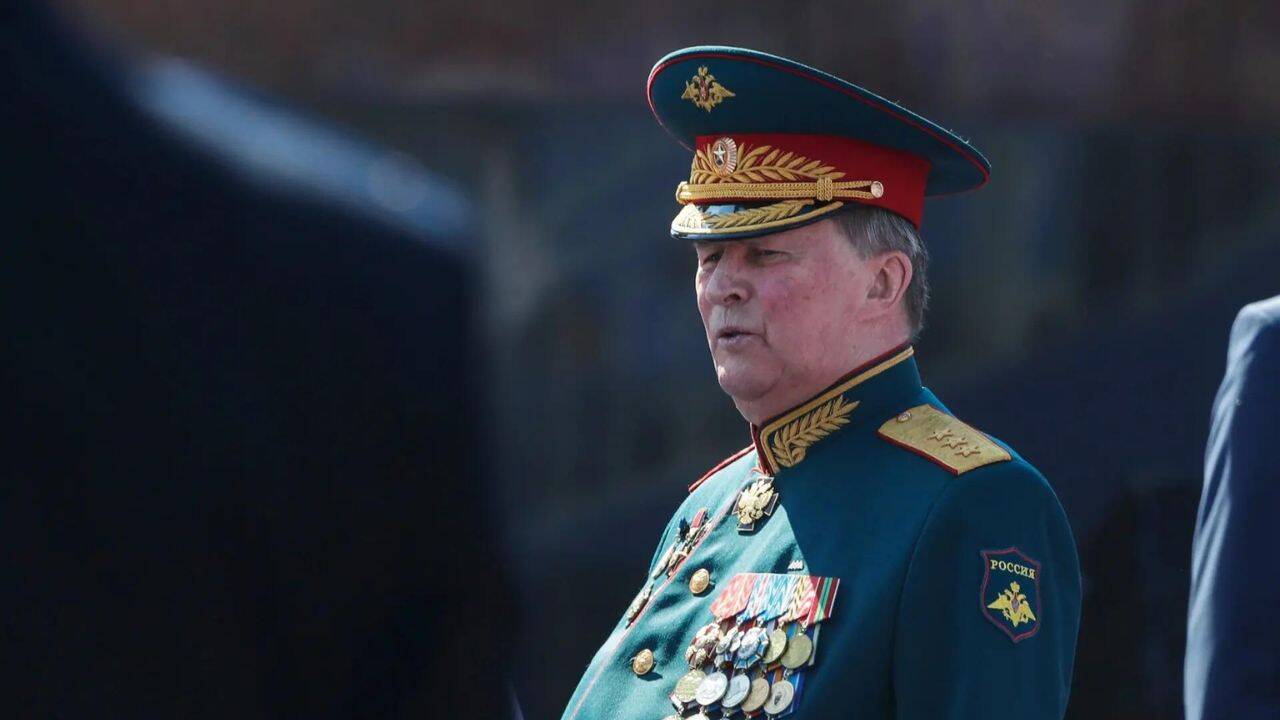
The death of Sergei Ivanov at age 73 marks the true end of an era inside the Kremlin. For years, Western observers and Russian insiders watched him as the man who would inherit Vladimir Putin’s crown. He didn't. Instead, his career became a masterclass in how the Russian system chews up and spits out overly ambitious loyalists.
When the news broke via the VTB United League basketball organization on June 26, 2026, it didn't come with the typical state fanfare reserved for a sitting giant. He was the honorary president of a basketball league, a stark contrast to his days running the Russian defense ministry and the Kremlin staff. His passing from a rumored long-term illness shows how quickly power fades in Moscow.
The Almost President of 2008
You have to look back to 2007 to understand why Ivanov mattered so much. Putin faced constitutional term limits. He needed a placeholder president.
The choice came down to two men from the St. Petersburg inner circle. Sergei Ivanov, the hardline defense chief with a KGB background, stood on one side. Dmitry Medvedev, the seemingly mild-mannered lawyer, stood on the other.
Ivanov looked like a lock. He had the spy credentials, the trust of the security services, and high public approval numbers. In fact, internal polls at the time placed him ahead of Medvedev.
Putin chose Medvedev. Why? Because Ivanov was too strong.
An ambitious, deeply connected president with KGB backing might not have given the keys back to Putin in 2012. Medvedev was safe. Ivanov was dangerous. That single decision altered the trajectory of modern Russian history, locking in the submissive Medvedev era and setting up Putin's eventual return.
From KGB Comrades to Environmental Envoy
Ivanov and Putin shared roots stretching back to 1970s Leningrad. They were young KGB officers together, rising through the ranks of the Soviet intelligence apparatus. When Putin took the presidency in 2000, Ivanov was right there beside him, first as secretary of the Security Council and then as defense minister from 2001 to 2007.
He led the brutal military campaign during the second war in Chechnya. He oversaw the modernizing efforts of a rust-bucket post-Soviet military. He knew every secret the Kremlin held.
Yet, total loyalty didn't guarantee permanent power.
After losing the succession race, Ivanov served as deputy prime minister and then as Kremlin chief of staff from 2011 to 2016. Then came the sudden demotion. In 2016, Putin stripped him of his chief of staff role and handed him a created title: special presidential envoy for environmental affairs, ecology, and transport.
Going from the head of the military to protecting Siberian leopards is a message everyone in Moscow understood. It was an honorary retirement. Putin systematically replaces his old KGB peers with younger, completely dependent bureaucrats who owe their entire existence to him. Ivanov was allowed to live out his days in relative comfort, but his political teeth were pulled a decade ago.
What His Passing Reveals About Modern Moscow
Ivanov’s death leaves the older generation of the siloviki—the security men who built Putin’s regime—dwindling. He was subject to heavy Western sanctions following the military escalations in Ukraine, a reality he shared with almost every vintage Kremlin operator.
His journey shows that in Putin's system, being the ultimate insider means nothing if you pose even a hypothetical threat to the top man. Ivanov accepted his golden parachute quietly. He didn't rebel; he chose survival over a futile power struggle.
If you are tracking where Russia goes next, forget the old names. The old guard is fading away, and Ivanov’s death seals that transition. The people running the show now are technocrats and hyper-loyalists who don't remember the shared camaraderie of the 1970s Leningrad KGB. They only know Putin as an absolute ruler.