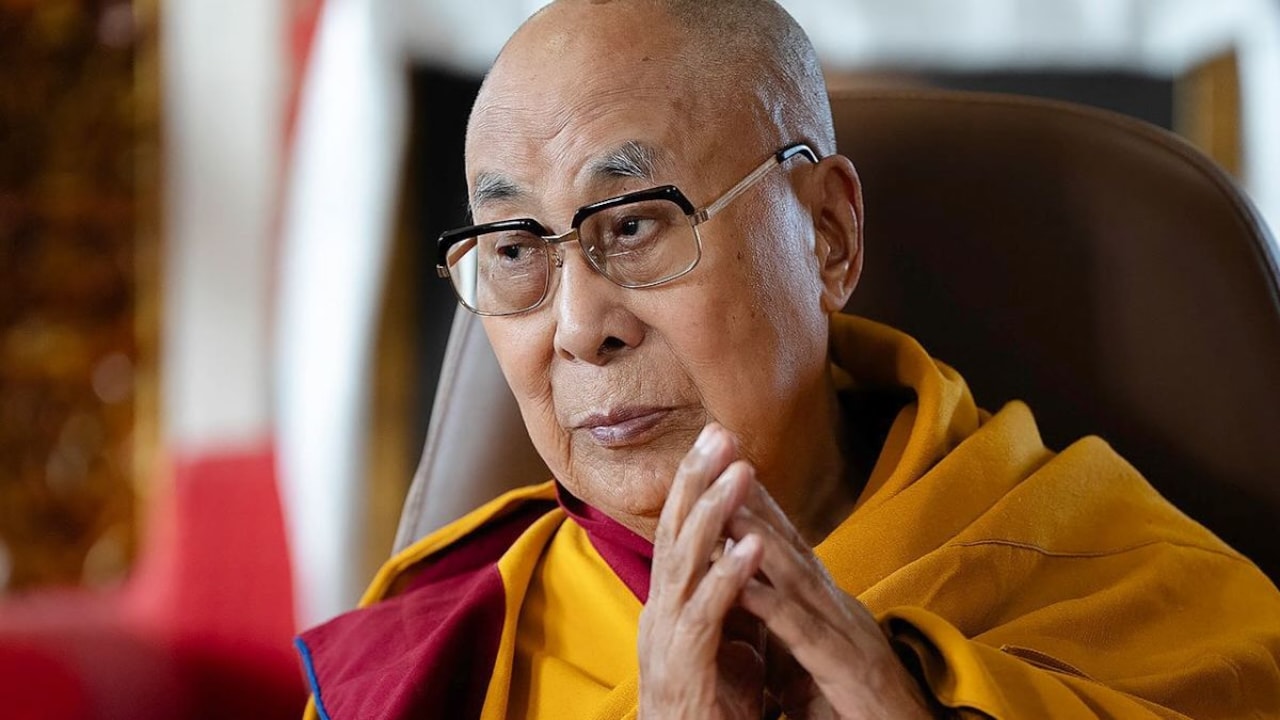
Every July, a quiet Himalayan town in northern India fills with colorful prayer flags, the deep drone of long horns, and thousands of devotees. Dharamshala is celebrating the birthday of Tenzin Gyatso, the 14th Dalai Lama. But beneath the smiles, the cake, and the traditional dances lies a fierce geopolitical struggle that has been simmering for over seven decades.
It is the battle for the soul of Tibetan Buddhism. Specifically, it is about who gets to decide who the next Dalai Lama will be.
The aging spiritual leader has made his position clear. He recently issued a formal statement affirming that the institution of the Dalai Lama will continue and that the responsibility for finding his reincarnation lies exclusively with his own Gaden Phodrang Trust. He explicitly stated that his successor will be born in the "free world" outside of Chinese control.
Beijing shot back instantly. The Chinese Communist Party declared that any reincarnation of the Living Buddha must follow historical rituals, use a special lottery system involving a golden urn, and receive final approval from the central government.
This is not a minor religious spat. It is a high-stakes chess match between an authoritarian superpower and an exiled spiritual movement. The outcome will decide the future of Tibet and permanently impact relations between global superpowers.
The Irony of an Atheist State Choosing a Living Buddha
To understand how absurd this situation has become, you have to look at the fundamental mismatch of the two players. The Chinese Communist Party is officially atheist. It views religion with deep suspicion. Yet, Beijing has codified laws regulating how spiritual figures can reincarnate.
In 2007, China passed State Religious Affairs Bureau Order Number 5. This law dictates that all reincarnations of high lamas must be approved by the government. Without this state stamp, the reincarnation is deemed illegal.
Why does an atheist government care so much about Buddhist rebirth?
Control. Pure and simple.
The current Dalai Lama has been the single most powerful figure uniting Tibetans globally. He fled Tibet in 1959 after a failed uprising against Chinese rule and has spent his life in exile. Despite being away for decades, his influence inside Tibet remains massive. Beijing knows that as long as he lives, their efforts to fully integrate Tibet into the Chinese state will face quiet, resilient resistance.
Beijing is playing the long game. They are waiting for the current Dalai Lama to pass away. When he does, they plan to use their laws to select a young child inside China, declare him the 15th Dalai Lama, and raise him under strict party supervision. By doing this, they hope to neutralize the Tibetan independence movement and turn the highest office of Tibetan Buddhism into a mouthpiece for the state.
The Panchen Lama Blueprint
We know exactly how Beijing plans to execute this strategy because they have done it before.
In 1995, the Dalai Lama identified a six-year-old boy named Gedhun Choekyi Nyima inside Tibet as the reincarnation of the Panchen Lama, the second-highest figure in Tibetan Buddhism. Within days, Chinese authorities detained the boy and his family. He has not been seen in public since, making him one of the world's youngest political prisoners.
Months later, the Chinese government held its own ceremony using a golden urn. They selected another young boy, Gyaltsen Norbu, and declared him the official Panchen Lama.
Today, the government-backed Panchen Lama lives under strict state watch, gives speeches praising Communist Party policies, and travels under tight security. Most Tibetans do not recognize him. They view him as an imposter.
Beijing intends to replicate this exact blueprint when the 14th Dalai Lama passes away. They want a duplicate Dalai Lama who will tell the world that Tibetans are perfectly happy under Chinese rule.
The Counter-Strategy from Dharamshala
The Dalai Lama is fully aware of China’s playbook. He has spent years laying out counter-strategies to block Beijing's plans.
His latest declaration stripped away any ambiguity. By giving sole authority to the Gaden Phodrang Trust, he took the decision completely out of the hands of anyone living under Chinese duress. The search will look at high lamas, traditional protectors, and signs, but it will happen outside of China.
The Dalai Lama has even floated radical alternatives in past interviews. He suggested he might reincarnate as an adult, allowing his successor to bypass a long childhood and take over leadership immediately. He has hinted he could be born as a woman. He has even stated that if the Tibetan people feel the institution is no longer useful, he might simply be the last Dalai Lama, ending the lineage completely rather than letting China hijack it.
By keeping his options open and explicitly stating his next incarnation will be born in the free world, he has set up a scenario where there will almost certainly be two rival Dalai Lamas in the future. One will be chosen by the Tibetan diaspora and recognized by the global Buddhist community. The other will be appointed by Beijing and recognized only by China and its closest allies.
The Geopolitical Fallout Between Giants
This spiritual dispute will quickly turn into a hard political crisis for the rest of the world, particularly for India and the United States.
India has hosted the Tibetan government-in-exile in Dharamshala since 1959. This has always been a major source of friction between New Delhi and Beijing. If the next Dalai Lama is discovered in India—perhaps in the Himalayan regions of Ladakh or Arunachal Pradesh—it will put India in an incredibly delicate spot.
Recognizing an Indian-born Dalai Lama would infuriate Beijing and likely trigger severe military tensions along the already disputed Indo-Chinese border. But refusing to recognize him would alienate millions of Buddhists and look like a surrender to Chinese pressure. Indian leaders have consistently supported the Dalai Lama's right to celebrate his birthdays and manage his spiritual affairs, but a succession crisis will test New Delhi's resolve like never before.
The United States has already picked a side. The US Congress passed the Tibet Policy and Support Act, which makes it official US policy that the selection of the Dalai Lama is a strictly religious matter that belongs only to the Tibetan Buddhist community. The law mandates sanctions on any Chinese officials who try to interfere in the succession process. More recently, American lawmakers and international bodies like the European Parliament have pushed back heavily against China's intensifying "Ethnic Unity" laws, which aim to systematically erase Tibetan cultural identity and language.
What Happens When the Restraining Force is Gone
Many geopolitical analysts believe Beijing is making a massive miscalculation by trying to kill off the Dalai Lama's influence.
For fifty years, the Dalai Lama has been a voice of moderation. He advocates for the "Middle Way Approach." This policy does not seek full independence for Tibet. Instead, it asks for genuine autonomy within the framework of the Chinese constitution, allowing Tibetans to preserve their culture, language, and religion while remaining part of China.
He has also been the primary force keeping Tibetan resistance peaceful. When major anti-government protests broke out in Lhasa in 1987 and 2008, the Dalai Lama stepped in to calm the crowds. In 2008, he went so far as to threaten to resign as leader of the exile government if the violence did not stop. Tibetans listened to him.
Once he passes away, that massive restraining force disappears.
Younger generations of Tibetans, both in exile and inside Tibet, are growing deeply frustrated. They see that decades of peaceful dialogue have yielded zero concessions from Beijing. Instead, they see tighter surveillance, the forced assimilation of children into boarding schools, and the systematic destruction of their language.
Without the Dalai Lama's moral authority holding them back, the Tibetan movement could easily turn radical. Beijing’s heavy-handed attempt to install a puppet leader could trigger the exact instability and border insecurity they are trying to avoid.
Steps for the International Community
The battle over the next Dalai Lama is not a future problem. It is happening right now through policy, law, and diplomacy. If global governments want to protect religious freedom and prevent a massive crisis in Asia, they cannot wait until the current leader passes away.
Action must happen immediately through specific steps.
Codify Succession Laws Globally
Other democratic nations must follow the blueprint set by the United States. Governments in Europe, Asia, and the Americas need to pass domestic legislation stating clearly that they will only recognize a Dalai Lama chosen via the traditional methods outlined by the Gaden Phodrang Trust. Legally formalizing this stance now takes away Beijing's ability to surprise the world later.
Reject the Government-Appointed Panchen Lama
International bodies and diplomats must refuse to meet with or validate Gyaltsen Norbu, the state-appointed Panchen Lama. Treating him as a legitimate religious leader gives China the green light to use the same tactic for the Dalai Lama.
Keep the Spotlight on Tibetan Human Rights
Beijing relies on the world forgetting about Tibet. International governments must continue to monitor and publicly report on the status of religious freedom, the closure of private Tibetan schools, and the ongoing surveillance of monasteries. The Tibetan Centre for Human Rights and Democracy consistently documents these crackdowns, and these findings must be brought directly to the United Nations floor.
The coming succession crisis will not just be about a single throne in a monastery. It is a direct test of whether an authoritarian state can rewrite ancient spiritual traditions by force, or whether a community's faith can withstand the pressure of a global superpower. The ground is being laid today, and the world cannot afford to look away.