A warm summer night turned into absolute terror just an hour after the celebratory fireworks cleared from the sky. Eight people were shot on West 31st Street in Brooklyn, including four young children who were simply out enjoying the holiday. The NYPD is actively hunting for suspects, but the damage is already done. This isn't just another tragic headline. It's a glaring reminder that our city's approach to holiday security is completely failing the families who live here.
When gunfire erupted at 10:37 PM near the Seapark Apartments, the festive energy of the nation's 250th anniversary instantly evaporated. Chaos took over. Emergency responders rushed to the 2900 block of West 31st Street, finding a scene of pure devastation.
People want answers immediately. They want to know who was hurt, why it happened, and how a family-friendly neighborhood became a war zone in seconds.
Here's exactly what we know about the victims right now. The youngest victim is a 6-year-old boy who took a bullet to the stomach. A 7-year-old boy was shot in both legs. A 12-year-old boy was hit in the leg, and a 14-year-old boy was wounded in the thigh. Think about those ages for a moment. These are elementary and middle school kids. Alongside them, a 21-year-old woman is currently fighting for her life in critical condition after being shot in the chest. Three others—two men aged 33 and 37, and a 25-year-old woman—are in stable condition at local hospitals.
Police found a gun at the scene. They haven't caught the shooter.
The chaos on West 31st Street
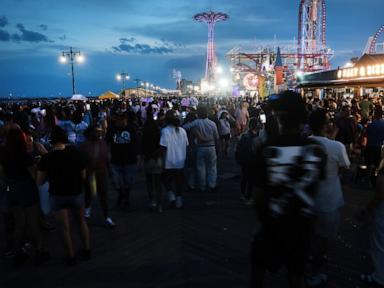
The location of the shooting isn't an isolated, dark alleyway. It happened right near a major residential complex during a high-traffic holiday evening. Coney Island draws hundreds of thousands of visitors every single Fourth of July for the beach, the boardwalk, and the massive fireworks displays.
Witnesses described a scene where people couldn't tell the difference between the final echoes of fireworks and the sudden pop of real gunfire. That confusion is deadly. By the time families realized they were hearing gunshots, bullets were already flying through the crowd.
Emergency medical teams did what they could, moving all eight victims to regional trauma centers quickly. But stable condition doesn't mean healed. A 7-year-old boy recovering from bullet wounds in both legs faces a lifetime of physical and psychological trauma. The neighborhood faces that same trauma.
Neighbors are angry, and they have every right to be. The community feels exposed. Gun violence on major holidays has become an predictable, terrifying pattern that city leadership can't seem to get ahead of.
Breaking down the July Fourth holiday violence spike
We need to look at the numbers because they tell a story that politicians often try to smooth over. Independence Day is historically the most violent day of the year in America when it comes to mass shootings and gun-related injuries.
Warm weather, large outdoor gatherings, alcohol, and readily available illegal firearms create a volatile mix. Data from the Gun Violence Archive consistently proves that early July sees a massive surge in shooting incidents nationwide. New York City isn't immune to this trend despite having some of the strictest gun laws in the country.
The problem isn't a lack of awareness. Everyone knows the risks go up on holiday weekends. The problem is how the city allocates its resources.
Massive crowds get channeled down to the boardwalk and the main strip where the main events happen. Police presence is incredibly heavy in those specific tourist zones. You see rows of officers, barricades, and flashing lights every few yards. But just a few blocks inland, where local residents actually live, that security blanket quickly thins out. West 31st Street sits just blocks away from the main tourist hubs, yet it became a blind spot.
Why standard police deployment misses the mark
Law enforcement tends to flood high-profile tourist areas to protect the city's economic interests and public image. It makes sense on paper. You protect the beach, the boardwalk, and the amusement parks because that's where the massive influx of people congregates.
This strategy creates a dangerous security vacuum in the surrounding residential blocks. Criminals aren't going to initiate a shootout directly in front of a dozen state troopers standing on the boardwalk. They move a few blocks away into the residential side streets where the police presence is noticeably lighter.
The Seapark Apartments area became vulnerable because the security perimeter didn't extend deep enough into the community. We see this mistake repeated during New Year's Eve, Labor Day, and Memorial Day weekends. The focus stays locked on the main event area while the local neighborhoods are left to fend for themselves.
True community safety means securing the places where people live, not just the places where tourists spend money.
What needs to change before the next holiday weekend
We have to stop treating these holiday shootings as unpredictable anomalies. They are completely predictable. Because they are predictable, they are preventable.
First, the NYPD needs to shift its deployment strategy from a centralized model to a decentralized one. Security perimeters for major events must extend at least five to six blocks deeper into the surrounding neighborhoods. This stops the creation of fringe zones where illegal activity can thrive just out of sight of the main detail.
Second, we need to talk about real, localized intelligence and community partnerships. Neighbors usually know where the tension points are. Local community leaders, credible messengers, and violence interrupters need backing and active communication channels with precinct commanders well before the holiday weekend begins. Gun violence interrupters can flag brewing disputes before someone pulls a trigger in a crowd of children.
If you want to keep your family safe during these high-risk holiday events, you can't rely solely on city infrastructure. Stay aware of your surroundings. Understand where the nearest exits and solid structures are when you attend crowded outdoor events. If you live in an area adjacent to a major celebration, keep small children indoors during the late-night hours when event crowds begin to disperse into the side streets.
The shooting in Coney Island shouldn't have happened. The fact that four children are currently in hospital beds because of a holiday dispute is an absolute failure of public safety planning. We don't need more empty statements or promises of thorough investigations. We need a fundamental shift in how this city protects its neighborhoods when the fireworks stop.
Check your local precinct's community council schedule and demand to see the neighborhood deployment maps for the next upcoming public holiday. Hold local leaders accountable for the gaps in your backyard.