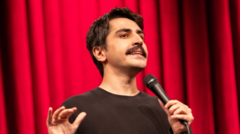
You can't laugh at the president, and you definitely can't laugh at the Quran. That's the reality Turkish stand-up comic Deniz Goktas faced when he stepped off a plane at Istanbul's main airport.
Instead of heading home, the 32-year-old comedian was slapped with handcuffs. His crime? Making a stadium full of people laugh.
The Istanbul Chief Public Prosecutor's Office moved fast. They launched an investigation into Goktas for "publicly insulting religious values." If he's convicted, he could face up to a year behind bars. It's the latest flashpoint in an aggressive government push to quiet independent voices before a major NATO summit.
What got him into trouble wasn't a hidden underground tape. It was his latest special, "Olu Deniz" (Dead Sea). Recorded in Istanbul, the show went live on YouTube on June 25. Within a week, it racked up over 8.7 million views.
The Jokes That Broke the Internet
Goktas didn't hold back. He took aim at Turkey's long-standing political issues, opposition leaders, and the delicate Kurdish and Alevi questions. But the real trigger for the authorities was his commentary on President Recep Tayyip Erdogan and Islam.
During the set, Goktas called Erdogan a "reticent dictator who grew into the role." He also cracked jokes involving the Quran, even though he jokingly credited it as "the best" of all holy books.
That didn't stop government-aligned figures from painting a target on his back. High-profile politicians like Great Unity Party Chair Mustafa Destici and former Ankara Mayor Melih Gokcek blasted him online. The pro-government newspaper Sabah reported that 185 public complaints flooded in. That gave prosecutors all the ammunition they needed to order his detention.
The Information and Communication Technologies Authority quickly stepped in to block social media clips of the show. But the digital cat was already out of the bag.
A Pattern of Silencing the Stage
This isn't an isolated incident. Turkey's comedy scene has been operating in a minefield for years. The government has steadily narrowed the room for free expression, moving from journalists and politicians to pop culture figures.
Just months ago, female comedian Tuba Ulu was detained. Her offense? A joke about Ottoman Sultan Suleiman the Magnificent marrying his "fuck buddy," referring to Roxelana. She faces up to three years in prison for insulting historical and moral values.
Last year, YouTuber Bogac Soydemir and rapper Enes Akgunduz were jailed pending trial over a simple wordplay joke about a Islamic teaching. Even Turkey’s iconic satirical magazine, Leman, has seen its staff put on trial.
"Deniz Goktas showed the youth of this country that it's possible to speak out without fear. A very important threshold has been breached," says New York University historian Ayse Baltacioglu-Brammer.
What This Means for Free Speech
The state's reaction shows exactly how threatened it feels by raw, uncensored culture. When traditional news outlets are heavily controlled, comedy clubs and YouTube channels become the last places where people can hear the truth about their daily reality.
Goktas actually seemed to know what was coming. During his live show, he placed a massive cardboard cutout of his own face on its side on the stage, mimicking a decapitation. He knew the risks. He told the jokes anyway.
If you want to support free expression and stay informed on how censorship impacts global culture, here is what you can do right now.
- Watch independent creators directly: Support regional artists on platforms like YouTube before censorship algorithms or state bans pull their content down.
- Follow local free speech watchdogs: Organizations like Bianet and the Expression Interrupted project track judicial harassment of artists and journalists in real-time.
- Spread the word: Sharing stories of detained artists keeps international pressure on regimes that use courts to silence comedians.