The margins for error in the American West don't exist anymore. On Saturday, June 27, 2026, the brutal reality of modern wildland firefighting struck Mesa County, Colorado, leaving three federal firefighters dead and two others hospitalized with severe burns.
This wasn't a standard containment operation gone wrong. It was a violent, climate-driven trap. Five wildland crew members from the U.S. Wildland Fire Service and the U.S. Forest Service were caught in a catastrophic "burnover" while battling the Knowles and Gore fires near the Colorado-Utah border. When a fire moves too fast to escape, you deploy your emergency fire shelter, pin the corners with your limbs, press your face to the dirt, and pray the heat shield holds.
It didn't hold.
The tragedy forces us to confront an uncomfortable truth. The explosive nature of today's infernos means our traditional suppression playbook is failing the people we send to the front lines.
The Micro-Climate Trap That Triggered the Burnover
To understand how three experienced professionals lost their lives, you have to look at how quickly separate blazes can transform into a single megafire.
On Saturday morning, the Knowles Fire was just a 20-acre spot in the southern section of the McInnis Canyons National Conservation Area, likely ignited by a lightning strike. A few miles away, the Gore Fire was burning in similar rugged terrain. Individually, these were routine, manageable incidents for federal crews.
Then the weather shifted.
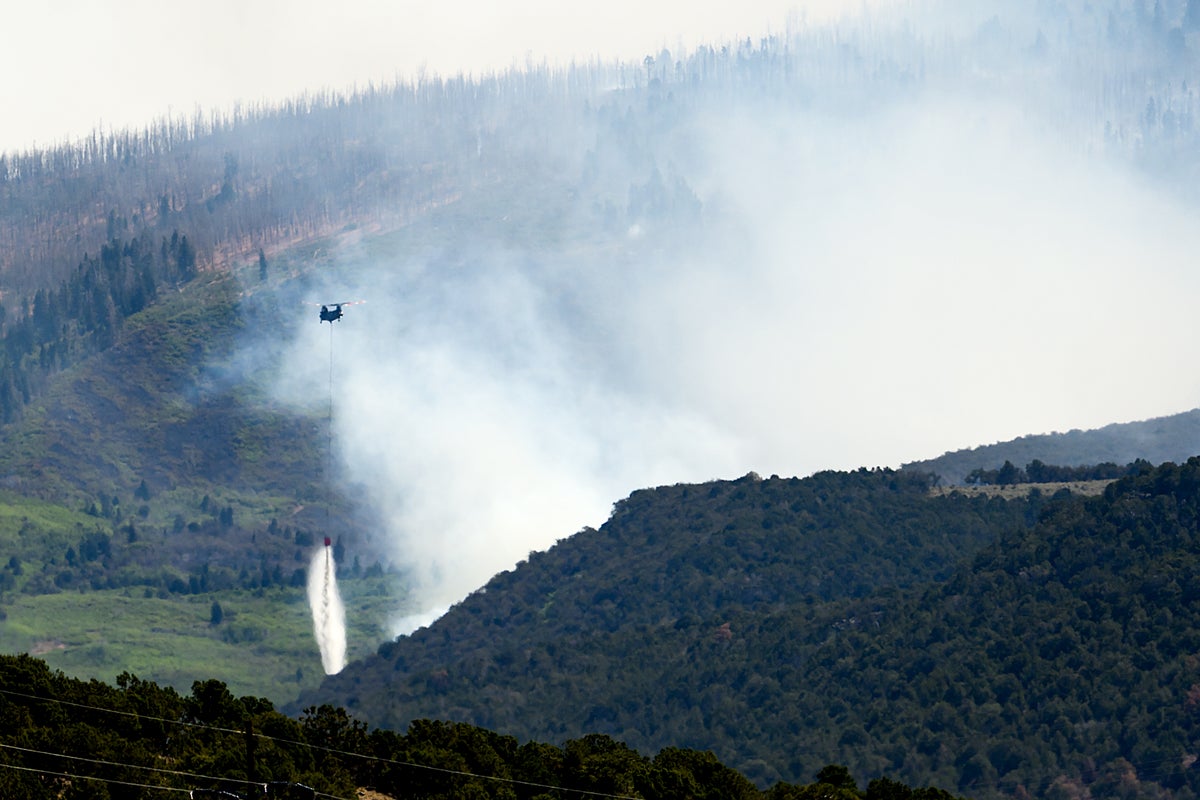
The National Weather Service had issued red flag warnings across the region, predicting bone-dry humidity and wind gusts reaching 50 mph. When those high winds hit the border canyons, they acted as a bellows. The Knowles and Gore fires didn't just grow; they exploded and merged with the nearby Jones and Snyder Mesa blazes. In a matter of hours, the independent fires consolidated into a massive, 28,000-acre monster renamed the Snyder Fire.
Knowles Fire + Gore Fire + Jones & Snyder Mesa Blazes —> The Snyder Fire (28,000+ Acres)
The crew was caught in the worst possible terrain during an atmospheric shift. In narrow canyons, high winds cause fires to "draft" like a chimney, racing uphill faster than a human can run. The speed of the Snyder Fire's expansion cut off escape routes, forcing the five-person team to deploy their aluminum-and-fiberglass emergency shelters on the ground.
While two injured crew members were successfully evacuated by helicopter to area hospitals, three did not survive the extreme thermal environment.
The Limits of Fire Shelters Against Modern Heat Load
The wildland firefighting community views the fire shelter as an absolute last resort. It's a small pup-tent-shaped shield designed to reflect radiant heat and trap breathable air near the ground. But these shelters have limits. They are rated to withstand radiant heat up to 500 degrees Celsius, but direct flame contact degrades the protective layers rapidly.
When a wildfire expands by thousands of acres in a single afternoon, fueled by historic drought, the fuel load burns deeper and hotter. The air temperature inside a violent burnover zone can easily exceed the physical capabilities of personal protective equipment.
By Sunday morning at the Grand Junction airport, a solemn procession of fire trucks and law enforcement vehicles escorted the flag-draped bodies of the fallen from a helicopter to the Mesa County Coroner's Office. It was a bleak reminder that courage cannot override the laws of thermodynamics.
A System Stretched to the Breaking Point Across the West
This disaster isn't happening in isolation. The entire Western Slope is burning, and our wildland firefighting infrastructure is being pushed past its absolute capacity.
Further west, the Cottonwood Fire in central Utah's Fishlake National Forest has exploded into the largest active wildfire in the United States, scorching more than 144 square miles (92,000+ acres) and remaining at 0% containment. The fire has already marched through steep canyons, destroying summer cabins and ripping through portions of a local ski resort.
The sheer number of concurrent starts has created an unprecedented operational strain:
- Resource Depletion: Utah State Forester Jamie Barnes confirmed that the sudden influx of lightning-caused blazes has stretched the state's response capabilities to their limit.
- Political Triggers: Utah Governor Spencer Cox has already issued an emergency declaration to ban fireworks ahead of the July Fourth holiday. Simultaneously, Colorado Governor Jared Polis declared a disaster emergency, authorizing the Colorado National Guard to assist overwhelmed ground crews.
- Tactical Roadblocks: The terrain along the Colorado-Utah border makes mechanical suppression nearly impossible. Bulldozers, heavy engines, and clearing equipment can't navigate the cliffs and vertical slopes. Everything relies on hand crews and erratic air drops.
The U.S. Wildland Fire Service was officially established earlier this year to streamline federal wildland fire response across public lands. Yet, despite better multi-agency coordination, crews are battling fires that display completely unprecedented behavior due to hyper-dry fuels and intense regional droughts.
The Hard Realities of Community Protection
If you live anywhere near the Western Slope or the intermountain West, the loss of these three firefighters should change how you view your own wildfire readiness. We can no longer assume that an engine crew will always be available to save a home.
The Mesa County Sheriff’s Office has spent the weekend going door-to-door, expanding pre-evacuation and mandatory evacuation zones west toward the Utah border. For property owners in these high-risk areas, the protocol has shifted from defensive firefighting to immediate, proactive mitigation.
Real Actions to Take Now
Don't wait for a smoke column to appear on your horizon before taking action.
- Enforce Defensible Space Dynamically: The classic 30-foot clear zone isn't enough when embers fly miles ahead of a wind-driven fire. Clear dry brush, pine needles, and dead vegetation up to 100 feet from your home. Focus heavily on clearing under decks and porches where trapping occurs.
- Saturate Your Perimeter Proactively: If your local emergency management team issues a pre-evacuation notice, utilize your agricultural or residential irrigation systems. Turning on perimeter sprinklers and saturating fields or lawns can disrupt the ground-level fuel chain, giving your structure a passive defense if crews are pulled back.
- Leave the Moment You're Told: The tragedy in Mesa County proves that fire velocity outruns vehicles and humans alike. When a pre-evacuation warning upgrades, pack your essentials and get out. Delaying your exit blocks narrow mountain roads, trapping both your family and incoming emergency vehicles.
The Bureau of Land Management has completely closed public access to lands within the McInnis Canyons area to prevent further human-caused ignitions from compounding the crisis. Respect these boundaries. Every single recreational mistake right now risks the lives of a firefighting force that is already grieving, exhausted, and fighting an uphill battle against an unyielding environment.
Learn more about wildland firefighter safety and shelter limits
This field report from KUTV 2News details the extreme scale of the nearby Cottonwood Fire and explains the regional conditions facing wildland crews on the ground.