Pop culture and heavy engineering usually don't mix. Yet, Chinese scientists recently decided to bridge that gap by naming a newly discovered, ultra-tiny fish species after Blackpink's Jennie. It sounds like internet clickbait, but it's a real scientific record.
If you think that's a bizarre footnote, look closer at the broader scientific landscape coming out of the region. From ocean observation towers that break records to 6G networks turning concrete walls into massive radar systems, things are moving fast.
The Western media tends to focus strictly on geopolitical tech battles, but the real story is the sheer velocity of practical, everyday breakthroughs. Here is what is actually happening on the ground, minus the usual corporate jargon.
The Pop Star Fish and the South China Sea Tower
Let's start with the small stuff. Researchers in China discovered one of the smallest fish species in the world and officially named it after K-pop star Jennie. It shows a distinct shift in the culture of academic research. The old, stiff academic guard is giving way to younger, pop-culture-fluent scientists who aren't afraid to inject some personality into the official taxonomic record.
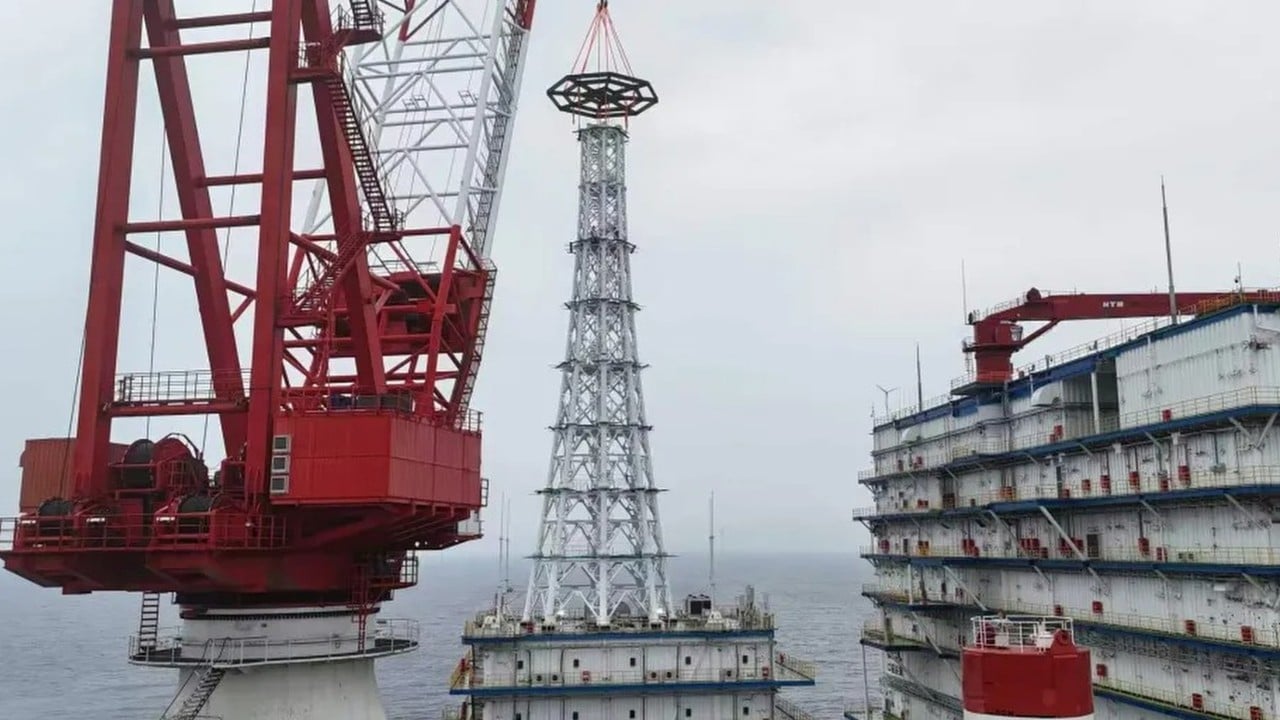
Meanwhile, on a massive scale, the China Meteorological Administration just finished building a 100-meter environmental observation tower right in the middle of the South China Sea. It's the tallest tower of its kind in the region.
Why does a giant metal pole in the ocean matter? Because it gives scientists highly granular, real-time data on atmospheric conditions where weather systems form. If you want to predict typhoons before they wreck coastal cities, you need data from the exact spot the tower now stands.
Free Drinking Water from the Sun
Desalination is historically a terrible business. It takes massive amounts of electricity or fossil fuels to boil salt out of ocean water, meaning only wealthy nations can afford to scale it.
A Chinese research team changed that dynamic by creating a new photothermal material. They literally wove nanoparticles into a three-dimensional evaporation structure.
- The Cost: Zero utility energy bills.
- The Mechanism: It relies entirely on solar energy to drive evaporation.
- The Result: Cheap, stable, year-round fresh water.
In outdoor prototype tests, this system ran with zero external power costs for a full year. It makes desalinating seawater cheaper than buying bottled water. For coastal communities facing massive freshwater shortages, this alters the economic playbook completely.
The 6G Smart City Where Walls Have Eyes
Everyone is still trying to get reliable 5G signals, but engineers in China are already testing 6G networks in simulated smart cities. The real development isn't just faster download speeds for your phone. It's structural sensing.
They built a specialized metasurface system that turns normal building materials into signal reflectors. Think of it like a precision mirror for wireless data.
If a 6G signal hits a dead spot behind a concrete pillar, these surfaces bounce the signal around the corner. But here's the catch: as the signal bounces, the system tracks how the waves deform. This allows the walls, pipes, and structures to act as a giant radar system. The network tracks people moving through a room without using a single camera. It's brilliant for automated safety, but arguably terrifying for privacy.
The Talent Reverse Migration
For a long time, the flow of scientific talent was a one-way street from Asia to Western institutions. That trend is breaking down fast. The combination of intense scrutiny in Western labs and massive funding drives at home is causing top-tier talent to return.
Take Chen Weiqiang, for example. He was a tenured professor of mechanical and biomedical engineering at New York University. He's a pioneer in "cancer-on-a-chip" technology, which lets doctors test oncology treatments on live cells outside a human body. He packed up his lab and joined Nanjing University as a distinguished professor.
He isn't alone. Li Xueke, an Arctic climate scientist, left the University of Pennsylvania for Hong Kong. As global warming opens new shipping routes in the Arctic, her work on the economic impacts of a melting north is critical. She noted that the move was about getting to the front lines of the green economy. When researchers feel that the West is becoming an unhealthy environment for collaboration, they vote with their feet.
What the Data Actually Tells Us
A lot of analysts love to speculate about who is winning the global tech race. A recent United Nations report on Sustainable Development Goals shed some light on this without the usual political spin.
According to UN data, China is actively on track to surpass the United States in key metrics regarding human and planetary health. The data shows China hitting targets for poverty eradication and quality education, while the US leads heavily in traditional industry, innovation, and infrastructure.
It reveals that the scientific push isn't just about building weapons or faster microchips. The funding is targeting basic survival metrics: clean water, sustainable cities, and localized medical research.
Your Next Steps to Track This Shift
If you're managing investments, working in tech, or just trying to stay ahead of the curve, stop reading generic tech blogs.
- Monitor the talent pipelines: Watch the roster changes at major universities like Tsinghua, Peking, and Nanjing. When top researchers leave Western institutions, their patent portfolios and grant pipelines move with them.
- Look at infrastructure, not software: Apps are easy to copy. A 100-meter observation tower or a specialized 6G metasurface infrastructure cannot be cloned overnight. Follow the physical deployments.
- Watch the water sector: Solar desalination materials are moving from lab prototypes to industrial scaling. Keep an eye on companies commercializing photothermal materials; they will disrupt the utilities market sooner than you think.

:max_bytes(150000):strip_icc()/TAL-nassau-bahamas-BEAUTCARIB0323-4fbfce903e5a4418b895e03717e3de0d.jpg)