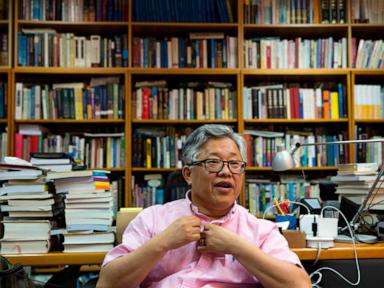
A sudden landing at Los Angeles International Airport on a Friday evening marked the end of a grueling ordeal for one of China’s most prominent religious figures. Pastor Ezra Jin Mingri, founder of the massive underground Zion Church, is officially back with his family in the United States. His release comes less than two months after U.S. President Donald Trump personally raised his case during a high-stakes state visit to Beijing in May 2026.
If you have been following the escalating tensions surrounding religious freedom in China, this news is a massive shift. A pastor freed from prison in China after direct diplomatic intervention is rare. It breaks the usual pattern of how Beijing handles high-profile domestic dissidents. The family openly credited the sudden development to direct intervention from Chinese President Xi Jinping following Trump's appeals.
While this brings immense relief to Jin’s family, it opens a flood of questions about what this means for international diplomacy, human rights, and the thousands of other believers still operating under the shadow of state surveillance.
The Reality of the October Crackdown
To understand why Jin’s release is such a big deal, you have to look at how he ended up in a cell in the first place. In October, Chinese authorities executed one of the largest coordinated crackdowns on a single independent church in decades. Security forces detained Jin along with 17 other pastors and staff members associated with Zion Church.
For years, the officially atheist Chinese Communist Party has mandated that all Christian worship take place strictly within government-registered congregations. These state-sanctioned bodies, known as the Three-Self Patriotic Movement, face strict censorship regarding what they can preach. Jin refused to comply. He wanted a church that put faith above state control.
He founded Zion Church in 2007. It quickly grew into one of the largest house churches in Beijing. The state tried to crush it in 2018 by forcing its physical location to close. Jin did not back down. He moved the entire operation online. The church utilized streaming services and digital platforms to reach thousands of believers across the country.
That digital defiance ended up putting a target on his back. New regulations from China’s top religious regulator specifically banned unauthorized online preaching, religious training by unregistered clergy, and anything deemed as foreign collusion. By the time October rolled around, the state moved in.
The Air Force One Disclosure
The diplomatic chess match that secured Jin's freedom became public in mid-May 2026. Flying back from his state visit to Beijing, Trump dropped a bombshell to reporters aboard Air Force One. He revealed that he had specifically given Xi Jinping a list of political prisoners, with Jin’s name near the top.
According to Trump, the Chinese leader promised to give serious, strong consideration to the pastor’s case. But the conversation was not entirely victorious. Trump also pressed Xi on the release of Jimmy Lai, the 78-year-old devout Catholic and pro-democracy media mogul serving a 20-year sentence in Hong Kong. Xi’s response to that request was entirely different.
Trump admitted that Xi told him Lai's case would be a tough one. The response regarding the aging tycoon was not positive at all. Lai was convicted of conspiracy to collude with foreign forces under Hong Kong's sweeping National Security Law, a charge Beijing views as a direct threat to its sovereignty.
This contrast shows exactly how Beijing calculates its diplomatic concessions. Releasing a domestic religious leader like Jin satisfies a key U.S. diplomatic request without undermining what China considers core national security red lines in Hong Kong.
Why This Release Breaks the Standard Pattern
Historically, when China decides to release a prisoner due to Western diplomatic pressure, the individual is almost always a foreign national. For instance, in 2024, the U.S. State Department successfully secured the release of David Lin, an American pastor who had been jailed in China for nearly twenty years.
Jin’s case is fundamentally different because he is a Chinese citizen. Beijing fiercely guards its right to prosecute its own citizens without outside interference. Usually, public pressure from Washington causes the Chinese government to dig its heels in further to avoid looking weak on the global stage. When Chinese Nobel laureate Liu Xiaobo was dying of cancer in 2017, international pleas to let him seek treatment abroad were completely ignored.
The sudden turnaround for Jin indicates that the personal, direct channel between Trump and Xi managed to bypass the usual bureaucratic gridlock. The Jin family released a statement confirming that the release happened incredibly fast and acknowledged that it could not have occurred without the direct, personal intervention of Xi.
The Unfinished Battle for Zion Church
It is easy to celebrate this single victory and assume things are improving. But a closer look at the ground reality shows that the systemic pressure on independent churches has not changed.
Right now, at least eight other members of Zion Church remain in state custody. Human rights organizations, including Human Rights Watch, have pointed out that these individuals face serious legal jeopardy. Last month, prosecutors received the cases of nine church members, including Jin before his release, on fabricated charges of illegal business operations and financial fraud.
This strategy is a common tactic used by authorities. Instead of charging religious leaders with political subversion, which draws international outcry, they use mundane financial allegations to lock them away. While Jin is safe in Los Angeles, his colleagues face the very real prospect of lengthy prison sentences in facilities far away from any media spotlight.
Practical Steps for International Observers and Advocates
If you are looking to support religious freedom efforts or keep track of these complex geopolitical developments, specific actions matter far more than general awareness.
First, keep the focus on the remaining detainees. Public pressure works, but only when it is specific. Organizations like the Committee for Freedom in Hong Kong Foundation and the Inter-Parliamentary Alliance on China maintain updated registries of specific prisoners. Flooding congressional representatives with requests to name these specific individuals during bilateral talks keeps their cases alive.
Second, support the digital infrastructure of underground groups. The only reason Zion Church survived after its 2018 closure was its digital presence. Assisting organizations that provide secure, encrypted communication tools to independent groups inside tightly controlled nations helps them maintain their communities safely.
Third, do not let the focus slide from Hong Kong. Jimmy Lai’s family expressed deep gratitude that Trump raised his case, even if the initial response from Beijing was negative. Continued international focus on Lai’s upcoming appeals ensures that his situation remains a diplomatic priority rather than fading into obscurity.
Jin’s daughter, Grace Jin Drexel, spent months testifying before congressional committees and working behind the scenes to keep her father's name relevant. Her efforts prove that relentless, targeted advocacy can pierce through even the most rigid geopolitical walls. The focus must now turn to the people he left behind.