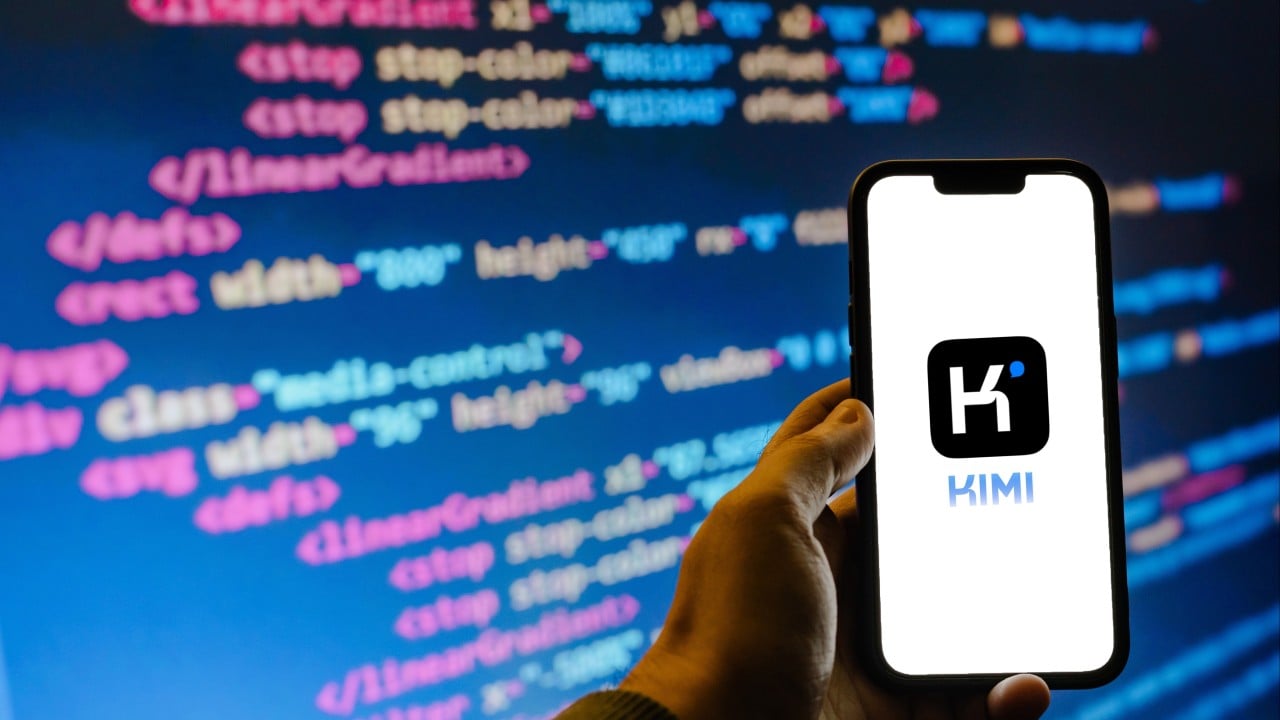
Silicon Valley tech stocks took a sharp hit when Beijing-based startup Moonshot AI released Kimi K3. Within 48 hours, the massive surge in global traffic forced Moonshot to suspend new user subscriptions because their GPUs literally couldn't handle the load. That kind of immediate disruption hasn't happened since DeepSeek shocked the world, and it proves one thing clearly. Western tech giants no longer hold a monopoly on top-tier artificial intelligence.
If you've been following the ongoing tech rivalry between Washington and Beijing, you might think US export controls on advanced chips had permanently stalled Chinese software development. Kimi K3 completely shatters that narrative. At 2.8 trillion parameters, it's currently the largest open-weight AI model ever built. It doesn't just match closed-source systems like OpenAI's GPT-5.5 or Anthropic's Claude Opus on key metrics; in frontend coding and multi-step complex reasoning, it regularly beats them. If you liked this piece, you might want to check out: this related article.
Understanding what Kimi K3 actually changes about the software economy requires looking beyond the hype.
Why Kimi K3 Is Forcing Big Tech to Rethink Open Source
For years, major American labs argued that open-source models would always stay six to twelve months behind proprietary, closed-door platforms. That gap has effectively closed. By releasing a 2.8-trillion-parameter Mixture-of-Experts architecture with open weights, Moonshot AI gave independent developers and global enterprises direct access to near-frontier intelligence without tying them to expensive subscription locks. For another angle on this story, see the recent coverage from CNET.
The economics here are ruthless. Closed APIs charge premium rates for token consumption because companies have to recoup massive infrastructure investments. Moonshot priced Kimi K3 API calls at $3 per million input tokens and $15 per million output tokens, dropping cached inputs down to a fraction of a dollar. Developers can take those same open weights and host the software on their own private servers or cloud infrastructure.
When businesses can run top-tier coding assistance locally at a discount, paying premium rates for closed ecosystems becomes a hard sell to CFOs.
What Makes the Architecture Behind Kimi K3 Different
Building a model this large without unlimited access to state-of-the-art clusters forced Chinese engineers to innovate at the algorithmic level. They couldn't just throw raw hardware at the problem. Instead, Moonshot focused on structural efficiency.
Kimi Delta Attention Replaces Traditional Cache Bottlenecks
Standard attention mechanisms struggle when processing long sequences, rapidly filling GPU memory. Kimi K3 implements a linear hybrid system called Kimi Delta Attention. By reworking how prefix caching operates directly inside vLLM frameworks, the engineering team achieved up to 6.3x faster decoding across its 1-million-token context window.
Quantile Balancing Solves MoE Routing Conflicts
With 16-of-896 expert routing sparsity, directing token traffic without bottlenecking system performance is notoriously tricky. Moonshot ditched standard heuristic routing updates for Quantile Balancing, deriving expert allocation directly from router-score quantiles. The result was a 2.5x jump in scaling efficiency compared to their previous generation.
Practical Benchmark Performance Over Pure Hype
In real-world evaluations, K3 took the top spot on Arena's Frontend Code leaderboard, jumping straight past Claude Fable 5. On the BrowseComp benchmark for high-difficulty information retrieval, it scored 91.2 out of 100 using a single-agent setup. In one test case from computational astrophysics, K3 reproduced the complex universal I-Love-Q relation—a task that normally takes an experienced researcher up to two weeks—in just two hours by scanning and validating 20 research papers simultaneously.
The Real Threat to American Tech Dominance
The debate isn't just about benchmark scores or who has the smartest chatbot. It's about who controls the underlying software layer for global software development.
Beijing has actively backed domestic AI creators by subsidizing compute resources and power consumption. This allows Chinese startups like Moonshot, DeepSeek, and Alibaba to publish open models while Western firms rely heavily on proprietary subscriptions. If global software engineers standardize their workflows on open Chinese weights, American tech giants risk losing control over developer platforms.
The recent market volatility around major US tech stocks reflects this growing panic. Investors realize that if open-weight options deliver 95% of frontier performance at a fraction of the cost, corporate budgets will inevitably shift.
How You Should Prepare Your Stack Right Now
Don't panic and rewrite your enterprise infrastructure overnight, but don't ignore what's happening either. Here is how engineering leads and tech decision-makers should adapt:
- Audit your API expenses across closed-source models to identify workflows where open-weight alternatives could save money.
- Test Kimi K3 weights locally or on private cloud setups for internal coding pipelines, particularly frontend development and documentation processing.
- Evaluate your data compliance policies regarding open-source deployments to ensure self-hosted instances meet regional regulatory rules.
- Track weight releases scheduled for late July 2026 to benchmarking performance directly against your proprietary internal datasets.