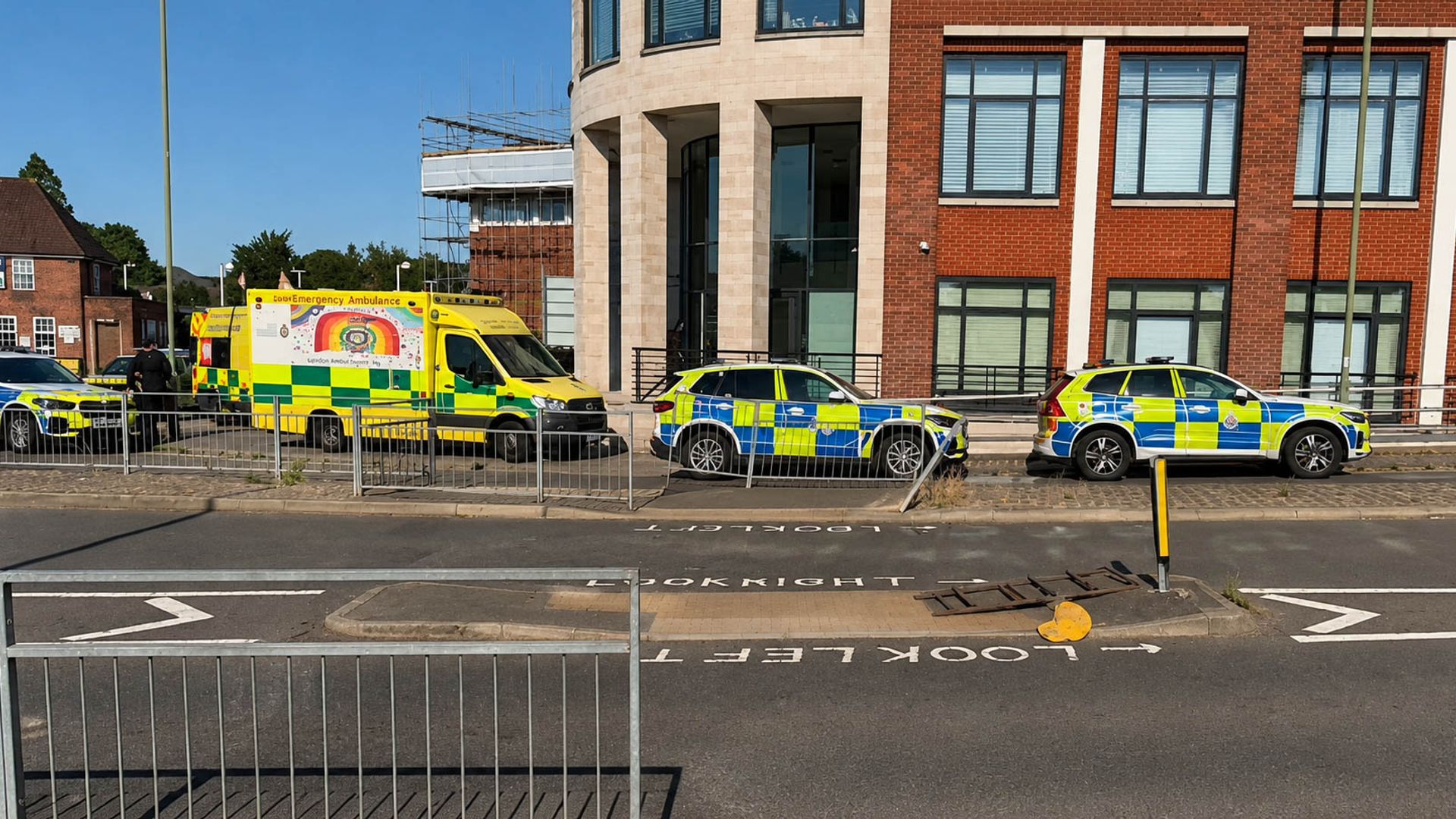
A quiet evening on Pyrcroft Road in Chertsey shattered when police vehicles lined the street. Neighbors watched as emergency services converged on a residential property. Inside, a three-year-old girl was dead.
Surrey Police quickly shifted their focus to a 31-year-old man, arresting him on suspicion of murder. The arrest didn't happen in a standard interrogation room right away. Instead, authorities transported the suspect directly to a hospital for medical treatment. Once discharged, he will face formal custody and questioning by detectives.
This case didn't start with a frantic 911 or 999 call about an active attack. It began with "concern for safety" reports, a phrase British policing uses when someone senses a deep, quiet wrongness behind closed doors.
The Anatomy of a Welfare Check
When the Surrey Major Crime Team took over the property, they confirmed a detail that instantly changes how the public views a tragedy: the incident occurred entirely within a family setting.
They explicitly stated they aren't looking for anyone else. There's no rogue attacker hiding in the shadows of Surrey, and there's no ongoing threat to the wider community. But for the people living on Pyrcroft Road, that reassurance feels incredibly heavy. It means the danger lived inside the house.
A welfare check—or a safety call—is often the last line of defense in isolated domestic environments. Police officers face an uphill battle during these calls. They have to balance individual privacy rights against the immediate need to protect vulnerable individuals, especially young children who can't speak up or call for help themselves.
Why Family Setting Investigations Require Absolute Precision
Investigating a child's death inside a home requires a completely different strategy than handling a public crime scene. In a standard street investigation, forensic teams look for external DNA, stray footprints, or eyewitnesses who saw a stranger flee the scene.
In a domestic setting, the forensic footprint is already messy. The suspect's DNA belongs there. Their fingerprints are supposed to be on the doors, the toys, and the furniture. Detectives can't simply rely on the presence of physical evidence; they have to reconstruct the exact timeline of events leading up to the safety report.
Surrey Police announced that a significant police presence will remain on Pyrcroft Road for days. This isn't just for show. Officers are conducting door-to-door inquiries, searching for any historical context that might explain what happened. They need to know if there were previous arguments, unusual noises, or signs of escalating tension that went unreported.
The Blind Spots in Child Protection
Tragedies like the one in Chertsey highlight a systemic issue that child welfare experts warn about constantly. When a child is only three years old, they aren't enrolled in compulsory schooling. They don't have teachers, school nurses, or daily peer groups observing their well-being.
If a family isolates itself, a toddler completely disappears from public view. The responsibility of reporting potential danger falls entirely on neighbors, extended family members, or health visitors.
When neighbors hesitate to report unusual noises or signs of distress because they don't want to cause trouble or get involved in private family matters, the safety net fails. Police departments across the UK have spent years trying to convince the public that a false alarm is always better than a ignored warning sign.
What Follows a High Profile Domestic Arrest
The legal process for the 31-year-old suspect will move slowly. Because he required hospital treatment immediately after his arrest, the standard countdown clock for police detention handles a delay. Ordinarily, British police have a strict 24-hour window to charge or release a suspect, though they can extend it to 96 hours for serious offenses like murder.
However, that clock only starts ticking once the suspect is officially booked into a police station. While he sits in a hospital bed under guard, detectives are using that extra time to compile their initial evidence file.
Once medical professionals clear him, the transfer to police custody will happen. From there, the Crown Prosecution Service will determine if the evidence matches the high threshold required to secure a formal murder charge in court.
If you suspect a child is in immediate danger or facing neglect within your community, don't wait for someone else to make the call. Contact local emergency services or child protection lines immediately. Your report could be the only safety check that matters.