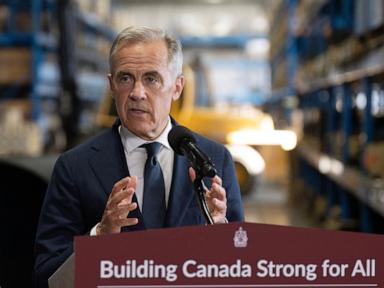
Prime Minister Mark Carney isn't just making a routine defense announcement on his way out of Halifax to the NATO summit in Ankara, Türkiye. He's deciding the strategic trajectory of the Royal Canadian Navy (RCN) for the next fifty years. The Canadian Patrol Submarine Project (CPSP) isn't your standard peacetime procurement program. It's a massive, high-stakes $100 billion race to replace four decrepit, barely floating Victoria-class hulls with 12 world-class conventional submarines.
The choice comes down to a zero-sum, winner-take-all battle between Germany’s ThyssenKrupp Marine Systems (TKMS) and South Korea’s Hanwha Ocean.
The evaluation process by the newly created Defence Investment Agency, led by former banker Doug Guzman, focuses heavily on who can keep these boats running. The evaluation criteria put a massive 50% weight on sustainment and maintenance plans. The technical platform itself takes up 20%, while the financial aspects and strategic economic partnerships take up 15% each.
If you think this is only about deep-sea sonar or torpedo tubes, you're missing the real story. This is about national survival in an melting Arctic, a desperate scramble to hit NATO's new defense spending target of 5% of GDP by 2035, and an industrial poker game promising tens of thousands of local jobs.
The Fatal Flaw in Canada's Current Fleet
Let's look at what the Canadian navy is dealing with right now. Out of the four second-hand Victoria-class diesel-electric submarines Canada bought from the UK back in the late 1990s, exactly one is operational. The other three are stuck in dry dock, eating up taxpayer money just to stay afloat.
The navy needs a fleet where at least three vessels can remain deployed simultaneously across the Atlantic, Pacific, and Arctic oceans. To get that reliability, you need 12 boats. Because a submarine takes roughly six years to build, and the current fleet hits its hard retirement ceiling in 2035, Ottawa is running dangerously low on time. If they don't lock in a supplier immediately, Canada will lose its underwater capability entirely.
South Korea Is Wagering on Speed and Green Hydrogen
Hanwha Ocean isn't playing defensive. They sailed a finished KSS-III class submarine, the Dosan Ahn Chang-ho, right across the Pacific to CFB Esquimalt to let Canadian officials touch the hardware. That's a massive contrast to the German option, which is still sitting on a blueprinted assembly line.
Hanwha's biggest selling point is a production line that actually moves. They promise they can deliver the first KSS-III to Canada by 2032, and have four boats operational by 2035. According to their numbers, beating the clock saves Canadian taxpayers an estimated $1 billion in extended maintenance costs for the dying Victoria-class fleet.
The KSS-III Capabilities
- Submerged Endurance: Up to three weeks using advanced Lithium-ion battery tech.
- Hull Construction: Heavily silenced conventional teardrop design built with high-yield HY-100 steel.
- Weaponry: Outfitted with vertical launch systems (VLS) for heavy strike capabilities.
The industrial bribes are equally aggressive. Under a proposal dubbed "Project Beaver," Hanwha signed an agreement with the Automotive Parts Manufacturers’ Association to build armored vehicles locally. They're also offering to build a network of hydrogen refueling stations and manufacture hydrogen-powered trucks across Canada. Over 18 years, they project an injection of $96.3 billion into the Canadian economy.
Germany's Pitch Focuses on NATO Interoperability and Arctic Stealth
TKMS and the German government aren't backing down, even after a nasty ransomware attack hit one of their communications subsidiaries last month. German Defence Minister Boris Pistorius has been lobbying hard, arguing that Canada choosing the German-Norwegian Type 212CD would create a standardized, 24-sub mega-fleet across the Atlantic and Arctic.
To solve the delivery panic, Berlin rejigged its own domestic production queues. They now pledge that TKMS will deliver four Type 212CD submarines to Canada by 2036.
The Type 212CD Advantages
- Submerged Endurance: Up to 41 days using specialized Fuel Cell Air-Independent Propulsion (AIP).
- Hull Construction: Fully non-magnetic materials that evade Magnetic Anomaly Detection (MAD) systems.
- Geopolitics: Perfect data sharing and parts compatibility with European NATO allies.
TKMS counters South Korea's economic package with an absolute monster of an estimate. They claim their bid will generate $160 billion in total economic activity and $86 billion directly toward Canada's GDP. They’ve gone so far as offering to fund infrastructure upgrades to transform the Port of Churchill in Manitoba into a major liquefied natural gas export hub.
The Strategic Reality of the Selection
The two options push Canada toward two completely different futures. Choosing Germany is the safe, traditional play. It reinforces the transatlantic NATO alliance and pleases allies who want a unified front against Russian movements in the North Atlantic.
Going with South Korea signals an aggressive pivot to the Indo-Pacific. It treats Seoul as the new powerhouse of Western military manufacturing.
Splitting the order is out of the question. Defence Minister David McGuinty made it clear that a single supplier is mandatory because splitting a fleet of this scale creates massive, compounding logistics costs over thirty years.
To move forward with monitoring the rollout of this historic defense shift, keep tabs on the Parliamentary Budget Officer’s forthcoming independent life-cycle cost assessment of the winning platform. You should also watch for the initial infrastructure contracts for the naval bases in Esquimalt and Halifax, which must be overhauled to accommodate whichever massive hull Carney selects.