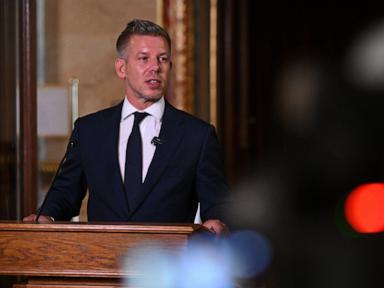
You don't usually see a foreign minister transition straight into a corporate suite at a company they just handed billions of taxpayer dollars to. But that's exactly what happened in Budapest. Péter Szijjártó, Hungary's longtime foreign minister under the recently ousted Viktor Orbán regime, shocked parliament by resigning his seat to become a director at Chinese electric vehicle giant BYD. Within days, the newly elected Hungarian government dropped a hammer, launching a full-scale investigation into the massive state subsidies and backroom deals that brought BYD to the country.
This isn't just a local political squabble. It's a textbook case of how geopolitical alliances, massive corporate cash, and a sudden change in government can collide. For years, Orbán's administration operated with total control, funneling public funds into projects designed to tether Hungary to Eastern powers. Now that the opposition has taken the reins, the books are flying open. Every executive doing business in Europe needs to pay attention to what happens next.
Inside the Rapid Fall of the Orbán Circle
To understand how we got here, you have to look at the seismic shift that occurred in April 2026. After more than a decade of unchecked power, the Fidesz party suffered a crushing electoral defeat. Péter Magyar and his Tisza party swept into office on a fierce anti-corruption platform, promising to dismantle the tight web of state-funded oligarchy that defined the previous era.
Szijjártó was the public face of Orbán's "Eastern Opening" strategy. He spent years defying European Union consensus by maintaining cozy relationships with both Beijing and Moscow. When Fidesz lost, Szijjártó basically vanished from the public eye, skipping parliamentary votes and keeping a low profile.
Then came the Facebook post.
On July 15, 2026, Szijjártó announced he was quitting parliament for a "prestigious" international role at BYD. He's now the director responsible for external relations and new business development. The blatant revolving door mechanics of the move instantly drew outrage from the new administration.
Prime Minister Péter Magyar didn't waste any time. He stood before lawmakers and announced that the state would audit every single decision, negotiation, and commitment Szijjártó made regarding BYD. Magyar explicitly accused the former minister of using hundreds of billions of forints in public money, infrastructure support, and diplomatic weight to assist his new employer while holding public office.
The Mechanics of a Subsidized EV Powerhouse
Why did BYD care so much about Hungary in the first place? It's simple geography and trade policy.
As the EU began ratcheting up import tariffs on Chinese-made electric vehicles to protect domestic European automakers, Chinese conglomerates needed a backdoor. Hungary offered exactly that. By building manufacturing facilities inside an EU member state, BYD could completely skirt those pesky tariffs and sell vehicles across the continent without a penalty.
Szijjártó was the architect of this bypass. In 2023, he proudly announced that BYD would build its first European passenger car factory in Szeged, Hungary. In 2025, he doubled down, revealing that Budapest would house the automaker's European headquarters and a major research facility.
The price tag for Hungarian taxpayers was astronomical. The government openly committed 20 billion forints ($63.7 million) in direct financial assistance for the headquarters alone. The total amount of subsidies, tax breaks, and infrastructure gifts given to the Szeged plant remains hidden under a shroud of state secrecy.
Magyar's new probe aims to pull back that curtain. The investigation isn't just looking at the cash transfers. It's targeting environmental exemptions, fast-tracked permits, and the structural burden placed on local communities. For years, local residents and environmental groups protested the rapid influx of Chinese battery and EV plants, warning that the projects would wreck local water supplies and degrade the environment. Those warnings were completely ignored by the previous cabinet. Now, investigators want to know exactly who signed off on those exemptions and what professional red flags were swept under the rug.
The Secret Russia Connection That Spurred the Crackdown
You can't separate the BYD probe from Szijjártó's broader, highly controversial geopolitical track record. While he was busy courting Chinese automotive executives, he was also keeping a direct line open to the Kremlin.
Even after the 2022 invasion of Ukraine, Szijjártó regularly traveled to Moscow to secure oil and gas deals, famously referring to Russian Foreign Minister Sergey Lavrov as his friend. Things got incredibly messy during the 2026 election campaign when leaks revealed that Szijjártó was essentially giving live briefings to Lavrov during high-level EU meetings where sensitive Western policy was being debated.
Magyar confirmed that parallel to the BYD investigation, a separate classified probe is digging into Szijjártó's ties to the Russian government. The new administration views his sudden jump to a Chinese multinational not as an innocent career change, but as a potential payout for years of prioritizing foreign interests over Hungarian state security.
What This Means for Foreign Investments in Europe
If you think this is just an isolated Eastern European drama, you're missing the bigger picture. The situation in Budapest sends a massive warning shot to global corporations operating in shifting political climates.
First, the era of relying on a single strongman politician to secure long-term corporate favors in Europe is dying. BYD built an entire continental expansion strategy on the back of personal relationships with Orbán and Szijjártó. Now that those individuals are out of power, the company faces severe reputational risks, legal scrutiny, and the potential clawback of state aid.
Second, regulatory compliance is about to become brutal for multinational firms in the region. The new Hungarian government isn't just looking at BYD; they're reviewing all major state commitments made to foreign firms over the last decade. If your business relied on opaque tax breaks or rushed environmental permits granted by the previous administration, expect an audit.
Action Steps for International Business Observers
Don't wait for the final report to adjust your strategy. If you manage international investments, supply chains, or corporate compliance, take these steps immediately.
- Audit All Political Exposure: Review any contracts, subsidies, or land grants obtained through direct ministerial interventions rather than standardized, transparent public bidding processes.
- Strengthen Revolving Door Protections: Ensure your corporate hiring practices don't onboard former government officials who directly oversaw your industry's regulatory framework or subsidy allocations within the past twenty-four months.
- Re-evaluate Environmental Compliance: Check if your regional facilities rely on fast-tracked environmental waivers. If a new government comes to power, those waivers are the first things they'll revoke to satisfy local voters.
- Diversify Regional Hubs: Relying heavily on one politically volatile nation for your entire European infrastructure leaves you exposed. Spread your manufacturing and operational footprint across multiple regulatory jurisdictions.
The rules of engagement in European business are shifting fast. The investigation in Hungary proves that backroom political deals eventually come with a massive bill. When the political tide turns, the corporate fallout is inevitable.