On June 24, 2026, the coast of northern Venezuela changed forever in exactly 39 seconds. That is all the time it took for the Venezuela double earthquakes to strike, flattening entire blocks and leaving thousands dead under shattered concrete. Two massive tremors measuring 7.2 and 7.5 in magnitude hit back-to-back, catching the country completely off guard.
If you are looking for clear numbers amidst the chaos, here is where things stand right now. The official death toll has climbed to 3,342 people, and more than 16,740 citizens are fighting injuries in overextended medical centers. Officials state that 17,345 people are suddenly homeless, moving into 79 temporary camps scattered across the disaster zone. The United Nations Development Programme estimates physical destruction at roughly 6.7 billion dollars. That amount is about six percent of the entire country's gross domestic product.
People want to know if anyone else is coming out alive. Search operations have changed from massive international efforts into gritty, localized struggles. The formal international crews are packing up, but the true story on the ground is about the local volunteers who refuse to stop digging.
Where the System Failed and Locals Stepped In
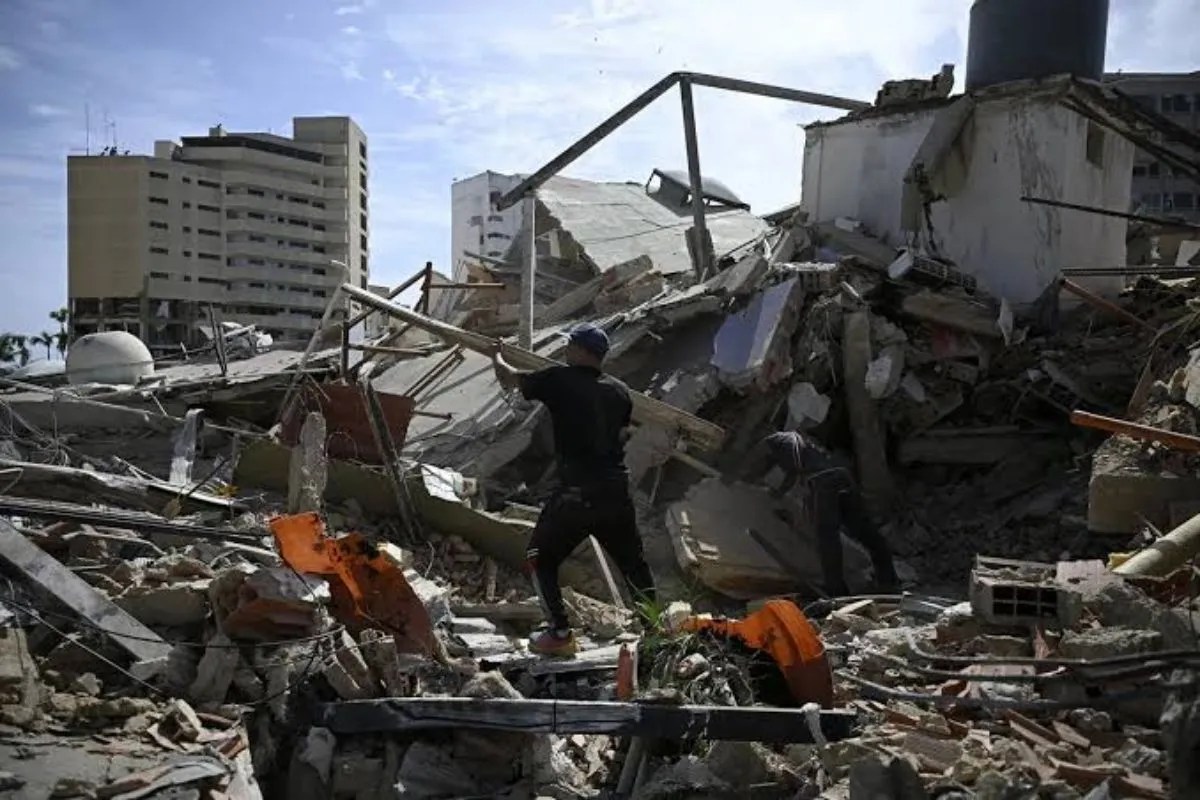
The hardest hit area is the coastal state of La Guaira, just north of Caracas. It looks like a war zone. Nearly 200 buildings collapsed entirely, while over 850 structures suffered heavy damage. Among the ruins, you will not find high-tech government equipment on every corner. You find the topos.
Topos translates to moles. These are amateur Venezuelan rescuers who traveled from rural farming communities to help. Before June 24, these men were cattle ranchers or banana growers. Today, they crawl into terrifying cracks in pancaked 14-story apartment complexes like the Residencia Costa Brava. They use simple tools and bare hands.
Government officials like National Assembly President Jorge Rodriguez highlight the deployment of 29,567 military and police personnel along with thousands of tons of distributed food. Interim President Delcy Rodriguez defended the response during an Independence Day speech, praising social solidarity.
Yet citizens tell a very different story. Many families spent the first critical days searching through rubble completely alone without state help. One citizen-led initiative called Desaparecidos Terremoto Venezuela has logged over 31,000 missing-person reports on its digital platform. The government still has not released an official tally of the missing, which fuels deep local frustration.
The Science Behind the Double Disaster
Why was this so much worse than a typical disaster? A double earthquake, or a doublet, involves two distinct large shocks of similar size occurring close together in time and location. The United States Geological Survey confirmed that these two quakes struck just 39 seconds apart.
When the 7.2 shock hit, it weakened structures instantly. Before columns could settle or people could flee, the 7.5 shock followed. This one-two punch brought down massive buildings that might have survived a single tremor. It also triggered nearly 1,000 aftershocks, which keep shaking the fragile ruins today.
The international airport near Caracas remains closed to commercial flights, complicating logistics. Food and clean water are scarce. Relief efforts have moved around 9,585 metric tons of food, but when tens of thousands of families are displaced, supplies vanish instantly.
What Happens Now
Survival windows have closed for most trapped individuals, though the moles keep searching for closure. Mass burials are underway. At the La Esperanza cemetery in La Guaira, workers buried over 150 unidentified bodies in a single weekend. Simple white crosses mark the dirt, all sharing the same date of death.
If you want to support relief efforts, look for direct, verified humanitarian channels feeding local volunteer groups rather than massive state bureaucracies. The immediate priority for survivors is securing clean drinking water and medical supplies to prevent disease outbreaks in the crowded camps. This recovery will take years, and the political fallout over the initial slow response is only beginning.
:max_bytes(150000):strip_icc()/TAL-nassau-bahamas-BEAUTCARIB0323-4fbfce903e5a4418b895e03717e3de0d.jpg)