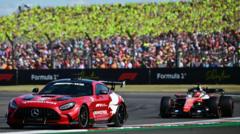
Silverstone always delivers drama, but the latest British GP didn't just deliver drama—it delivered absolute chaos that left teams, drivers, and fans scratching their heads. If you watched the final laps, you probably felt a mix of adrenaline and pure confusion. A late safety car turned what should've been a straight tactical battle into a frantic sprint finish, completely upending the podium and leaving several drivers wondering how a potential win slipped through their fingers.
The main topic keyword here is the chaotic British GP, and honestly, the fallout from this race is going to dominate F1 conversations for weeks. It wasn't just about who had the fastest car. It was about who survived the strategy lottery when the safety car split the field wide open.
How the Safety Car Ruined Clean Racing Strategy
F1 strategy teams spend millions of dollars simulating every possible race scenario. They map out tire degradation, pit window gaps, and fuel loads to the millisecond. Then a car spins off, the yellow lights flash, and all that expensive data goes straight into the trash.
That's exactly what happened at Silverstone. The deployment of the safety car late in the race created a massive disparity between those who had already pitted and those who got a "free" stop. In regular racing conditions, tire management is an art form. Under a late-race safety car, it becomes a chaotic scramble.
Drivers who had nursed their hard compound tires to build a commanding lead suddenly saw their advantages evaporate. The pack bunched up. Suddenly, the cars behind them were riding on fresh, soft rubber with heaps of mechanical grip. It fundamentally changes the sporting dynamic. Instead of a reward for sustained pace and smart management, the race transformed into a five-lap sprint where track position meant everything, but tire temperature meant even more.
The Technical Reality of Cold Tires and Restart Chaos
When the safety car stays out for multiple laps, the drivers face a massive technical hurdle: keeping heat in the tires. Pirelli's modern F1 compounds are incredibly sensitive to temperature windows. Drop below the optimum range, and the car feels like it's driving on ice.
You watch the drivers weaving aggressively behind the safety car, trying to generate friction. But at Silverstone's high-speed corners like Copse and Maggots, entering a restart with front tires that are five degrees too cold is a recipe for disaster. The lead driver acts as the pacemaker, trying to time the acceleration to catch the field off guard.
The confusion at the end of this race stemmed from the mixed tire strategies in the top six. We had some drivers on scrubbed mediums, others on brand-new softs, and a couple trying to defend on older hard tires. When the safety car finally pitted, the speed differentials down the Wellington Straight were staggering. It wasn't clean racing; it was survival. Drivers were forced into desperate defensive moves, throwing their cars into corners completely blind to whether the grip would actually hold.
The Decisions That Left Teams Furious
Team radios after the checkered flag were filled with awkward silence and tense debriefs. The core frustration lies in the timing of the race control interventions. When a safety car is deployed right as the leader passes the pit entry, it instantly splits the field into winners and losers based purely on track position.
Some teams argued that a Virtual Safety Car (VSC) would have preserved the natural gaps and offered a fairer sporting contest. A full safety car completely resets the board. For a driver who built a twelve-second lead through flawless driving, that reset feels incredibly cheap.
The post-race arguments weren't just about bad luck. They were about how the rules are applied consistently. When the clerk of the course throws a full safety car instead of a VSC, they aren't just clearing a stranded car—they are actively rewriting the podium.
What This Means for the Championship Fight
Don't look at Silverstone as just a one-off chaotic Sunday. The points swing caused by those final chaotic laps has massive implications for the rest of the season.
- The Momentum Shift: Drivers who looked dead in the water suddenly grabbed massive points hauls, completely altering the psychological dynamic in the paddock.
- Development Pressures: Teams now have to look hard at how their cars handle dirty air and sudden restarts, because out-and-out qualifying pace doesn't mean a thing if you can't defend on a chaotic restart.
- Strategy Overhauls: Expect strategists to become far more conservative in the coming races. Nobody wants to be the leading car left out on old tires while the rest of the grid gets a cheap pit stop.
The lesson from this chaotic British GP is clear: you can have the fastest car on the grid, but if your pit wall doesn't react instantly to safety car chaos, you're going to get swallowed up by the pack.
Next time you watch a race heading into the final ten laps, don't look at the gap between first and second. Look at the pit window, keep an eye on the sky, and watch how teams position themselves for the inevitable drama. The teams that win championships aren't just the quickest—they're the ones that know how to play the lottery when the safety car scrambles the grid.