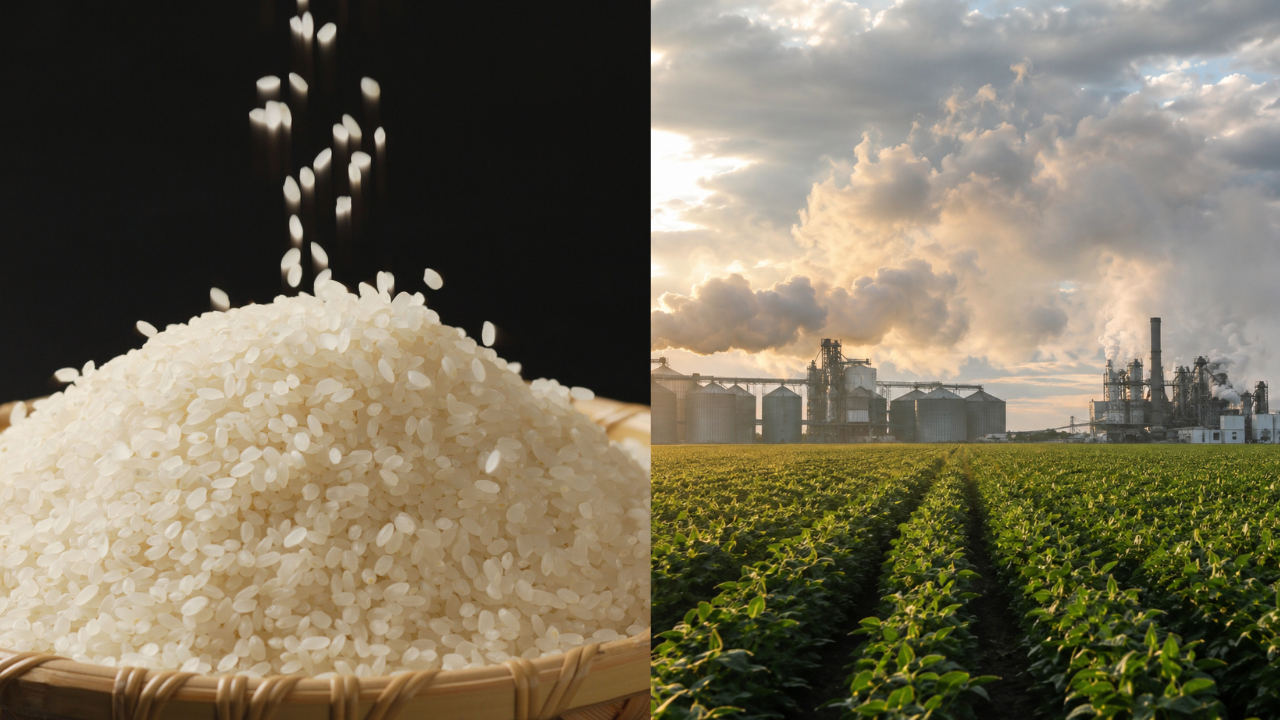
Half the world eats it every day. It's comfort food, a staple, a lifesaver. Rice keeps billions of people alive. But behind that innocent bowl of white grain lies a massive ecological crisis. Scientists are sounding the alarm because traditional rice farming is quietly pushing Earth past its safe environmental boundaries.
We talk a lot about beef, coal, and plastics. Rice somehow escapes the blame. That needs to stop. The way we grow this crop is completely unsustainable. It swallows staggering amounts of fresh water, pumps out massive amounts of greenhouse gases, and poisons local ecosystems with fertilizer runoff. We need to look closely at what this agricultural habit really costs us.
The methane bomb hiding in flooded paddies
Most people think of peaceful, beautiful green terraces when they picture rice fields. The reality is much dirtier. Traditional rice cultivation requires flooding the fields. This standing water cuts off oxygen to the soil.
When soil loses oxygen, anaerobic microbes take over. These tiny organisms love the oxygen-free environment. They feast on decaying organic matter and produce methane gas as a byproduct.
Methane is a terrifying greenhouse gas. It traps heat in the atmosphere roughly eighty times more effectively than carbon dioxide over a twenty-year period. Rice fields alone are responsible for around ten percent of global man-made methane emissions. That is a massive chunk of global warming coming from a single crop.
We can't just ignore this because people need to eat. The climate impact is immediate and severe. Every year we keep fields continuously flooded, we accelerate global warming. It is a self-defeating loop. Rising temperatures trigger unpredictable weather, which then threatens the very rice yields people rely on to survive.
The water hoarding crisis
Agriculture uses more fresh water than any other human activity. Rice uses the lion's share. To produce just one single kilogram of irrigated rice, farmers use between two thousand and five thousand liters of water.
Think about that number. It is wildly inefficient.
Most of this water doesn't even stay in the plant. It evaporates or leaks away. In places like northern India or parts of Southeast Asia, underground aquifers are emptying at an alarming rate. Farmers are drilling deeper and deeper to pump up groundwater just to keep their rice fields drowned.
This creates a terrifying security risk. When the groundwater runs out, what happens to the drinking water? Entire communities face dehydration because we prioritize an outdated farming method. The current system treats fresh water as an infinite resource. It isn't.
Chemical overload is poisoning the soil
Growing enough rice to feed billions requires heavy chemical intervention. Farmers dump massive quantities of synthetic nitrogen fertilizers onto their crops. The plants can't absorb all of it.
The excess fertilizer washes away into rivers, lakes, and oceans. This triggers a process called eutrophication. Algae blooms explode, consuming all the dissolved oxygen in the water.
Fish die. Aquatic ecosystems collapse. Entire coastal zones turn into dead zones where nothing can survive.
The nitrogen that stays in the field doesn't do much better. Soil microbes convert it into nitrous oxide. This is another potent greenhouse gas, hundreds of times more damaging than carbon dioxide. The overuse of these synthetic inputs is destroying soil health, making fields dependent on even more chemicals just to produce the same yield next season.
Real solutions that actually work right now
We don't need to stop eating rice. We just need to stop growing it like it's the Middle Ages. Smarter methods exist, but adoption is painfully slow.
Alternate wetting and drying
The simplest fix is called Alternate Wetting and Drying, or AWD. Instead of keeping fields permanently flooded, farmers let the water drop until the soil dries out slightly before flooding it again.
This simple tweak changes everything. It drops methane emissions by up to fifty percent. It cuts water use by a third. Crucially, it doesn't hurt crop yields at all. In fact, it often makes the plant roots stronger.
The barrier isn't technology. It is education and tradition. Farmers have flooded fields for generations because it keeps weeds down. Convincing them to let their fields dry out takes trust and training.
Direct seeded rice
Another strategy involves changing how the rice is planted. Traditionally, farmers grow seedlings in nurseries and then transplant them into flooded fields. It is backbreaking, labor-intensive work that requires tons of water.
Direct seeded rice skips the nursery. Farmers sow seeds directly into the main field, just like wheat or corn.
This method removes the need for early-stage flooding. It slashes labor costs and reduces water consumption dramatically. It also cuts down methane production significantly because the soil stays aerated for a much longer portion of the growing season.
Better fertilizer management
We have to fix the chemical addiction. Precision agriculture tools can tell farmers exactly how much nitrogen their soil actually needs.
Using organic alternatives or slow-release fertilizer balls can prevent the massive runoff that poisons waterways. Some farmers are even experimenting with growing fish or ducks directly in their rice paddies. The animals eat the pests and weeds, and their waste naturally fertilizes the crop. It creates a balanced, functional system that cuts out synthetic chemicals entirely.
What needs to happen next
Fixing global rice production requires a massive shift in agricultural policy and consumer awareness. We can't leave this entirely on the shoulders of poor smallholder farmers.
Governments must step up. Right now, many countries heavily subsidize water and electricity for farmers. This sounds helpful, but it actually encourages waste. When pumping groundwater is free, there is zero incentive to save water. Subsidies need to shift toward rewarding conservation and sustainable practices.
Big food brands need to pay a premium for sustainably grown rice. If a farmer can get a better price for using AWD methods, they will switch tomorrow. Consumers should start demanding certified sustainable rice at the grocery store, forcing supply chains to adapt.
Stop treating rice as an infinite, consequence-free commodity. Start supporting the farmers who are trying to fix the system. Pay attention to labels, support agricultural reform, and push for smarter water management before the wells run dry.