Donald Trump doesn't just attend historic milestones; he tries to own them. For years, he hyped up the United States Semiquincentennial, openly relishing the fact that America’s 250th birthday would land squarely in his second term. When July 4, 2026, finally arrived, it wasn't just a national celebration. It was a masterclass in political theater, complete with military flyovers, record-breaking fireworks, and an intense battle over who gets to define what it means to be an American.
If you tuned into the official celebrations on the National Mall, you didn't see a bipartisan gathering of leaders reflecting on a complex 250-year journey. You saw a campaign-style environment tailored precisely to the MAGA brand. Trump bypassed the original, congressionally chartered America250 commission to launch Freedom 250, a semi-private entity backed by millions in federal funds. The result was a sequence of high-octane events that left Democrats scrambling and voters deeply divided over the commercialization of our nation's founding.
How Freedom 250 Replaced A Balanced Birthday
The lead-up to the anniversary wasn't smooth. Originally, the federal government envisioned a milestone that focused on common values like innovation, community service, and local history. But that modest approach didn't sit well with the administration. Trump wanted a spectacle. When the existing America250 board pushed back against increasingly partisan event plans, Trump aides simply pivoted. They set up Freedom 250, an alternative limited liability corporation operating under the National Park Foundation.
Reports from outlets like Mother Jones revealed that Freedom 250 received at least $79 million in federal appropriations while simultaneously pulling in massive corporate donations. Because of its unique structure, the group claimed it didn't have to report its line-item spending to Congress. This allowed the administration to hire friendly political event firms to handle the staging, lighting, and logistical coordination for what essentially turned into a massive summer long rally series.
The Concert Collapse And The Birth Of The Super Rally
The pivot to a pure rally format happened out of necessity. In late May, Freedom 250 announced a lineup of musical artists for the Great American State Fair on the National Mall. But within days, the schedule collapsed.
High-profile acts like country star Martina McBride, rapper Young MC, and soul legends The Commodores backed out. Performers openly complained that they hadn't been informed about the heavily political nature of the event. Young MC explicitly posted on social media that artists were kept in the dark about administration involvement.
Instead of backing down, Trump went to Truth Social to slam the departing artists as "overpriced" and "boring." He ordered the concert series canceled, replacing it with what he called a "Rally to end all Rallies." He promised fans that they didn't need talented singers with big fees to put them to sleep. All they needed was a few speakers, military choirs, Lee Greenwood, and the President himself.
Scorching Heat And Shifting Speeches
Executing a massive outdoor celebration on the East Coast in July is always a gamble, and 2026 brought brutal weather. Triple-digit heat waves rolled through the Midwest and Northeast, forcing cities like Hartford, Harrisburg, and Wilkes-Barre to cancel their parades entirely.
In Washington, the Great American State Fair struggled with attendance as temperatures soared. On July 4, dangerous thunderstorms forced a sudden, two-hour evacuation of the National Mall just after 7:00 p.m. Thousands of spectators had to huddle inside sweltering subway stations, federal buildings, and museums to escape the downpour.
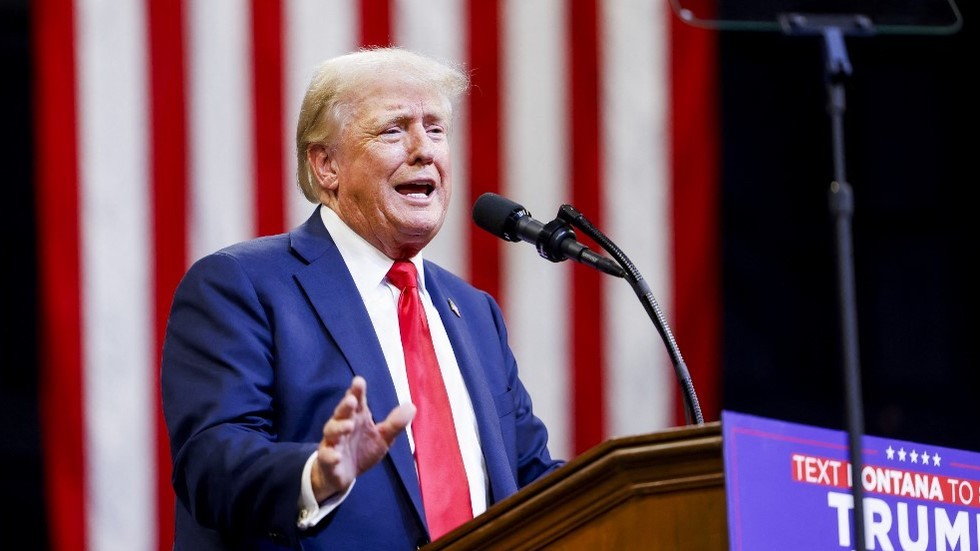
Trump used the disruption to double down on his resilient branding. He posted online that no amount of rain would stop the 250th anniversary. After the evacuation order was lifted, a dedicated crowd returned to the muddy grass near the Reflecting Pool. Under the roar of a stealth B-2 bomber and a massive 17-plane military flyover, Trump finally took the stage late into the night to deliver his keynote address.
A Partisan Agenda For A Historic Milestone
The speeches leading up to and during the July 4 weekend made it clear that the administration wasn't looking for national unity. The night before the Washington rally, Trump traveled to Mount Rushmore in South Dakota to set the tone. Speaking to an overwhelmingly white crowd beneath the stone faces of Washington, Jefferson, Roosevelt, and Lincoln, he delivered a fiery speech aimed at his domestic political rivals.
He didn't focus on shared democratic progress. Instead, he framed the anniversary as a battle for survival against a "communist menace" inside the country. He openly attacked progressive narratives, arguing that people who point out the historical flaws of the Founding Fathers are trying to "beat the American spirit out of us." He told the cheering crowd that you can be loyal to Karl Marx or you can be loyal to America, but you cannot be both.
When he returned to Washington for the main event, the rhetoric remained fiercely partisan. Transportation Secretary Sean Duffy set the mood by explicitly mocking the progressive artists who canceled their appearances, while praising Trump as the greatest president since George Washington. The event featured no high-profile Democratic speakers. It ended with the U.S. Marine Band playing the music for Trump’s signature walk-off dance.
The Democratic Dilemma
This overt weaponization of the Semiquincentennial forced Democrats into a tough strategic corner. They wanted to celebrate the country's 250th birthday, but doing so alongside the administration meant participating in a production designed to celebrate Trump.
Many progressive leaders chose to stay far away from Washington. They leaned into localized state celebrations instead. Democratic governors, like Maryland’s Wes Moore, spent the weekend emphasizing community service projects, naturalization ceremonies for new immigrants, and museum exhibits that explored the complex history of slavery and civil rights. Moore publicly argued that Democrats need to stop ceding the American flag and patriotism to a single political party, insisting that love for the country belongs to everyone.
Polling ahead of the event highlighted just how fractured the national mood had become. A study by The Associated Press-NORC Center for Public Affairs Research found that only about 4 in 10 American adults felt "proud" about the 250th anniversary, while a mere 3 in 10 felt "excited." Most respondents openly stated they felt the country had strayed far from its founding principles.
Next Steps For Finding Meaning In America 250
The massive fireworks have cleared, and the political speeches are over, but the anniversary year continues through the end of 2026. If you want to engage with the milestone without the partisan noise, look beyond the National Mall.
- Check your local state archives and historical societies. Many states are running independent, non-partisan exhibitions detailing local histories during the revolutionary era.
- Read the founding documents directly. Skip the modern political commentary and look at the actual text of the Declaration of Independence to judge for yourself how well the modern nation is living up to those ideals.
- Engage with community-driven projects. Organizations like the official, state-level America250 commissions are still hosting essay contests, time-capsule contributions, and neighborhood block parties focused on local unity rather than national political theater.