Australia is doubling down on its battle against Silicon Valley, but the math just doesn't add up.
Over the weekend, the federal government announced a massive escalation in its war on youth screen time. Tech giants failing to block kids under 16 from their platforms will soon face a staggering maximum penalty of A$99 million ($68 million USD). That is exactly double the previous cap of A$49.5 million. Prime Minister Anthony Albanese and Communications Minister Anika Wells are talking tough, claiming Big Tech wants these laws to fail.
They are probably right about the tech companies. But increasing a theoretical fine won't fix a fundamentally broken enforcement mechanism.
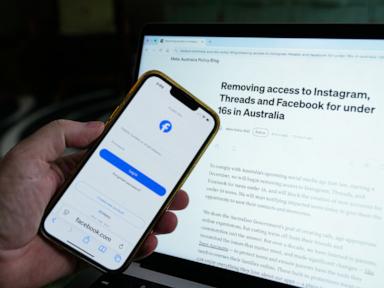
Here is the reality behind the headline. This regulatory crackdown arrives precisely because the world-first under-16 social media ban, which went into effect on December 10, 2025, is being aggressively ignored by the very kids it aims to protect. Recent data from the University of Newcastle found that an incredible 85% of Australians aged 12 to 15 were still actively using social media months after the ban went live.
If millions of teenagers are bypassing the restrictions without breaking a sweat, you have to ask why the government thinks a higher price tag on non-compliance will change anything.
The Paper Tiger Problem
To understand why a A$99 million fine won't terrify Meta, ByteDance, or Google, you have to look at how much money these entities actually make. For companies that measure quarterly revenues in tens of billions of dollars, a A$99 million fine is not an existential threat. It is the cost of doing business.
Worse yet, the Australian government has not issued a single penalty to any tech platform since the ban commenced over six months ago.
The eSafety Commissioner, Julie Inman Grant, is currently investigating five major platforms for potential non-compliance:
- Meta's Instagram and Facebook
- Google's YouTube
- Snap's Snapchat
- TikTok
While the regulatory wheels spin, teenagers are finding simple workarounds. According to a study published in the British Medical Journal involving local adolescents, two-thirds of underage users stayed online by simply lying about their birth year or uploading a selfie that an AI system easily accepted as over 16. In many cases, platforms didn't even prompt the kids to verify their age in the first place.
The law requires these platforms to take "reasonable steps" to block underage users. But "reasonable" is a slippery legal term. Tech companies argue they are deploying the best available tools, like facial age-estimation tech. Meanwhile, the Communications Minister accuses them of pulling tricks straight out of the big tech playbook and doing the bare minimum.
Moving Beyond the Selfie
The upcoming legislative amendment isn't just about doubling the fines. It also expands the information-gathering powers of the eSafety Commissioner.
Soon, the watchdog will have the legal teeth to compel not just the social media apps, but third-party age-assurance providers and mobile app stores to cough up data. The goal is to cross-verify exactly how these platforms are running their compliance checks.
This is a step in the right direction, but it exposes the core flaw of the entire project. True age verification requires either intrusive biometric scanning or linking social media accounts to government-issued identity documents. Neither option sits well with privacy advocates.
Furthermore, platform-specific bans do nothing to stop kids from using Virtual Private Networks (VPNs) to spoof their locations, making it look like they are browsing from a country without an age limit. The law expects platforms to block VPN access for minors, but enforcing that across millions of rotating IP addresses is a technical nightmare.
What This Means for Parents and the Tech Sector
If you are a parent waiting for the government to magically clean up your child's smartphone feed, don't hold your breath. Even Minister Wells admitted that the first three years of this cultural experiment are going to look incredibly untidy.
For businesses and tech providers operating in this space, the regulatory risk is skyrocketing, but the tactical execution remains completely vague. If you run an online platform that falls under the Australian definition of an age-restricted service—meaning you use algorithmic feeds, infinite scrolling, or disappearing stories—the window for passive compliance is slammed shut.
Instead of waiting for a historic fine to hit your balance sheet, companies need to take three immediate, practical steps.
First, audit your existing onboarding flows. If your age verification process relies entirely on a self-declared checkbox or basic user-uploaded photos without live anti-spoofing checks, it will not pass regulatory muster under the new scrutiny.
Second, prepare for data requests. Ensure your compliance teams have clear logs of your age-assurance efforts, because the eSafety Commissioner is going to start demanding internal evidence to prove you are making a good-faith effort.
Finally, look closely at decentralized identity solutions. The future of compliance isn't going to be every single app collecting copies of children's passports. It will rely on secure, privacy-preserving third-party verification hubs that simply pass a "yes or no" token back to the app.
The global momentum is real. The UK is already planning even tougher restrictions that include live-streaming and gaming apps, while countries like France and Indonesia are moving forward with their own age limits. Australia's big fine might make for a great political press release, but true compliance will require a complete overhaul of how we verify identity on the internet.