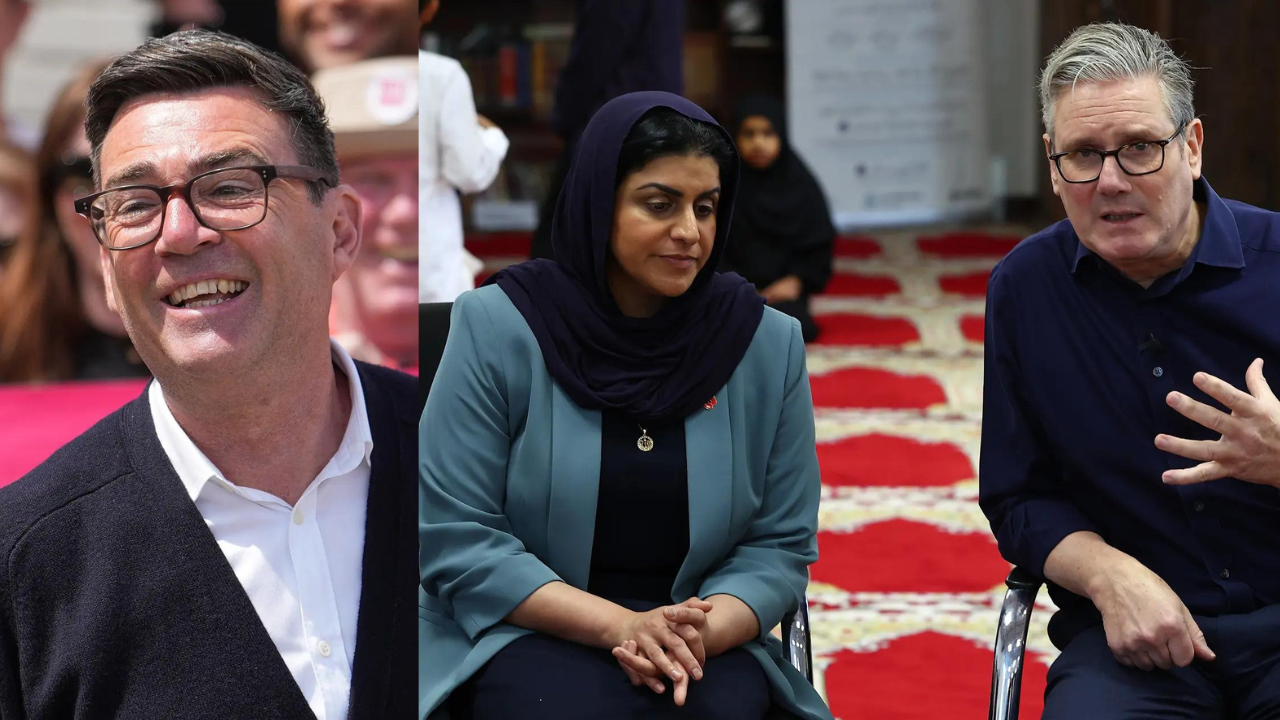
Keir Starmer is out, and the race to become Britain’s next prime minister is basically over before it even officially started.
When Starmer walked up to the Downing Street podium on Monday morning to announce his resignation, he admitted he "heard the answer" from his own members of Parliament. Two years after a landslide election victory in 2024, his premiership collapsed under a mountain of poor local election results, policy U-turns, and the spectacular fallout of appointing Peter Mandelson as Washington ambassador despite a failed security vetting. In other updates, take a look at: Why Trying To Outrun A Wildfire Is The Deadliest Mistake You Can Make.
The media is framing this as a wide-open battleground of senior Labour politicians. Don't believe it. While the competitor headlines list five or six names to watch, the reality on the ground in Westminster is vastly different. This isn't a wide-open race. It is a rapid coronation.
Andy Burnham, the newly elected MP for Makerfield and former Mayor of Greater Manchester, is the undisputed frontrunner. Minutes after Burnham confirmed his bid, his biggest potential centrist rival, Wes Streeting, pulled out and endorsed him. If you want to understand who will control the keys to Number 10 by July or September, you need to look past the superficial candidate lists and look at the brutal internal math of the Labour Party. USA.gov has also covered this important issue in great detail.
The rapid rise of the King of the North
Andy Burnham played the long game, and it worked perfectly. He left Westminster years ago, built a massive profile as the straight-talking Mayor of Greater Manchester, and waited for the right moment to return. That moment came last week.
When the Makerfield seat became vacant, Burnham jumped at the chance. On June 18, 2026, he didn't just win the by-election; he crushed it, increasing Labour’s vote share by 10 percentage points compared to 2024 and fending off a fierce challenge from Nigel Farage's Reform UK. He proved he could win back the working-class voters Starmer was losing.
Public opinion data backs up the political momentum. A fresh YouGov poll shows that 34% of Britons think Burnham would do a better job than Starmer—miles ahead of anyone else in the party. Among 2024 Labour voters, 41% view him as an upgrade. More importantly, Survation polling of actual Labour Party members reveals that 42% put Burnham as their absolute first choice, leading his closest rivals by a massive 31 points.
He appeals to the soft-left of the party, but he also pulls in a surprising amount of support from prospective Conservative and Reform voters who respect his anti-Westminster, regional independence stance.
The rivals who aren't actually running
Mainstream media outlets love a multi-candidate drama, which is why they are still hyping up other names. Let's look at why those challenges are breaking down.
Wes Streeting
The former health secretary was supposed to be the champion of the Labour right. He resigned from the cabinet to distance himself from Starmer's sinking ship, but he quickly realized he lacked the numbers. Needing 81 MP nominations to even make the ballot under Labour rules, Streeting saw the writing on the wall. By backing Burnham immediately, Streeting guarantees himself a top-tier cabinet position—likely Chancellor or Home Secretary—rather than facing a bruising defeat.
Angela Rayner
The Deputy Prime Minister remains immensely popular with the party's traditional base, but she has a history of ruling herself out of direct leadership challenges. While she could technically try to rally the left wing of the party, party insiders suggest she is more likely to negotiate a power-sharing alliance with Burnham to maintain her influential grip on domestic and worker-rights policy.
Shabana Mahmood and Al Carns
Home Secretary Shabana Mahmood has a strong reputation among party moderates, but she lacks the national popularity needed to counter the populist threat of Reform UK. Meanwhile, Al Carns, the military veteran who recently resigned his ministerial post, is an intriguing fresh face for the future, but he simply doesn't have the deep roots in the parliamentary party to mount a serious challenge in a race that moves this fast.
The strict timeline to Downing Street
The process to replace Starmer won't be a drawn-out summer saga. The Labour National Executive Committee is keeping things on a remarkably tight leash to avoid prolonged instability.
Nominations open officially on July 9, 2026. They will close just one week later on July 16, right as Parliament breaks for summer recess. Because Streeting folded his campaign into Burnham's, Burnham's allies confidently claim he already has well over 200 MPs ready to sign his nomination papers.
If no other candidate manages to secure the required 81 nominations by July 16, there won't even be a vote among the wider membership. Burnham will be crowned unopposed and could be sworn in as Prime Minister as early as July 17. If a rogue candidate does manage to get on the ballot, a vote will take place over the summer, with a hard deadline to announce the winner by September 1.
What happens next for the UK
The next prime minister isn't getting a honeymoon period. Britain is facing deep economic stagnation, crumbling public infrastructure, and an increasingly volatile international landscape.
Furthermore, Nigel Farage is already weaponizing the transition, demanding a snap general election and trashing Labour for shoving "another professional politician into No 10." Because the next national election isn't legally required until 2029, Burnham won't call one. He will use his massive parliamentary majority to push through major policy shifts.
Expect the new administration to ditch Starmer's cautious, technocratic approach. Burnham made his name by fighting for regional funding, rail nationalization, and bold social care reforms. He has already signaled that an orderly transition means focusing immediately on structural changes to the economy that voters feel in their pockets.
If you are tracking British politics, stop watching the minor cabinet ministers pretending to weigh their options. The real story is how quickly the party is uniting behind a single figure to stop the electoral bleeding.



.jpg)