Public officials don't get to disappear into a medical black hole while keeping their seats in the United States Senate.
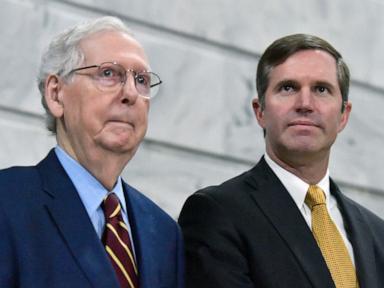
That's the core message behind Kentucky Governor Andy Beshear's direct letter to Senator Mitch McConnell. Sent on July 8, 2026, the letter politely but firmly demands a transparent update on the 84-year-old lawmaker's health status. McConnell has been hospitalized in Washington D.C. since June 14, 2026, following an emergency at his home. Since then, his office has offered almost nothing but stone-cold silence.
Kentuckians are entirely in the dark. Beshear's move isn't just political grandstanding; it's a necessary intervention in a situation that has spiraled into a circus of wild internet rumors and partisan anxiety.
The Three Week Wall of Silence
McConnell's current hospitalization began with a dramatic emergency response. Public EMS dispatch audio from mid-June revealed that emergency workers responded to a call for an unconscious person at McConnell's residence, with the dispatch mentioning "cardiac arrest".
His office hasn't confirmed the details of that dispatch. Instead, they've stuck to vague, boilerplate updates claiming the senator "continues to improve" and is working with staff while the Senate is out of session.
We haven't seen a single picture. No videos. No direct quotes.
When a major public figure goes completely radio silent for nearly a month after a life-threatening medical emergency, the public has a right to ask questions. Beshear pointed this out directly, writing that holding public office requires clear communication about one's actual physical capacity to serve. Allowing the media vacuum to persist isn't fair to anyone.
Rumors Fill the Void
Because McConnell's inner circle refuses to talk, conspiracy theorists have taken over the narrative. Right-wing influencers have claimed without evidence that the senator is brain dead or being kept alive strictly by machines.
Meanwhile, Senate Republican colleagues like John Barrasso and political commentators have insisted they've had 20-minute phone conversations with an alert, fully engaged McConnell. Other politicians have openly mocked these unverified reports. Kentucky Representative Thomas Massie joked on social media that McConnell called him to advocate for ending foreign wars and apologize for local primary results.
It is an incredibly messy situation. A direct statement from McConnell or his medical team would end the chaos instantly, yet they choose to stay quiet.
The Looming Battle Over Kentucky Succession Laws
Behind the concern for an elderly statesman lies an intense, high-stakes political chess match. This isn't just about whether McConnell can vote next week; it's about who controls his seat if he can't finish his term, which runs until January 2027.
Kentucky's Republican-dominated legislature spent years anticipating this exact scenario. They systematically stripped Governor Beshear, a Democrat, of his ability to appoint a temporary successor.
Historically, if a Senate seat became vacant, the governor could appoint an interim replacement to protect the balance of power until the next election cycle. In 2021, the state legislature changed the law, forcing the governor to choose from a list of three names provided by the departing senator's political party. Then, in 2024, they changed the rules again. Under the current statute, the governor's power is completely gone; a vacancy simply triggers a mandatory special election.
Beshear vetoed both pieces of legislation, calling them unconstitutional. The Republican supermajority overrode him both times.
If McConnell resigns or passes away before his term concludes, a massive legal showdown is guaranteed. Beshear has never hidden his belief that the legislature's changes violate the state framework. If a vacancy occurs, the governor might try to appoint a Democrat anyway, triggering an immediate court battle over the legitimacy of the 2024 statute.
Why the Senate Majority Is Sweating
The timing of this health crisis is brutal for national Republicans. They currently hold a thin 53-47 majority in the Senate.
Without McConnell's physical presence, that majority drops to 52 active votes. Senate rules strictly forbid proxy voting; you have to be in the room to cast a ballot.
McConnell has spent his final years in office acting as a critical buffer on defense and foreign policy issues. His absence shifts the mathematical realities of the chamber, making it harder for leadership to block specific resolutions or push through contested confirmations. Even though he stepped down from his formal leadership post, his vote remains indispensable to his party's legislative strategy.
What Needs to Happen Next
The current strategy of dodging questions and releasing vague, text-only updates is actively damaging public trust. Voters aren't asking for private medical records, but they absolutely deserve to know if their elected official is conscious, communicative, and capable of cast-iron decision-making.
McConnell's office needs to provide a verified update, ideally with direct visual confirmation or an official medical statement from his attending physicians. If the senator is genuinely recovering and eager to get back to work, proving it would silence the internet trolls in five seconds. If he isn't capable of doing that, the conversation about a transition of power needs to happen openly, not behind closed doors in Washington. Transparency shouldn't be an optional luxury in public service.