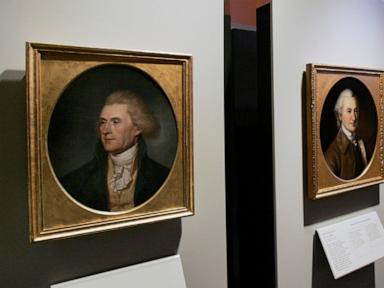
We love our historical myths neatly packaged. We like our heroes bold, loud, and holding a pen ready to sign away an empire without a second thought. That's why Thomas Jefferson gets a massive monument in Washington D.C., while John Dickinson gets skipped over in high school history class.
Dickinson is the man who refused to sign the Declaration of Independence. To a public raised on the cinematic bravado of 1776, that looks like cowardice, or worse, treason. But if you think his missing signature means he wasn't a patriot, you have been fed a watered-down version of American history.
It is a historical injustice that peaked recently during the nation's 250th anniversary celebrations. While the country cheered the fifty-six men who put their names on that famous piece of parchment, Dickinson was left in the shadows. He's treated as a footnote—the ultimate non-signer whose legacy is haunted by what he didn't do on July 4, 1776.
Honestly, it's time to fix that narrative. Dickinson wasn't a coward. He was a realist who risked his entire career because he cared more about America's survival than his own popularity.
The Man Who Wrote the Revolution Before Jefferson
Before Thomas Jefferson ever put ink to paper, John Dickinson was the undisputed voice of American resistance. In the late 1760s, he published a series of essays called Letters from a Farmer in Pennsylvania. They weren't just popular; they were a cultural phenomenon.
Dickinson argued against British taxation with a clarity that unified the thirteen disparate colonies. He gave them a shared identity long before they had a shared army. People literally called him the "Penman of the Revolution." He even wrote the lyrics to "The Liberty Song," one of America's first patriotic anthems.
If you think he was soft on Britain, look at the Stamp Act Congress of 1765. Dickinson drafted the "Declaration of Rights and Resolves," the first united official protest against the King. He knew how to fight British overreach, and he did it better than almost anyone else at the time.
So why did he refuse to sign the big paper in 1776?
Why Dickinson Walked Away
It wasn't because he wanted to kiss the King's ring. It was because he knew the colonies weren't ready.
Look at the ground reality in July 1776. The Continental Army was a messy, untrained militia. The colonies didn't have a formalized central government. They had zero foreign alliances. Dickinson looked at the situation and saw a recipe for total disaster. He believed that declaring independence at that exact moment, without first securing a French alliance or establishing a domestic constitutional framework, was reckless.
He didn't want a bloodbath. He wanted a gradual, structured transition. He correctly predicted that a premature declaration would expose American soldiers to immense British cruelty without the proper institutional backing to support them.
On July 4, 1776, Dickinson knew exactly what his stand would cost him. He openly stated that his conduct that day would give the "finishing blow" to his popularity. He was completely right.
Instead of voting "no" and tanking the delicate consensus needed for the Declaration to pass, Dickinson and fellow moderate Robert Morris chose to abstain by staying home. Their absence allowed the vote for independence to pass unanimously. It was an act of political self-sacrifice. He stepped aside so the nation could move forward, knowing his own reputation would be ruined in the process.
From Rebel to Soldier and Constitutional Architect
What happened next is the part the history textbooks completely ignore. If Dickinson were truly a British loyalist at heart, he would have fled to England like thousands of others did.
Instead, he went to war.
Just weeks after refusing to sign the Declaration, Dickinson strapped on a sword, enlisted in the Pennsylvania militia, and marched off to face the British army as a brigadier general. He actually put his life on the line on the battlefield, something many of the vocal signers of the Declaration never did. Later, he served as a private soldier in the Delaware militia at the Battle of Brandywine.
Once the war ended, his brilliant legal mind was desperately needed again. He helped draft the Articles of Confederation. When that first government proved too weak, he became a core player at the Constitutional Convention of 1787.
He didn't just attend; he shaped the very structure of the United States government. Dickinson was the architect of the Great Compromise, which created our dual-system Congress: equal representation for states in the Senate and population-based representation in the House. He fought hard to include a ban on the importation of slaves—a cause close to his heart, as he had already freed all his own slaves.
And when the U.S. Constitution was finalized, John Dickinson proudly signed his name to it.
Moving Beyond the 1776 Myth
We need to stop evaluating the Founding Fathers solely by who signed a single piece of paper in 1776. History is messy, complicated, and rarely fits neatly into a black-and-white narrative.
Jane Calvert, a historian who leads the John Dickinson Writings Project, has spent decades fighting to restore his place in history. It's an uphill battle because modern culture prefers simple myths over complex truths. We love the narrative of unanimous, fiery rebellion. We don't like the guy who raises his hand and asks if anyone has checked the supply lines or written the bylaws.
But without the guy asking those tough questions, the rebellion would have collapsed. Dickinson's caution wasn't a lack of patriotism; it was a profound sense of responsibility toward the people who would have to fight and die for that independence.
If you want to understand the true story of how America was built, don't just look at the names at the bottom of the Declaration. Look at the missing ones, too.
Next Steps for History Buffs
If you want to get past the surface-level mythology and understand what really happened during the founding era, here is your homework.
- Read the Farmer Letters: Look up Letters from a Farmer in Pennsylvania. It's available online for free through various historical archives. It gives you a much better sense of why the colonies rebelled than the simplified slogans we use today.
- Compare the Documents: Read the Olive Branch Petition side-by-side with the Declaration of Independence. You'll see two brilliant legal minds—Dickinson and Jefferson—wrestling with the exact same crisis from two completely different strategic viewpoints.
- Visit the Source: If you're ever in Delaware, visit the John Dickinson Plantation in Dover. It provides an unfiltered look at his life, his politics, and his complicated relationship with early American liberty.