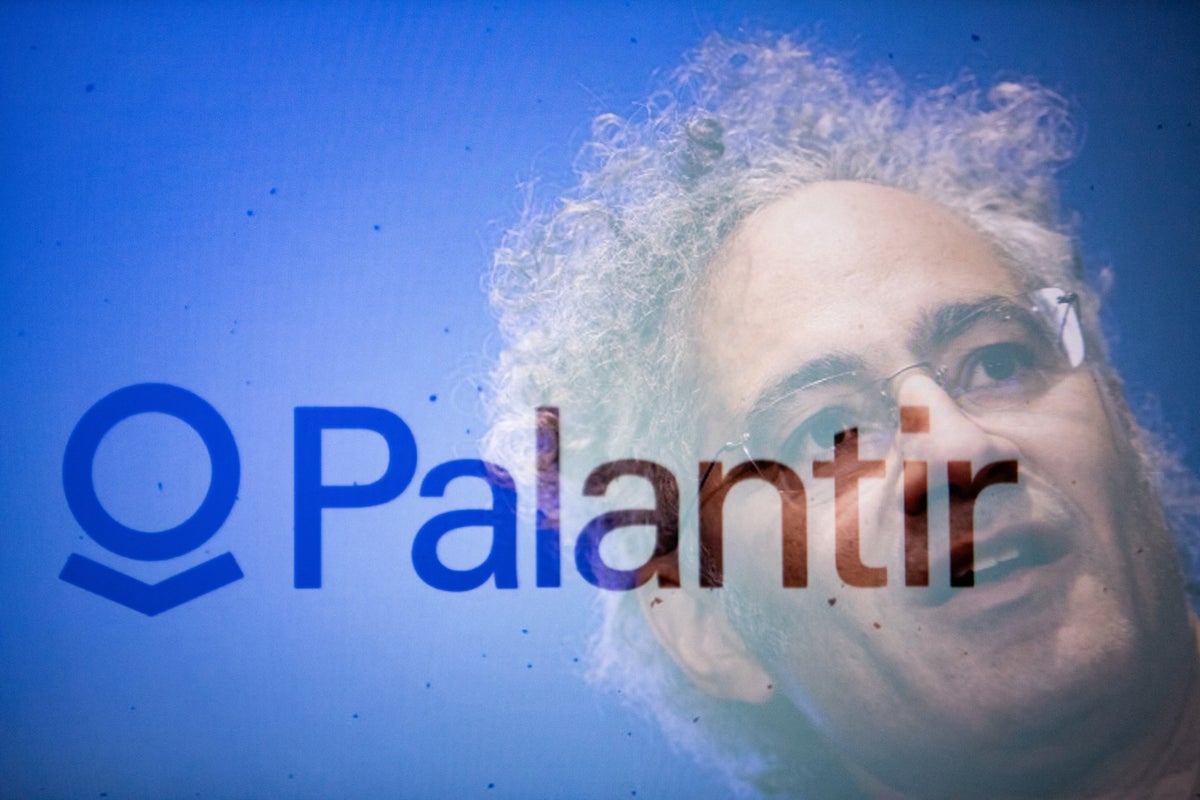
Palantir CEO Alex Karp just had what some are calling a live televised breakdown on CNBC, but if you look past the erratic pacing and rapid-fire rants, he actually exposed the biggest open secret in the tech world.
Corporate America is getting completely exhausted by the AI token economy.
During a wild 20-minute appearance on Squawk Box, Karp looked visibly unhinged at points, stumbling through stream-of-consciousness tangents, arguing with the hosts, and eventually joking that he felt like he was going to get kicked out of the room. When the anchors tried to cut to a live shot of Donald Trump’s aircraft to wrap up the segment, Karp kept right on talking, completely oblivious to the standard TV cues.
It looked like chaos. But his core message wasn't crazy at all. It was a direct, brutal attack on the business models of frontier labs like OpenAI and Anthropic.
The Token Pricing Trap
For the past couple of years, Silicon Valley has pushed a very specific flavor of AI. You hook up your corporate data to a third-party API, pay a micro-fee for every single token processed, and hope for magic. Karp says the jig is up.
According to Karp, corporate executives are quietly panicking behind closed doors. They're spending millions of dollars on tokens, realizing they aren't getting any actual workflow value, and growing increasingly terrified that their proprietary intellectual property is being siphoned off to train the next generation of public models.
"The basic view among enterprises in this country is I'm going to chillax and waste my time with tokens, I'm going to get no value, and they're going to get my IP," Karp snapped.
When host Becky Quick pointed out that he sounded incredibly angry, Karp didn’t back down. He claimed he was simply acting as a megaphone for the silent fury brewing in Fortune 500 boardrooms. He dared viewers to call any major CEO and ask how they felt about their current AI spend. His prediction? They’d be twice as angry as him.
Selling Shifting Chatbots vs Real Defense Tech
The underlying issue here is the massive gap between a flashy chatbot demo and a system that actually runs a complex business or a military operation.
Frontier labs have spent a lot of time selling the promise that their models will solve everything tomorrow. Their general vibe is that you don't need to fix your messy, legacy corporate data infrastructure today because the next model update will magically fix it for you.
But if you're managing a global manufacturing supply chain, launching a rocket, or deploying defense tech for warfighters, "directionally correct" isn't a viable strategy. A probabilistic chatbot that hallucinates 5% of the time can't be trusted to guide tactical decisions or run critical infrastructure.
That distinction explains the deep trust issues emerging between government agencies and closed-box Silicon Valley startups. Karp posed a harsh question to the hosts: Are we really going to outsource national security and the battlefield of this country to a consensus view engineered in Silicon Valley?
The Real Agenda Behind the Outburst
You have to look at the timing of this public meltdown to understand what's actually happening. Shocking outbursts on cable news rarely happen in a vacuum, especially from tech billionaires.
Just two days before Karp walked onto the CNBC set, Palantir announced a major joint venture with Nvidia. They are launching a Sovereign AI Operating System specifically engineered for U.S. government agencies and critical infrastructure.
This new platform runs Nvidia’s open-weight Nemotron models entirely within secure, air-gapped environments.
Look at how neatly this fits together:
- The Problem (according to Karp): Closed-box vendors like OpenAI charge you endless token fees, fail to solve your structural data problems, and take your data.
- The Solution (sold by Palantir): An open-weight system where you deploy on your own secure hardware, completely control the model weights, and actually own your intellectual property.
It's a classic enterprise tech playbook. You manufacture an existential crisis around your competitor’s pricing model right when you launch an architecture built on the exact opposite philosophy.
Where Corporate AI Spending Goes Next
If you are currently evaluating how your organization builds and deploys AI, Karp's unpolished rant offers a few very real lessons that go beyond the tech industry rivalry.
First, stop measuring AI progress purely by token consumption or model size. Burning cash on API calls to see what sticks is a quick way to kill your budget with zero return on investment.
Second, prioritize data sovereignty early. If your competitive advantage relies on proprietary workflows or highly sensitive data, sending that data over an external API line introduces long-term strategic risks that most legal teams aren't going to tolerate forever.
The era of indiscriminate spending on AI tech demos is winding down. The focus is shifting toward self-hosted deployments, open-weight model architectures, and integration into existing enterprise data systems where you actually own the final product.
Palantir's latest Sovereign AI infrastructure details are available directly through the Nvidia Technical Blog on Secure AI Deployments. This release outlines how open-weight models function inside air-gapped enterprise environments.