Think airline crew members get a free pass through airport security? Think again. The recent arrest of a 26-year-old Thai Airways flight attendant at Melbourne Airport shows exactly why border security agencies are ignoring the uniforms and focusing on the bags.
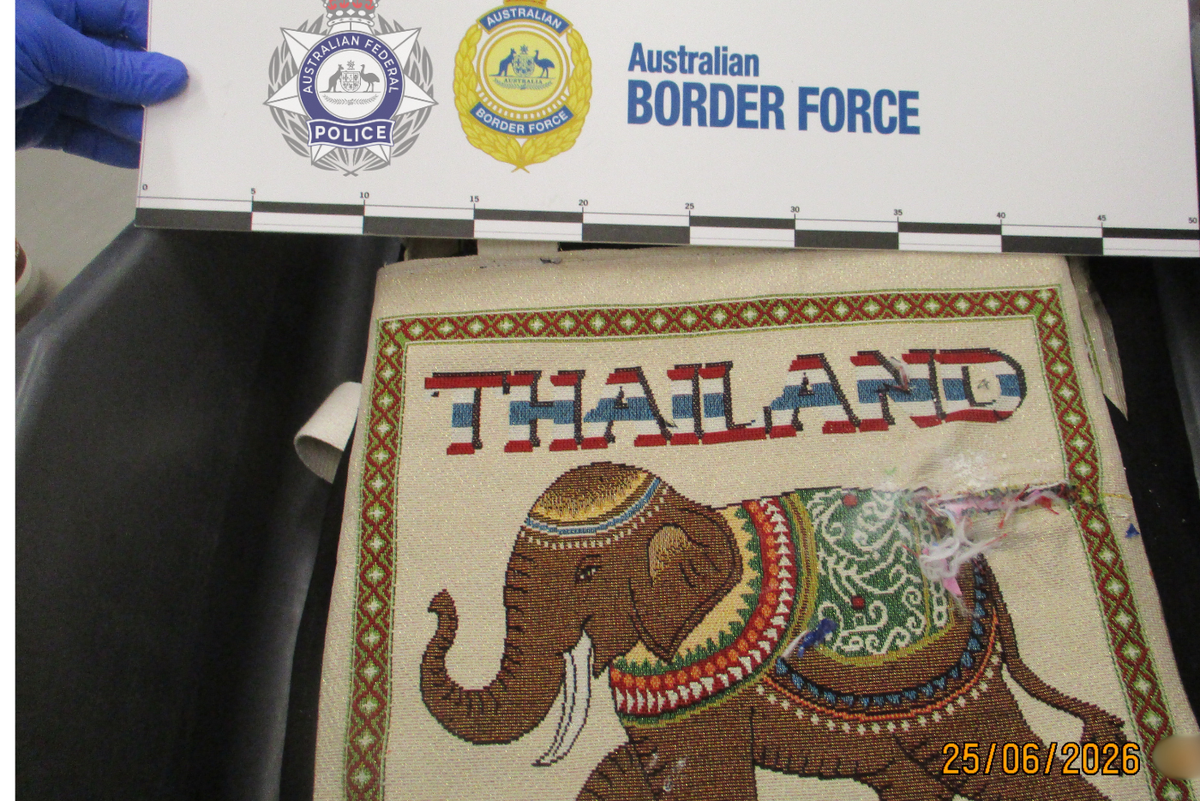
When flight TG465 touched down from Bangkok, a routine inspection quickly turned into a major drug bust. Australian Border Force (ABF) officers found more than a kilogram of heroin stitched directly into the linings of 12 separate tote bags. The street value sits at roughly AU$500,000.
This isn't just a story about one flight attendant making a terrible life choice. It highlights a massive, growing security gap that international drug syndicates are actively exploiting. Criminal networks are targeting aviation insiders because they offer something a normal mule can't provide: predictable, repeating access across international borders.
The Anatomy of the Melbourne Airport Bust
The details of the arrest outline a highly calculated smuggling attempt that fell apart under basic technological scrutiny.
The flight attendant arrived on a scheduled Thai Airways international service. During routine screening, ABF officers flagged her luggage for an X-ray examination. The scan highlighted structural anomalies in her tote bags. When officers physically inspected the bags, they discovered a hidden white powder concealed inside the fabric linings. Preliminary field tests confirmed the substance was heroin.
The Australian Federal Police (AFP) immediately took over, seizing the narcotics and arresting the crew member. She faces severe legal consequences under Australian federal law:
- One count of importing a marketable quantity of a border-controlled drug.
- One count of possessing a marketable quantity of a border-controlled drug.
- A maximum penalty of 25 years in prison for each individual charge.
She was denied bail during her initial court appearance and remains held in custody. Her next formal appearance before the Melbourne Magistrates’ Court is set for September 14, 2026.
The 8800 Baht Trap
What makes this specific case fascinating is the trail left on social media. Investigators from Thailand’s Office of the Narcotics Control Board (ONCB) quickly raided the suspect's Bangkok residence and interrogated her inner circle. They uncovered a series of Facebook messages that expose how easily these smuggling operations recruit couriers.
The flight attendant and her boyfriend had been communicating with a Facebook user operating under the alias "Rose." The recruiter claimed they needed someone to transport "OTOP" goods—a common Thai acronym for locally manufactured community products—to Australia, requesting roughly 20 kilograms of luggage space.
The agreed fee for this service was a mere 8,800 Thai Baht. That is roughly US$240.
For less than $250, a professional flight attendant risked a 25-year prison sentence in a foreign country.
Thai authorities are currently analyzing whether she was fully aware of the hidden cargo or if she was a victim of a blind courier scheme. However, the method of concealment—heroin professionally stitched into the linings of 12 matching tote bags—suggests a level of organization that makes the "clueless courier" defense incredibly difficult to prove in court.
Why Syndicates Covet the Trusted Insider
Organized crime groups do not recruit airline staff by accident. They do it because airport security infrastructure historically focused outward toward passengers, creating a softer security envelope for employees.
Aviation insiders possess security badges, understand flight schedules, and know which border entry points have specific shifts or lighter staffing. Even though crew members are subject to screening, the psychological edge of wearing a major carrier's uniform often reduces suspicion.
ABF Commander Clint Sims highlighted this exact vulnerability following the bust, stating that criminal syndicates continue to systematically target trusted insiders to bypass strict border controls. When a network manages to corrupt a single crew member, they effectively open a semi-regular pipeline for high-value, low-volume contraband like heroin or cocaine.
Thai Airways Scrambles to Limit Damage
For Thai Airways International, the arrest is a massive PR disaster. The airline is currently navigating a delicate corporate restructuring, and a high-profile international drug trafficking scandal is the last thing management needs.
The airline's CEO, Chai Eamsiri, immediately launched a high-level internal investigation. A dedicated disciplinary and fact-finding committee has been ordered to review operational protocols and report back within a week. Thai Airways issued a formal statement emphasizing that it enforces zero-tolerance policies regarding narcotics, noting that any employee found guilty will face immediate dismissal alongside criminal prosecution.
The Civil Aviation Authority of Thailand (CAAT) also stepped in to audit pre-flight screening measures at Suvarnabhumi Airport. While CAAT maintains that its airport security screenings strictly align with International Civil Aviation Organization (ICAO) standards, they admitted that standard aviation security checks are designed to detect weapons and explosives, not hidden narcotics. Finding drugs remains the domain of specialized law enforcement and intelligence sharing.
Next Steps for Aviation Security Teams
If you run aviation security or border compliance, this incident provides clear operational lessons that require immediate action:
- Eliminate Random Crew Screening Biases: Shift from random or sample-based crew screenings to mandatory X-ray and biometric verification for all staff arriving on high-risk international routes.
- Update Social Media Compliance Policies: Implement explicit training programs detailing how transnational syndicates use social media groups to recruit couriers under the guise of peer-to-peer shipping apps or transport favors.
- Enhance Cross-Border Intelligence Sharing: Maintain direct, unencumbered data pipelines between departure-state narcotics agencies (like the ONCB) and arrival-state border forces (like the AFP) to flag crew members exhibiting irregular travel patterns or sudden financial shifts.