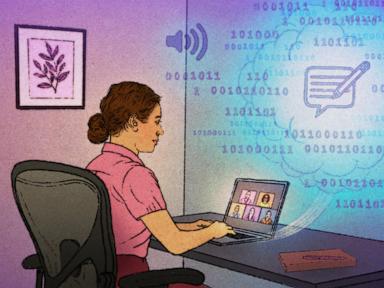
You finish an hour-long Zoom call, and within thirty seconds, a tidy little summary lands in your inbox. It has bullet points, clear action items, and a perfect breakdown of who said what. It feels like magic. It feels like you just won back two hours of your day. But that shiny new AI notetaker sitting in your virtual conference room is quietly opening a backdoor to your company's most sensitive data.
While these automated assistants promise to make workplace meetings easier, a growing group of corporate lawyers, privacy advocates, and human resource executives are realizing that the trade-off is a security nightmare. Every word spoken becomes permanent, searchable digital text. If you think your casual conversation disappears into the ether once the call ends, you are dead wrong. Corporate strategies, salary negotiations, and off-hand comments are being stored, analyzed, and sometimes used to train tech models without your explicit consent.
The core issue is simple. People treat virtual meetings like private conversations, but AI notetakers treat them like data mining expeditions.
The Hidden Danger of Turning Speech Into Text
We used to live in a world where corporate recording was rare. Storing massive video or audio files is expensive, cumbersome, and incredibly difficult to sift through. If a competitor or an attacker wanted to find a specific trade secret inside a recorded three-hour strategy meeting, they had to sit there and listen to the whole thing.
AI completely flipped that dynamic. Thorin Klosowski, a senior security and privacy analyst at the Electronic Frontier Foundation, points out that text is cheap to store and incredibly easy to search. When an AI tool transcribes a meeting, it transforms human speech into an indexed database.
Think about what happens when that data is indexed. A bad actor, a disgruntled employee, or a legal adversary does not need to listen to hours of audio tape anymore. They can just hit "Control + F" and type in words like "layoffs," "lawsuit," "patent flaw," or "product defect." By turning casual office chatter into structured text files, companies are building a goldmine for future litigation and cyberattacks.
The security issues do not stop at your company borders. Many of the startups offering free or cheap transcription services survive by reselling data or using your private conversations to train their future algorithms. When you let a random bot join your call, you are often signing away the rights to your intellectual property.
The Biometric Trap Your Legal Team Fears
The biggest legal landmine involves something most employees do not even realize is happening. It is the creation of your voiceprint.
To tell the difference between multiple people on a call, an AI app must analyze the unique physical characteristics of your voice. It measures your tone, pitch, cadence, and speech patterns to label you as Speaker 1 or Speaker 2. Chris Pluymers, an associate attorney at The Dillon Law Group, warns that these acoustic signatures are not just software markers. They are biometrics. They are just as unique and identifying as your fingerprint or a scan of your retina.
This creates a massive security vulnerability. Financial institutions and banks increasingly use voice recognition to verify identities over the phone. If a hacker breaches a third-party AI transcription vendor and steals a database of corporate voiceprints, they can theoretically use those vocal signatures to bypass security protocols, access personal bank accounts, or commit deepfake fraud.
States are starting to push back hard. In Illinois, the Biometric Information Privacy Act demands that companies provide written notice and get explicit, informed consent before any tool captures a voiceprint. The law also forces companies to have a public, documented schedule for when that data will be destroyed.
Pluymers notes that the vast majority of companies deploying these tools have absolutely none of these legal frameworks or consent forms in place. They are breaking biometric privacy laws every single day, completely exposed to class-action lawsuits.
Even Deleting Your Files Does Not Wipe the Slate Clean
Many managers think they can bypass the risk by going into their settings and hitting delete after a meeting recap is generated. That is a comforting thought, but it is largely an illusion.
Danielle Kays, a partner at the law firm Fisher Phillips, tracks how these applications handle data. She emphasizes that even when a vendor deletes the raw transcript or the audio file, they frequently hold onto the metadata indefinitely.
Metadata includes information about who attended, when they spoke, how long they talked, and the core behavioral summaries of the interaction. This underlying data can still influence how the AI provider's model behaves. In worse-case scenarios, sensitive proprietary data can become memorized or reproduced by the model later on. Once your data crosses the threshold into an external server, you lose total control over it.
Atlanta-based corporate attorney Justin Daniels summarizes the issue bluntly by stating that people using these tools simply do not know where their data goes. If you are discussing corporate strategies, pending mergers, or HR complaints, sending that data to an unverified cloud vendor is corporate negligence.
How to Kick Bots Out of Your Meetings Politely
You do not have to sit there and let a rogue piece of software record your biometric data. You can take control of your virtual environment.
The first step is cultivating a habit of checking your attendee list for bots the moment you log onto a platform like Zoom, Microsoft Teams, or Google Meet. Look for weird names in the participant sidebar. They are often labeled directly, but sometimes they sneak in under an individual employee's account name with a small tag indicating an external integration.
If you spot an uninvited digital recorder, you have every right to speak up. Amy Dufrane, the chief executive of human resources certification organization HRCI, believes the risks are so high that organizations should ban these applications entirely.
If you want to remove a bot without sounding combative, you can lean on corporate policy to take the pressure off yourself. You can use a script like this one.
Our company policy states that this meeting cannot be recorded or transcribed by external AI tools. Let's remove the bot, and I will happily take manual notes and share a recap afterward if anyone needs it.
✨ Don't miss: canon pixma tr160 portable printer
This framing keeps you from looking like the bad guy to external clients or eager salespeople. It places the boundary on compliance rather than personal preference.
If your team insists on using a tool for basic logistical reasons, you can opt for a hybrid approach. Allow the bot to stay for the first twenty minutes while you cover public project updates. Then, announce a hard stop for the bot before moving into sensitive topics. Justin Daniels handles his corporate calls this way, refusing to discuss any substantive or risky matters until the recording tool is completely shut off.
Your Next Steps for Total Data Control
If you want to protect your team and your career from the dark side of automated transcription, you need to stop passive usage immediately. Take these three concrete steps today.
First, audit your team. Look through your video conferencing history and find out which team members have connected automated apps to their calendars.
Second, update your employee handbook. Work with your legal department to draft a clear policy regarding biometric data and external software integrations. Specify which platforms are approved for internal use and explicitly ban unvetted free bots.
Third, enforce explicit consent rules. Make it mandatory for anyone using an approved corporate recording tool to ask for verbal confirmation from every single participant before hitting record. Never assume people are comfortable being transformed into training data.