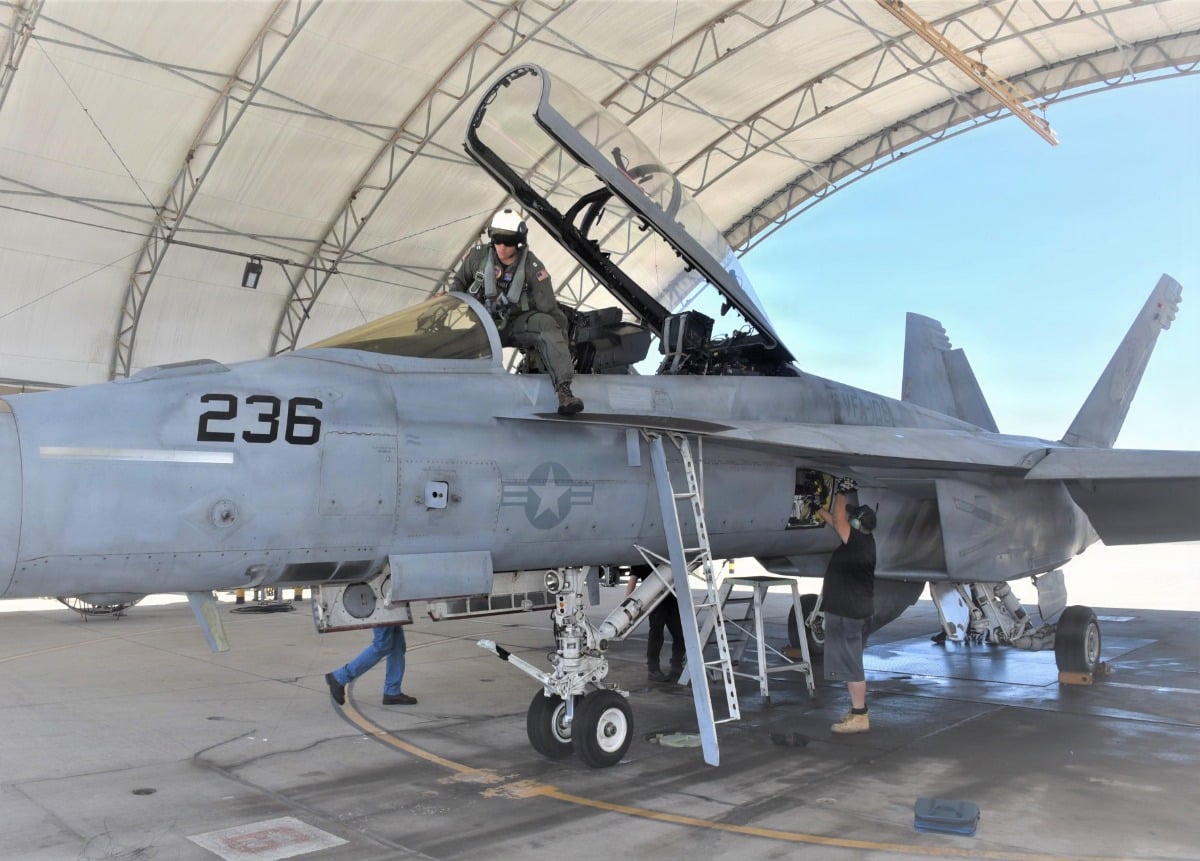
A multi-million dollar fighter jet shouldn't sit grounded in a hangar because a single piece of composite plastic cracked on an engine door. Yet, that's exactly what happens on aircraft carriers and forward operating bases worldwide. The Pentagon's traditional supply chain moves slow. If a jet in the western Pacific needs a specialized repair part, it usually waits for a massive logistics machine to ship it from a depot thousands of miles away in the United States.
The U.S. Navy thinks it found a way around this bottleneck. If you liked this piece, you should read: this related article.
Engineers from the Naval Air Warfare Center Aircraft Division (NAWCAD) and Fleet Readiness Center Southwest (FRCSW) just rolled out a new maintenance approach that uses 3D-printed composite patches to repair F/A-18 Super Hornets. They are aiming to slash select aircraft repair times by a staggering 50 percent. Instead of parking an expensive combat asset for weeks, sailors can fix the plane right where it's stationed.
Moving the Factory to the Front Line
The math behind military readiness is brutally simple. A jet that isn't flyable isn't a weapon; it's a paperweight. The F/A-18 Super Hornet relies heavily on advanced composite materials to keep its frame light, strong, and aerodynamic. But when those composite parts—like the high-stress doors shielding the twin F414 engines—take a beating, fixing them is an absolute pain. For another angle on this development, refer to the recent coverage from CNET.
Historically, repairing these structures required highly specialized maintenance artisans. It meant tearing the component off, shipping it away, or waiting for a specialized crew to arrive with heavy-duty curing equipment.
The new approach changes the game by using high-performance, 3D-printed composite patches that slap directly onto the damaged sections of the airframe.
The Navy didn't just build a fancy patch. They built an entire field-deployable ecosystem. NAWCAD and FRCSW engineers spent months designing specific patch application procedures and rigorous quality checks. The goal? Ensure that a patch printed on a standard machine on an aircraft carrier behaves exactly like a factory-molded part when a pilot pulls seven Gs during an aerial maneuver.
The 22-Site Global Printing Network
The most practical aspect of this test program isn't the technology itself. It's the infrastructure already waiting to use it. The Navy doesn't need to deploy brand-new, multi-million dollar industrial systems across the globe to make this happen.
The military already operates a distributed network of 3D printers spread across 22 naval maintenance sites around the world. Up until now, these machines were largely relegated to printing plastic brackets, training aids, or non-structural components.
By validating these high-performance composite patches, the Navy unlocks that existing hardware. If a Super Hornet gets damaged at a forward airbase, the squadron's technicians don't request a part from a warehouse in California. They download a certified digital blueprint, print the composite patch on-site, perform the engineered quality checks, and bond it to the engine door.
Lab testing and ground trials are already done. The real test comes this summer, when the joint development team plans to mount these 3D-printed patches onto an operational aircraft for active flight testing.
Ditching the Central Depot Bottleneck
Everyone talks about how additive manufacturing allows for weird, organic geometries that save weight. That's great for commercial aerospace, but for the military, the real prize is destroying lead time.
Consider what Fleet Readiness Center East (FRCE) pulled off recently with metal 3D printing. They managed to qualify, produce, and certify their first flight-ready metal parts—including a weapons pylon fitting for the AH-1Z Viper and a landing gear component for the V-22 Osprey—in less than six months. They used high-powered lasers to weld layers of aluminum powder into structural pieces because the traditional supply chain simply couldn't deliver the parts fast enough.
The Super Hornet composite patch project follows the same logic. By treating parts availability as a software distribution problem rather than a physical shipping problem, the Navy bypasses its own bloated shipping lines. It's a pragmatic necessity. The Marine Corps is already planning to sunset its remaining legacy Hornet squadrons by 2030 to shift toward the F-35, which means the specialized maintenance pools for older Hornet frames are shrinking.
The Fleet needs to be more self-sufficient. If a squadron can print its own structural fixes, it survives supply chain shocks that would otherwise stall operations during a conflict.
What Happens Next
The upcoming flight tests this summer will determine if this repair methodology becomes standard fleet doctrine. If the patches hold up under the brutal vibrations, thermal cycles, and aerodynamic loads of supersonic flight, expect the Navy to rapidly expand the catalog of printable fixes.
For anyone managing complex hardware, the lesson here is clear: stop looking at additive manufacturing as a way to build whole new machines and start looking at it as a way to fix the ones you already have, right where they break.