You think you've seen hot summers before, but 2026 is rewriting the rules. Climatologists are staring at their data monitors in disbelief because the current climate pattern isn't just strong. It's violent. The tropical Pacific Ocean is acting like a massive, unleashed radiator, throwing the planet's entire atmospheric engine completely out of whack.
If you're wondering why Europe just endured a brutal June heatwave that claimed lives, or why the US East Coast spent the Fourth of July weekend suffocating under a 115°F heat index, here's your answer. A monstrous El Nino has rapidly intensified. It's currently pacing to break every historical record for raw strength and extremity.
The World Meteorological Organization issued a blunt warning confirming that this event is developing with terrifying speed. We aren't just looking at minor seasonal shifts anymore. This is a profound disruption to global food supplies, power grids, and basic human safety that will ripple deep into 2027.
The Pacific Is Subverting the System
The mechanics behind this event show why experts are spooked. Normally, trade winds push warm surface water toward Asia, letting cooler water rise up near South America. During an El Nino, those winds collapse. The warm water sloshes backward, blanketing the central and eastern Pacific.
Right now, global average sea surface temperatures across our tropical and temperate oceans are hovering just under 21°C. That completely shatters the previous highs of the last few years. Alvaro Silva, a prominent scientist at the World Meteorological Organization, pointed out that there's unprecedented agreement among global forecast models. They all point to a historic, super-sized system.
When you trap that much raw energy in the ocean, it has to go somewhere. The sea releases its stored sub-surface heat straight into the atmosphere. It acts as a massive accelerant for global temperatures, multiplying the baseline warming we already get from long-term climate change.
Dropping the Ball on Infrastructure
Most media coverage fixates on the temperature numbers while ignoring the actual infrastructure threat. That's a huge mistake. The real danger isn't just a high number on your phone's weather app. It's the catastrophic strain placed on systems built for a cooler era.
Take the electrical grids. During prolonged heatwaves, millions of people run air conditioning simultaneously to stay alive. But in 2026, we have a massive new power drain on the grid. Artificial intelligence datacenters are pulling immense amounts of electricity around the clock. Major metropolitan areas like Phoenix and Philadelphia are facing real risks of localized blackouts because of this combined load.
A recent study highlighted that if a major power grid collapses during an extreme heat event in a city like Phoenix, over half the population could end up requiring emergency hospitalization. We're talking about potential mass casualty events simply because the grid cannot handle the dual stress of climate chaos and technological growth.
Chaos from South Asia to the Americas
The fallout from this Pacific warming follows a classic, brutal script, but on an amplified scale. The monsoon season in South Asia is already seeing severe disruptions. While parts of India face erratic, intense cloudbursts, overall water levels in crucial agricultural reservoirs remain dangerously low. The rain isn't falling where it needs to, threatening crop yields for the coming year.
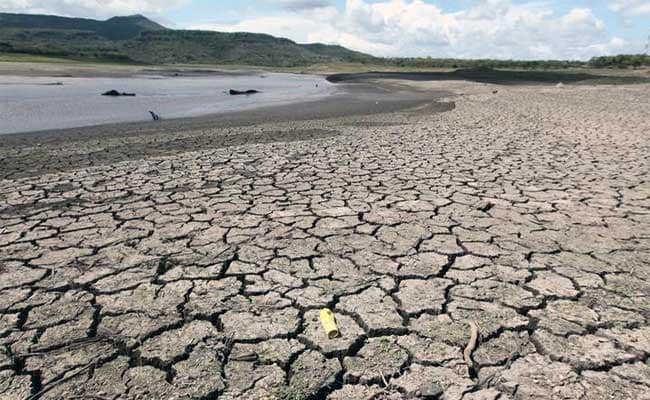
Simultaneously, Central and South America are drying out fast. Intense drought conditions are taking root across dozens of regions, parching the agricultural heartlands. It mimics the devastating historic droughts of 1988 and 2012.
Over in Europe, the situation has already turned lethal. A massive atmospheric block trapped a dome of intense heat over the continent in late June, overwhelming local healthcare systems and disrupting power generation plants that rely on cool river water to operate.
Actionable Steps to Protect Yourself
Sitting around worrying about global weather models won't keep your family safe. You need to adapt to this high-heat reality immediately.
- Audit your household medication: Many common prescriptions, including blood pressure meds, antidepressants, and antihistamines, severely impair your body's ability to regulate its own temperature. Talk to your doctor to see if your routine makes you hyper-vulnerable to heatstroke.
- Secure backup power alternatives: Don't assume the grid will stay online when temperatures cross 110°F. Invest in high-capacity portable power stations or solar generators specifically to run a high-powered fan or a small portable cooling unit.
- Shift your physical exposure window: If you work outdoors or exercise outside, you have to abandon the mid-day schedule. Shift heavy exertion entirely to the early dawn hours. Remember, because of rapid urbanization and concrete heat-trapping effects, nights aren't cooling down like they used to.
- Track the wet-bulb temperature: Stop looking at the standard thermometer. Buy a dedicated humidity monitor or check local wet-bulb globe temperature parameters. High humidity mixed with high heat stops your sweat from evaporating, which can turn fatal in a matter of hours.
This extreme weather pattern is locked in for the rest of the year and will spill directly into 2027. The old baselines are officially gone, and waiting for things to cool down is a losing strategy.